Hungarian Transport Minister quietly introduces a huge legislative package

János Lázár announced a 35-page, comprehensive proposal amending numerous points of the transport law, which received little fanfare. The draft bill, proposed by the Minister of Construction and Transport, would introduce changes relating to road, air, water and rail transport.
From a regulatory perspective, a less significant but important change is that a new substantive criterion has been established for road network development. In future, planning should also take into account ferry crossings that could replace road infrastructure.
This could be an important change in areas where developing ferries could be a more economical solution than building bridges.
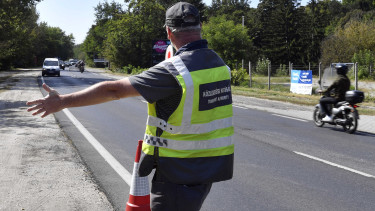
In everyday life, it is much more important for drivers that the authorities may be granted new powers during roadside checks. In future, the police would be able to take coercive measures against vehicles obstructing traffic on public roads, which would make it easier to remove obstacles.
Transport authorities and inspectors would be permitted to wear body cameras and make video and audio recordings.
According to the proposal, the powers of transport authorities would also be expanded,
enabling them to take action independently in a wider range of cases than before. For example, they would be able to impose fines.
Another important element is the introduction of rules to promote alternative fuels and electromobility. The package would transpose the EU's new Alternative Fuels Infrastructure Regulation (AFIR) into national law. The aim of AFIR is to standardise, develop and improve the availability of electric charging infrastructure.
The most significant change affecting rail transport is that it would be clearer which facilities and operations require technical approval. For example, based on the amendment, elevators and escalators in station buildings, as well as above- and underground infrastructure, would also require approval.
Another change is that limited rail traffic could only be maintained with the permission of the transport authority.
In practice, this would mean that, if a railway line could not be operated in the usual way due to track renovation, technical faults, safety equipment failures, track closures or other exceptional circumstances, for example, railway companies would not be able to introduce temporary reduced-safety-level operations automatically, but would have to request prior authorisation from the transport authority.
The amendment aims to ensure that, in all such situations, an external professional body examines whether restricted operations can be organised safely and, if necessary, imposes conditions. While this would, in principle, increase transport safety, it could also result in more administration and a longer authorisation process for railway operators.
One new feature could be an advance booking system for vehicles arriving at the state border.
If Parliament approves, the government will be authorised to determine which categories of trucks and which border crossings will be eligible for priority passage. This could alleviate the congestion that has plagued busy border crossings for years.
Passenger transport regulations may also be amended with regard to public transport. According to the draft, local authorities would be required to provide more detailed data on the bus fleet used for public services, how vehicles are procured, and how well they comply with requirements for the proportion of "clean vehicles". This would encourage the purchase of more sustainable vehicles in line with EU requirements.
The draft could also change the principles for imposing administrative fines, with the extent of the damage caused by the violation becoming a new determining factor. This would enable more differentiated fines, particularly in cases of serious violations.
Hungarian regulations would also be aligned with EU law with regard to the toll system. The amendment would adopt the provisions on the interoperability of toll systems, thereby helping vehicles to travel between EU Member States under a more uniform toll payment system.
Cover photo: A Transport Authority inspector stops a car during this year's road traffic environmental protection campaign on the outskirts of Budapest on 21 September, 2020. Source: MTI Photo/Zoltán Máthé





