ING: The market was expecting the government's move; there is no need to worry about the forint

Yesterday saw two important events on the Hungarian market: on the one hand, inflation turned out lower than expected, at 4.3% in October, which partly confirmed that the stronger forint is contributing to disinflation, ING Bank pointed out in its Wednesday analysis. At the same time, core inflation rose from 3.9% to 4.2%, suggesting that the central bank should continue to wait before cutting interest rates. The bank's analysts do not expect the base rate to be cut to 6.5% until the second half of 2026.
However, the inflation data was overshadowed by the announcement by Minister of National Economy Márton Nagy that the government would raise the budget deficit for 2025 from 4.3% to 5% and for 2026 from 3.7% to 5%. The market reacted to the news with a steeper yield curve, meaning that long-term yields rose on Tuesday. At the same time, it seems that
investors had expected a similar move before the elections, so the reaction was not severe.

According to the ING analysts, the full market impact will be seen on Wednesday, when US bond investors return after yesterday's holiday.
The forint weakened noticeably in the first half of Tuesday, but signs of a turnaround were already visible during the day, and this continues on Wednesday morning. According to ING,
this also suggests that the higher deficit target did not come as a surprise to the market and shows that the strong positioning in favor of the forint has not fundamentally changed.
For these reasons, experts expect that the weakening of the forint will not be lasting and that the euro will remain below 386 in the coming period.
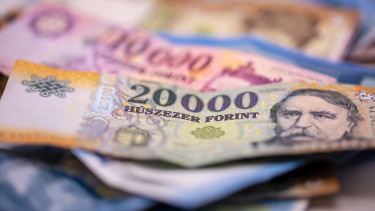
Cover photo (for illustration purposes only): Getty Images





