Is peace on the horizon? If it really happens, it will also impact investments


It seems that US President Donald Trump is truly determined to bring peace to Ukraine and is attempting to reconcile the Russian and Ukrainian positions. This is also having a positive effect on the markets, with
experts believing that a tangible peace agreement could give new impetus to Central and Eastern European currencies.
The forint is already approaching levels not seen since early 2024, and if further positive developments occur, it could easily break through the psychological barrier of 380 against the euro. In addition to expectations of peace, the high interest rate of 6.5% continues to support the Hungarian currency.

Investors are expected to continue focusing on geopolitical developments in the coming days, while important macroeconomic data will also be released both domestically and abroad. On Monday morning, for example, the Hungarian Central Statistical Office (KSH) will publish its October foreign trade statistics. Meanwhile, November purchasing managers' indices will be released in Europe and overseas, and Fed Chairman Jerome Powell will speak in the early afternoon.
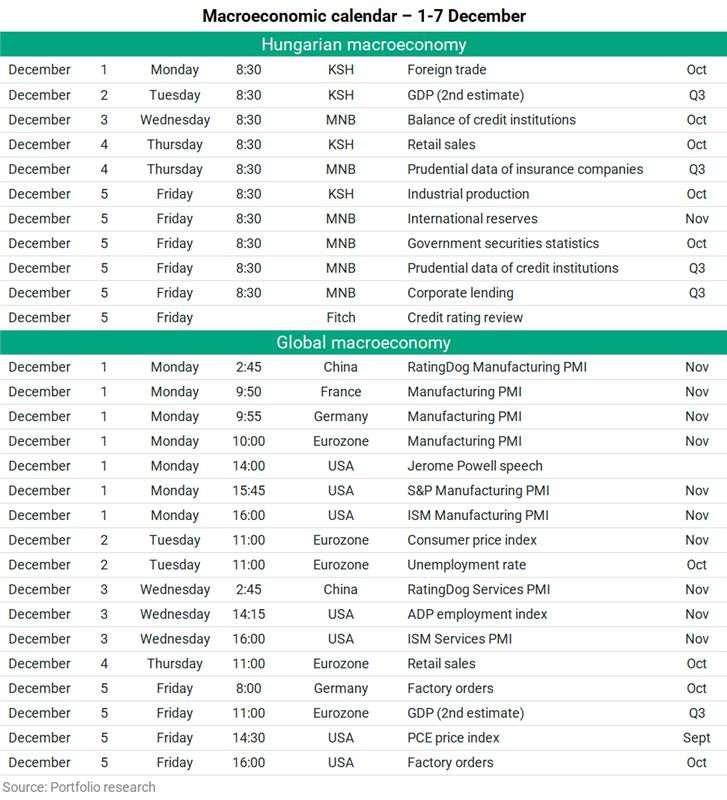
On Tuesday morning, we will learn the background to Hungary's third-quarter GDP data, as the statistical office publishes the detailed figures. In the morning, Eurostat will release preliminary inflation statistics for November and unemployment data for October for the eurozone.
On Wednesday, the National Bank of Hungary (MNB) will publish the latest data on credit institutions' balance sheets, but this is unlikely to have a significant impact on the market. From a Hungarian perspective, the US labor market data for November and the overseas services business cycle index may be more important.
On Thursday morning, the series of economic activity indicators for October will begin, as the KSH will publish its retail statistics. This will allow us to make preliminary conclusions about economic performance in the fourth quarter. Eurostat will also summarize the retail data of member states, so we can immediately get an idea of where Hungary stands in comparison with other European countries.
Friday morning may also be busy, as the KSH will publish preliminary statistics on industrial production, continuing its series of October data, while the MNB will report on the third-quarter results of Hungarian credit institutions, among other things. The central bank will also publish data on international reserves at the end of November and developments in corporate lending. Late in the evening, Fitch Ratings will release another credit rating decision on Hungary. The development of German factory orders may also be important from a Hungarian perspective, while in the US, investors may be watching the personal consumption price index, for which only September data is available due to the previous government shutdown.
Cover photo (for illustration purposes only): Portfolio





