Dramatic demographic data see daylight in Hungary


Last year, the number of births was low almost every month. December was no exception. Just 6,020 children were born, which was 4.9% (309) fewer than in December 2024.
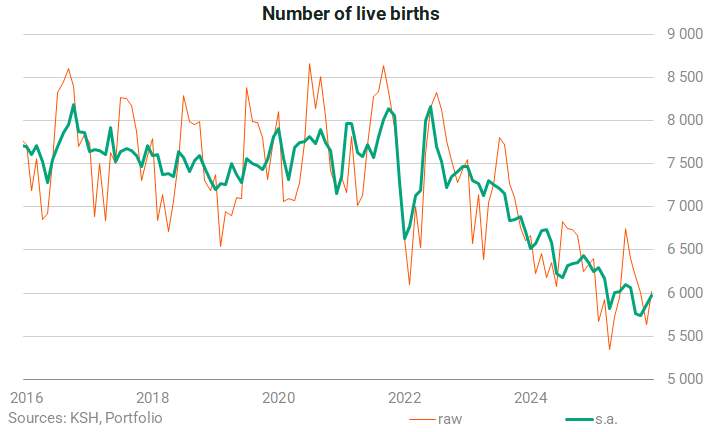
Preliminary estimates show that 72,000 children were born in 2025, which is 7.1% (5,511) fewer than the previous year. The total fertility rate per woman was estimated at 1.31, compared to 1.39 the previous year.
The last time the total fertility rate was lower than this was in 2011, so it has been 14 years since we saw such a low figure.
The number of deaths was more favourable. In December, 10,811 people lost their lives, which was 7.8%, or 910, fewer than a year earlier. Over the course of a year, 124,200 Hungarians lost their lives, which is 2.6% fewer than the previous year — a decrease of 3,270.
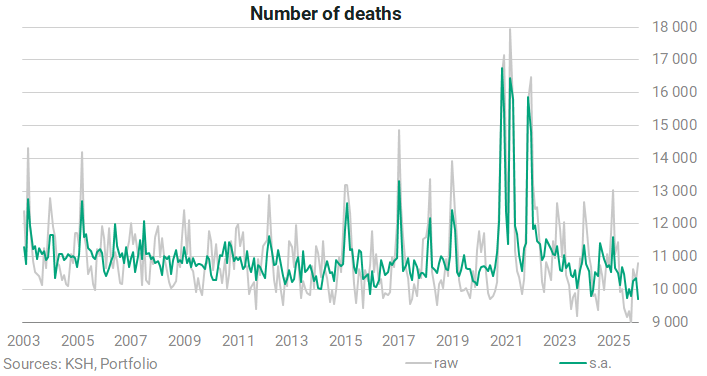
However, as the number of births was much lower than this improvement in the number of deaths, the estimated natural population decline was 52,200 — 4.5% higher than the previous year's figure of just below 50,000.
This figure is so high that it's as if the entire populations of Zalaegerszeg and Békéscsaba had disappeared in one year — and that's more than the population of Eger.

Although demographers do not usually draw far-reaching conclusions from data for a single year, the downward trend in the number of births that began in 2021 is certainly cause for concern. There is no question that the total fertility rate of 1.31—unless there is a significant improvement—points to a rapidly declining population in the coming years.
Based on last year's trend, we are now on a path that most researchers consider a pessimistic scenario, namely, a particularly rapid population decline.
The total fertility rate has now fallen back to the levels seen between 2000 and 2010—when there was serious concern about the expected population trend—while a few years ago, statisticians measured an encouraging value of 1.6 in 2020-21, which was the highest level since 1993-94.
Cover image (for illustration purposes only): Getty Images





