Hungarian price increases fall sharply in January


After December's 3.3%, it was expected that the inflation rate would fall significantly in the first month of the year, with analysts surveyed by Portfolio predicting a figure of 2.3%. In the end, the data released by the Hungarian Central Statistical Office (KSH) on Thursday morning came as a surprise even compared to this, as
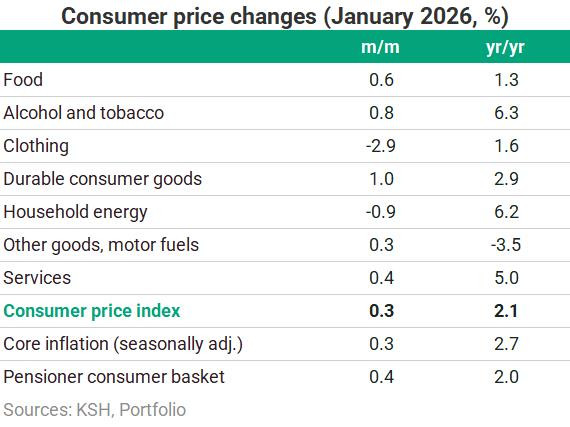
prices rose by 2.1%, the lowest level since March 2018.

The significant decline is partly due to the base effect, as the monthly price increase was 1.5% in the first month of 2025, which has now fallen to 0.3%.
Core inflation also fell significantly from 3.8% in December to 2.7%.
According to KSH's data, the annual price increase for food slowed to 1.3%, while the rate of increase for alcoholic beverages and tobacco products was also lower than in December at 6.3%, although the price of the latter product group is driven almost exclusively by changes in official prices and increases in excise duty. The price of clothing fell by almost 3% on a monthly basis, in line with seasonality. The market services price index, which caused an unpleasant surprise at the end of the year, also appears to be moderating, although a 5% increase was still measured in this category. However, on a monthly basis, the rate of increase fell from 0.8% to 0.4%. Household energy prices rose by 6.2% over the year, but fell by 0.9% on a monthly basis. Based on previous experience, the January data probably does not yet reflect the government's announced utility price freeze, as the statistical office usually calculates energy consumption with a two-month lag.
The rate of price increases fell below the MNB's target for the first time in five years. The central bank still wants to achieve a price increase rate of 3% plus or minus 1%. Based on the current data, they seem to be in an easy position, but margin caps and other voluntary price restriction measures are estimated to hold back price increases by around 1-1.5 percentage points. If these are phased out, the inflation rate may rise above the target again, although it would still remain below it based on current statistics.
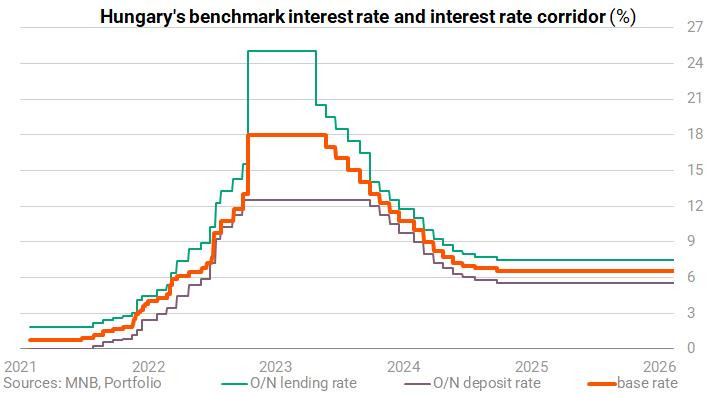
The Monetary Council will meet next on February 24 to decide on interest rates. Before the latest data was released, analysts were divided: some expected a 6.5% cut in the base rate at the February meeting, while others expected this to happen only in March, when the latest inflation forecast is published. The latest data
may reinforce expectations of an interest rate cut, increasing the likelihood of easing in February.
Cover photo (for illustration purposes only): Getty Images





