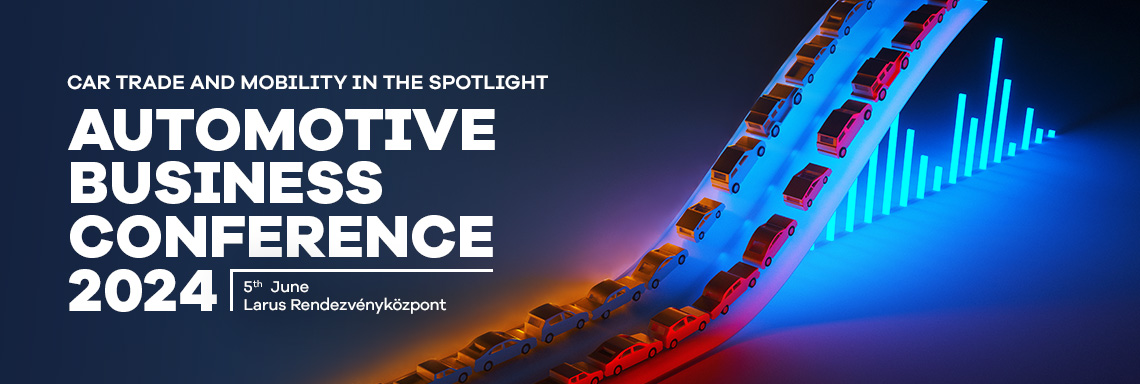
Car trade and mobility in the spotlight
The automotive industry is undergoing serious changes, partly due to electrification; in addition, the current macroenvironmental situation poses challenges to industry players in general. The transformation of consumer needs is seriously pushing the limits of the current retail model; different sales models are emerging, and the increasingly dominant vision is the agency model and its different concepts. We must be prepared to move from the infrastructure built 20 years ago – large glass palaces built for each brand in large sites – to strategic real estate, logistics and service centres supporting multi-brand servicing, fleet operations, and omnichannel sales. How are players preparing, and where are they in the adaptation process?
10:00 - 10:20
Keynote speech: The automotive industry’s challenges and prospects in Hungary and the CEE region
Speaker: Zsolt Müllner, Chairman of the Board, AutoWallis
10:20 - 10:40
The AutoWallis story – We are building the leading car and mobility provider in Central and Eastern Europe
Speaker: Gábor Ormosy, vezérigazgató, AutoWallis Nyrt.
10:40 - 11:00
Car trade trends and business models in Central Eastern European region
Speaker: Petr Knap, Senior Advisor, EY Consulting (CEE Automotive)
11:00 - 12:00
Panel discussion: The new hierarchy of car trade – Factory or private importers, dealer networks or agents?
Moderator: Petr Knap, Senior Advisor, EY Consulting (CEE Automotive)
Conversation participants:
As part of the transformation of the industry, there are more and more sales channels to buy a car. Digitalisation plays a key role, which also affects the automotive industry in many ways. Mobile internet and mobile payments have enabled the rapid spread of car-sharing services, among others. Another obvious impact of digitalisation is the shift of customers’ information acquisition and transactions to the digital space from traditional physical stores and retail outlets. Everyone must prepare for this change. In addition, electric cars account for a growing share of the new car market, and BYD is the leading player in this segment, so its share of the domestic market is expected to grow at an increasing pace in the coming years. In terms of design, safety, and technical content, today's Chinese supply is not only catching up, but often even surpassing the traditional supply, giving new space to the global conquest of Chinese car manufacturers. How will Europe cope with the price competition? How large is the market for electric cars in Hungary?
12:50 - 13:20
Customer focus – digital transformation and data driven marketing is the future? - Transforming Automotive Communication for enhanced CX & Growth
Speaker: Zmak Kreso, VP Products, Infobip
13:20 - 14:10
Panel discussion: Retail at home and in the region – Agent model, ESG, electromobility and the challenges of Chinese brands
Moderator: Tamás Pletser, EMEA Oil & Gas Analyst, Erste Investment
Conversation participants:
14:10 - 14:50
Fleet management roundtable – How to apply the increasingly important aspects of sustainability to corporate procurement and fleet management The role of ESG in corporate mobility
Moderator: Péter Farkas, Managing Director, Nelson Flotta
Conversation participants:
According to the newest trends, it is not at all sure that it is worth for a city-dweller to maintain a car when most of the time, it is parking on the street, costing money, and occupying parking space. For this reason, more and more people use car sharing services in foreign big cities and in Budapest, bringing about a significant change in urban mobility. As customer demand is changing, there is a growing trend for people to use mobility as a rental or car-sharing service rather than ownership, which can make cities more attractive and liveable as an integral part of community transport. Electro-mobility, charging networks, battery development, energy improvements, technological innovation – what do we need today for well-functioning, sustainable urban transport?
15:10 - 15:30
Trends and outlook of the global electric vehicle market
Speaker: Bence Gerlaki, Gazdaságfejlesztési stratégiáért és kifektetésért, valamint kereskedelemért felelős helyettes államtitkár, Nemzetgazdasági Minisztérium
15:30 - 15:45
Mobility solutions - Trends, european outlook
Speaker: Zoltán Vígh, Managing Director, Jedlik Ányos Klaszter
15:45 - 16:30
Panel discussion: What do we need for sustainable urban transport that works well? The mobility solutions of the future
Moderator: Péter Ilyés, Mobility Services Business Unit Director, AutoWallis Group
Conversation participants:
Co-organizer
Silver/Expert Sponsor
Organisation, general questions

Sponsorship
Program