Portfolio Sustainable World 2025
Program
In 2025, we will present the Green Awards powered by Green Cloud for the fourth time, recognising the most outstanding companies, institutions, programmes, and individuals across various categories.
Applications are open on the AWARDS page until 3 August.
Building a green economy has become a priority for all EU member states. Sustainability is becoming ever more deeply embedded in the business sector's operations; more and more people experience the physical risks of climate change, and what once seemed like distant green targets have now firmly entered the present-day business landscape. According to the most seasoned market players, the green transition is not merely a new trend but the only viable path towards long-term sustainable operations, maintaining a competitive edge, and ensuring economic stability. There are global challenges, obstacles, opposing voices, and even setbacks. However, postponement or denial will do nothing to stop the increasingly frequent phenomena linked to climate change that affect our society and economy.
The pressure to invest, the drive for innovation, regulatory compliance, a shifting capital market environment, and geopolitical fragility make companies’ paths to green transition increasingly complex. What is the best course of action in such a context? How do corporate leaders respond to the constant stream of new challenges? Is the market stalling, or are US programmes continuing under a different label while European companies can now truly focus on action thanks to regulatory easing? How does Hungary’s economy fare in light of its green transition target, and in which areas are investments beginning to accelerate?
New winds are blowing in the capital and credit markets: green investment products are steering players towards a world that supports green investment, the central bank is looking at markets through a green lens, and when commercial banks lend, it is also in their own corporate interest to financially support sustainable projects, the transition from brown to green. We are moving away from the view of green projects as a cost burden, as a growing group of people have, over the years, realised measurable benefits from sustainable operations and green investments. You no longer need to convince anyone; simply show them the best implementations and possibilities.
What physical and transitional climate risks does the financial sector consider and model? What new risks should be priced in? What steps is the central bank preparing to take, and what is the credit allocation strategy of commercial banks? What are financiers’ favourite green investments and projects?
The deeper we delve into the practical implementation of ESG, the trickier the problems become. The largest companies have been learning the process for some time, and this year, for the first time, they presented their initial reports under the new CSRD framework, setting an example for the years ahead. Although the omnibus regulation granted a two-year grace period for companies in the next wave, many do not see these years as a break but rather as a time to perfect trial reports.
What are the biggest challenges in reporting today, according to sustainability experts? How does digitalisation aid data collection? How can social aspects and the business benefits of CSR programmes be captured in reports? What advantages can ESG ratings bring to organisations?
A new era of ESG reporting is represented by a data-validator approach that not only supports individual companies’ supplier rating processes but also creates value for the entire Hungarian market. The service allows companies to efficiently use and expand their own suppliers’ ESG reports, while the data they collect becomes accessible to other market participants.
Achieving the most effective and green solutions possible is now a priority across the national, corporate, and residential sectors of the energy market. The rollercoaster of prices in recent years has kept energy policy on the priority list, while businesses and households are maximising solar power opportunities. Managing grid loads and maintaining flexibility must be a key focus if we want to continue increasing the share of renewables. Equally critical is reducing demand and encouraging investments in energy efficiency. There are plans, various pathways, possibilities, and challenges in infrastructure development, meeting the 2030 targets, overcoming weather dependency, and improving energy efficiency.
What will be the perfect energy mix for Hungary in 2030? Which developments deserve focus now? What new trends will emerge in the renewable energy market? How will the long-awaited major grid expansion be realised? Could the EEOS market be revived following amendments to the Energy Efficiency Act? How will prices evolve in the September EEOS auction? How to boost energy efficiency investments to achieve lower energy consumption?
Greening supply chains poses a complex challenge for both manufacturing and non-manufacturing companies. It is not only about raw materials, packaging, procurement, or sustainable logistics but also about how materials can be kept in circulation, how waste management can be optimised, and, regardless of a company’s activity, how the most vital element of the value chain, the employees, can become valuable contributors to the company’s operations and goals. This session will cover topics related to the green supply chain as well as education and the training of ESG experts—professionals who support companies in implementing the green transition.
How is Hungary performing in keeping DRS and non-DRS materials in circulation? What are the best practices and examples? How can logistics and procurement be made sustainable? What challenges arise from the employees’ perspective? How many new ESG experts does the market need? Will external experts or designating and retraining existing staff better support the green transition?
Distributors are playing an increasingly important role in promoting sustainability by aligning their expectations with those of environmentally conscious customers and encouraging manufacturers to adopt greener practices. This presentation explores how distributors influence upstream supply chain decisions, respond to evolving market demands, and deliver added value to consumers through transparency, eco-conscious product selection, and responsible logistics. Discover how distribution can contribute to shaping a more sustainable future.
Reducing greenhouse gas emissions is no small task, and just as actions in this area are underway, climate experts are already drawing attention to a new challenge: climate adaptation. It is not enough to reduce or try to halt certain processes; we must also prepare for the increasingly frequent problems caused by climate change, along with their financial market impacts and operational risks for businesses. Climate adaptation means strategic adjustment and enhancing resilience at the corporate, urban, and individual levels alike.
The session will also highlight that the positive aspects of the transition are often underemphasised in sustainability communications, even though a hopeful vision can engage the public and alleviate concerns among younger generations. What does sustainable communication look like? How can a company communicate authentically, transparently, and responsibly both externally and to internal stakeholders?
The Future-Proof Lounge provides an opportunity for relaxed yet thorough discussions on climate risks, the significance of adaptation, and potential ways to move forward.
Business success and sustainability in corporate operations hinge on flexibility, adaptability, future-proof skills, innovative technologies, and long-term investments. The stakes are nothing less than shaping future-proof companies through the proper management of the financial, operational and even physical risks posed by climate change. But what exactly makes a company future-proof?
How can companies, employees, and Gen Z be most effectively engaged in realising sustainability measures? How important is the commitment of corporate leaders? What kind of future should we prepare for? What role do artificial intelligence and digital tools play in sustainable corporate operations?
Imagine growing up in a world that already feels uncertain and dangerous when you are just a child. For Generation Z, this is not a theory; this is their everyday reality. They have grown up in an era where unpredictable, uncontrollable crises – such as climate change – loom over the future as a constant backdrop. From this mental landscape comes climate anxiety, which now fundamentally weaves into the lives of many young people. This is not a passing fear but a sense of existential uncertainty. From this perspective, sustainability is no longer optional – it is expected. And not just in terms of the environment, but also in how organisations operate, workplace culture, and even consumer habits. Beyond exploring this generational experience, the talk will also look at practical strategies for leaders and HR professionals.
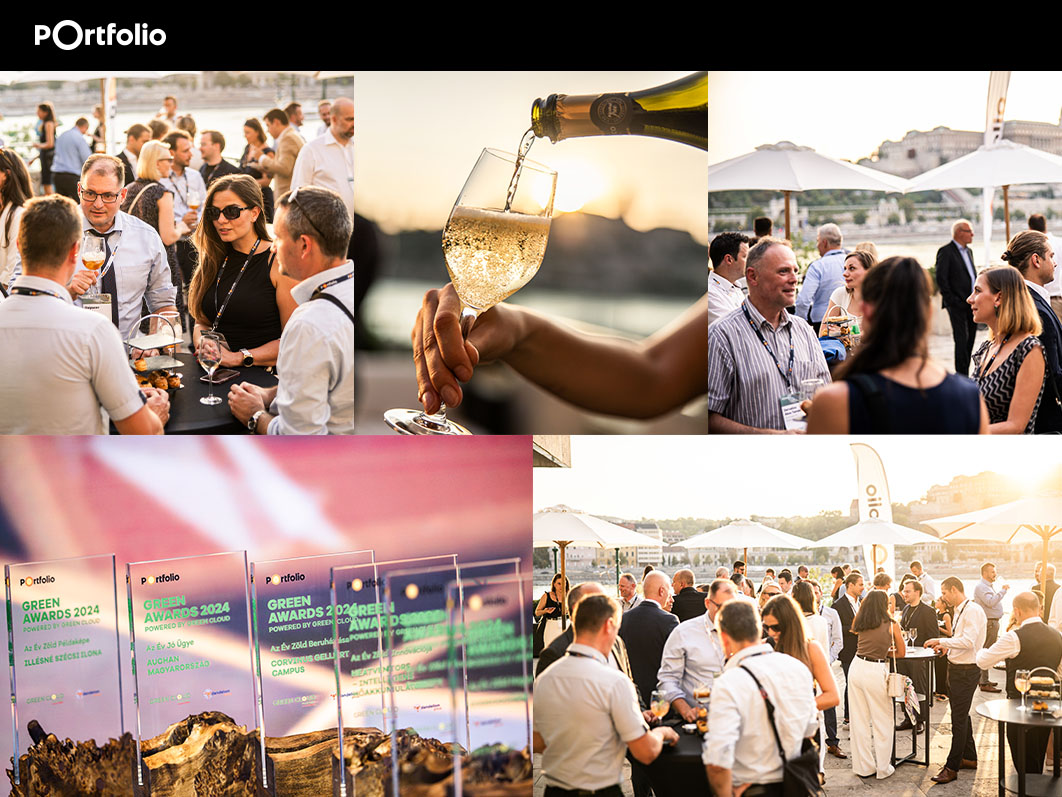
We are presenting the various categories of the Green Awards for the fourth time, with the joint support of Green Cloud and the Portfolio Group. The aim of this recognition is to honor the outstanding sustainability achievements, programs, or innovations of Hungarian companies in 2025.
We will conclude the full day of professional programs with a relaxed standing reception, where conversations will be accompanied by champagne, gin- and rum-based cocktails, and the excellent wines of Jammertal Wine Estate. The pleasant evening will be enhanced not only by fine drinks but also by a DJ.
Join us and raise a glass with us in the spirit of sustainability!
Contact


