Housing loans in Hungary: We haven't seen this since the hardest Covid times


The MNB has published the Hungarian banking sector's loan and deposit statistics for July. What is striking at first glance is that household lending was 25% down on July last year, and in the first seven months of the year it was only 5% up in annual terms.
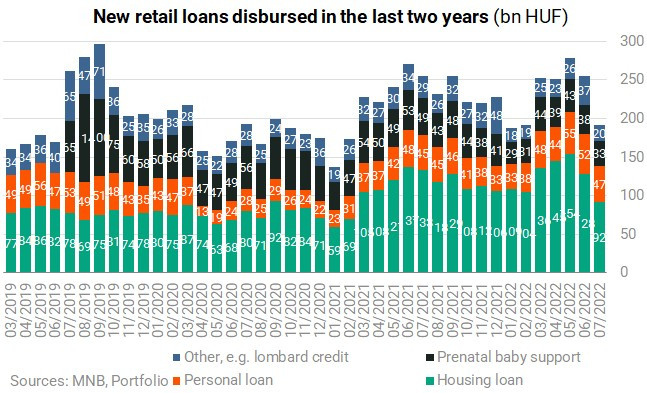
Housing loans showed the biggest drop in July (-31%), but families still took out a 19% larger amount of these than a year earlier. Personal loans also saw a slowdown, but new lending was still up, while 'baby loans' are in a slump.
| Change in new retail lending compared to the same period of the previous year | |||||
| Housing loan | Personal loan | Prenatal baby support | Other | Total | |
| Cumulated 2022 | 18,7% | 19,6% | -23,6% | -14,4% | 5,3% |
| July | -30,8% | 2,9% | -32,7% | -29,5% | -25,0% |
| Sources: MNB, Portfolio | |||||
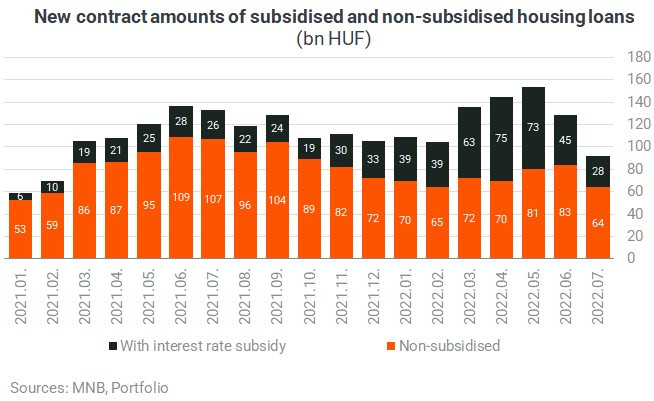
The decline in the extension of new housing loans may reflect the negative impact of the ramp-up of the Green Home Programme as it brought forward demand from the summer to the spring. At the same time, this was certainly partly due to the rise in interest rates, which not only increases repayments but also seriously erodes creditworthiness. The July figures show a 40% fall in market-rate mortgages and a 7% increase in subsidised mortgages.
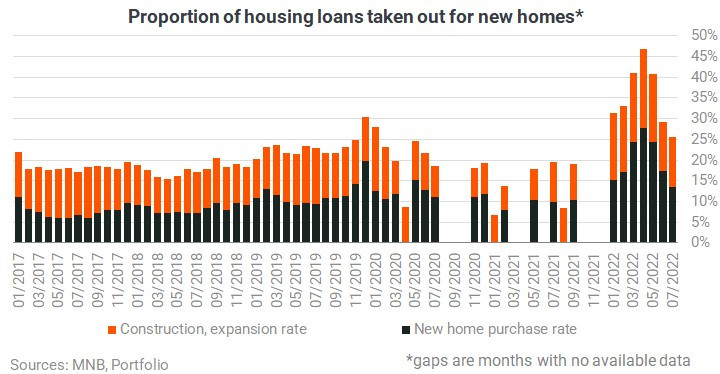
The phasing out of the Green Home Programme can also be seen in the distribution by purpose: the share of housing loans taken out for the construction/purchase of new residential property has almost returned to its previous level of around 20-25%.
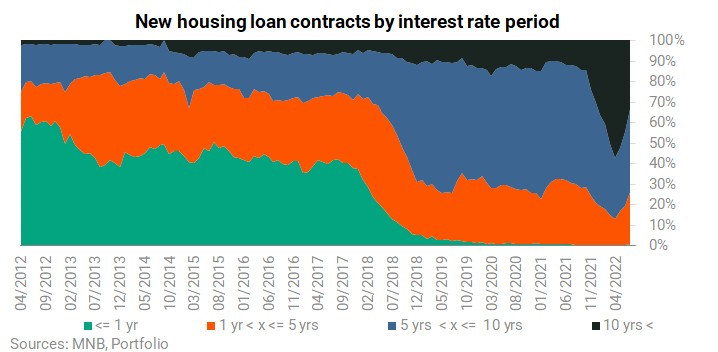
Compared to previous months, a similar trend can be seen in terms of the interest period: in July, 41% of new housing loans were for ten-year and 25% for five-year interest rate periods, while the share of housing loans with a 10yrs+ interest rate period (typically fixed throughout) in new contracts fell to 33%.
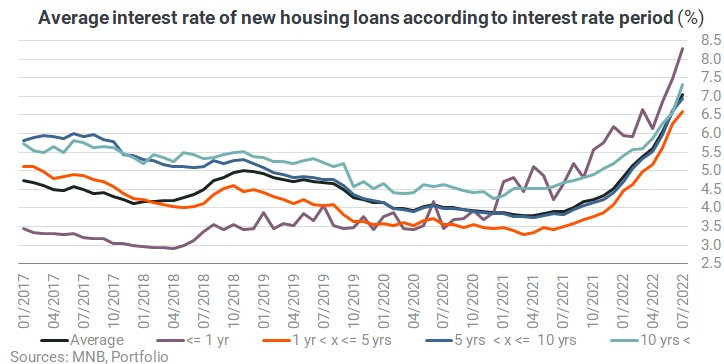
On average, Hungarians took out market-rate mortgages at 7.05% in July, up from 3.91% a year earlier. For a 20-year mortgage, this increase means a 29% higher monthly instalment.
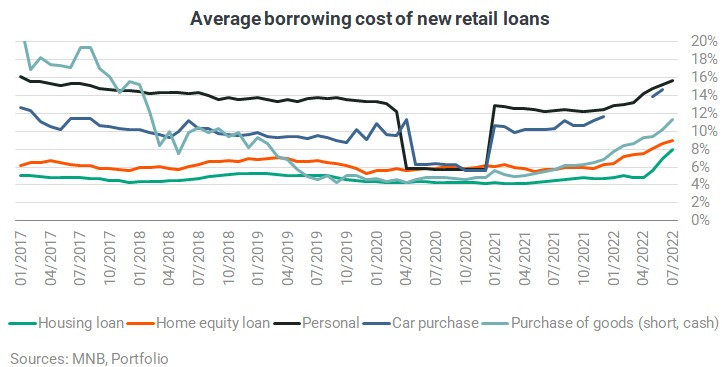
The average APR of new housing loans reached 8.0% and that of personal loans 15.6%, an increase of 3.5 and 3.3 percentage points respectively over a year.
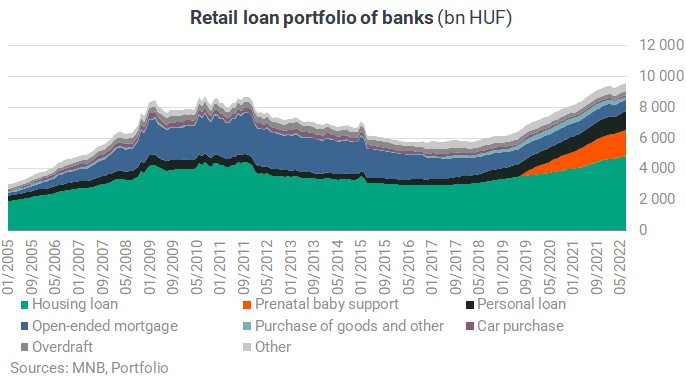
Total domestic household credit stood at HUF 9,587 billion at the end of July, up 8% year on year, which shows a slowing increase. Within this, the stock of housing loans increased by 12%, personal loans by 10% and baby loans by 24%.
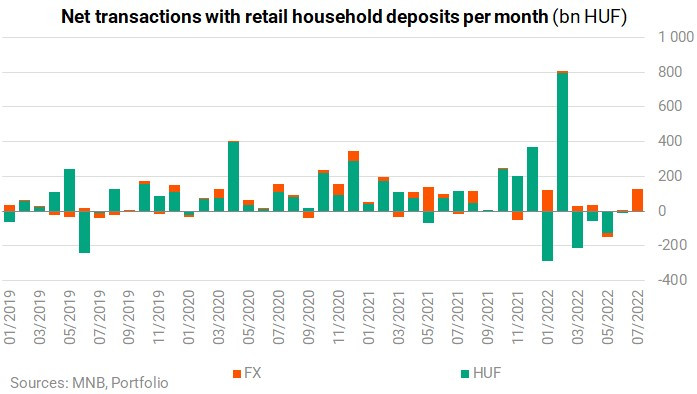
In deposits, the surge in foreign currency deposit transactions was interesting, as households were expecting the weakening of the forint in the first half of July to continue. During the month, HUF 3.4 billion of new savings flowed into forint deposits, and HUF 124.7 billion into foreign currency deposits, an amount not seen since May last year.
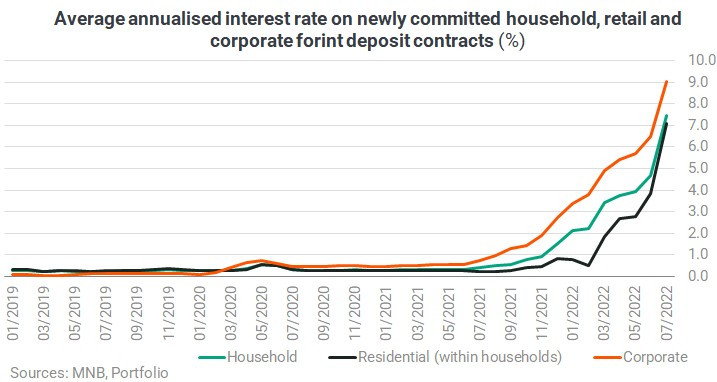
We have already addressed why deposit statistics are distorted for the general public. In fact, even the best deposit rate is below 2% at the majority of the large banks. By comparison, according to recent MNB data, households were able to deposit at a rate of 7.4% in July, and the general public (excluding non-profit organisations and independent businesses) at 7.1%. This is presumably due to treasury operations by private bank customers.
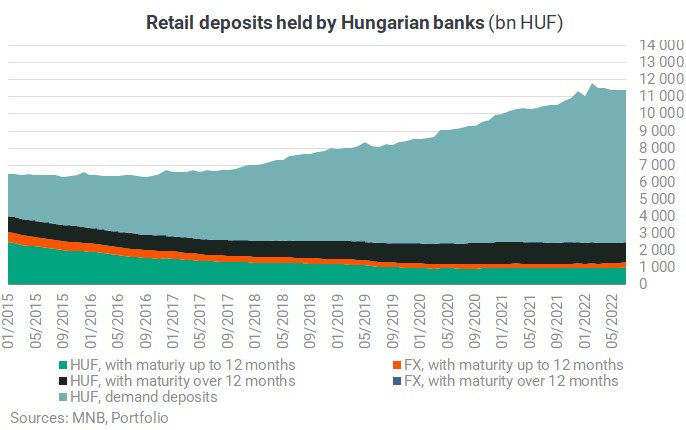
The stock of household deposits has been essentially stagnant since February, presumably due to the negative impact of inflation on savings. At the end of July, Hungarians held HUF 13,451 billion in bank accounts, which still represented a 13% year-on-year increase, but only 18% of the total stock was in fixed-term deposits.
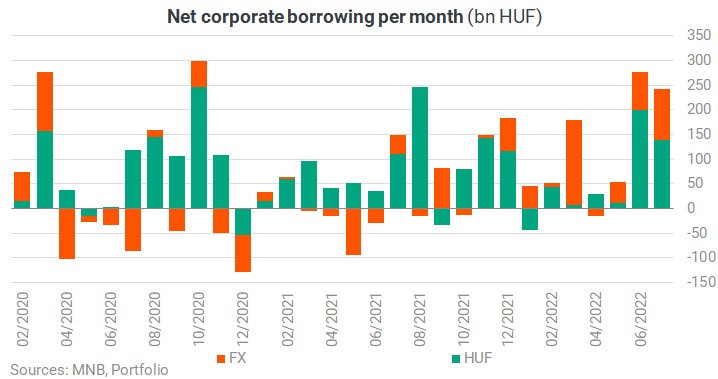
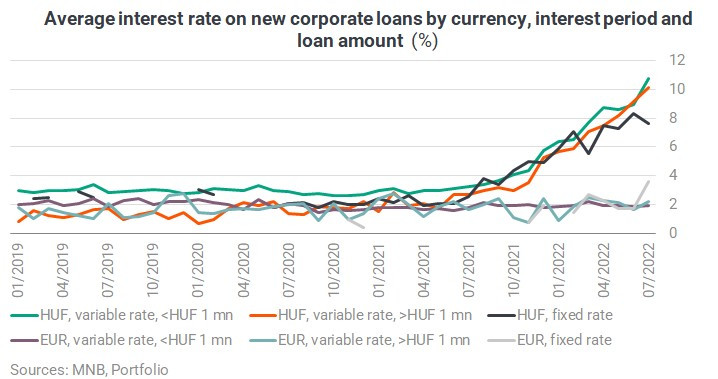
In the case of corporations, the data do not yet show a significant slowdown in lending: in the first half of the summer, companies were still able to take out very favourable loans (e.g. Széchenyi Card), and the rise in forint interest rates has also led to a shift to foreign currency loans.
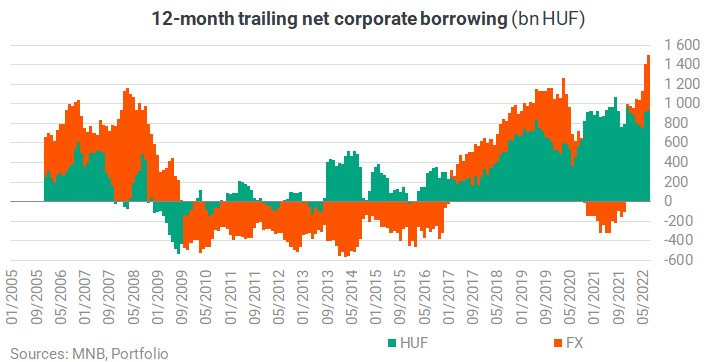
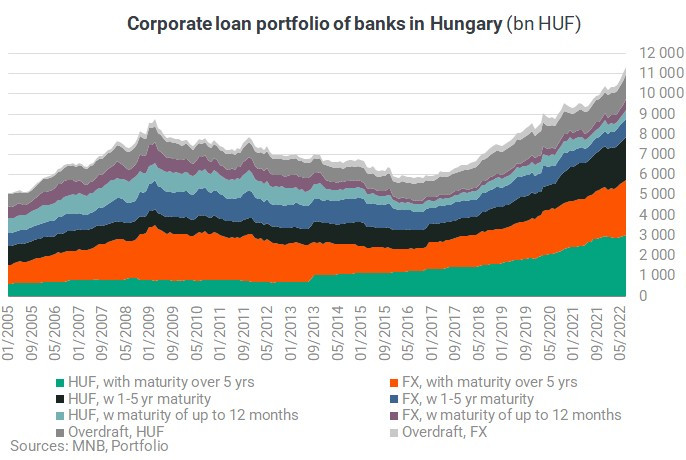
Over the past 12 months, corporates borrowed HUF 939 billion more in forint loans and HUF 559 billion more in foreign currency loans than they repaid.
However, market-based forint interest rates have also gone through the roof here: the interest rate on variable-rate corporate forint loans rose to over 10% in July, according to MNB data.
The stock of corporate loans increased significantly by 18% in a year. In absolute terms, long-term foreign currency loans contributed the most to this increase, while the stock of short-term foreign currency loans jumped the most relative to itself.
Cover photo: Getty Images