What Hungarians have in reserve, what they invest their money in, and where they would invest it if only they could


On commission of Portfolio, Datalyze conducted a representative online survey of 1,000 people to assess
- current savings habits and attitudes,
- knowledge of the world of savings and investments,
- expectations about the future currency and the way money is managed.
The findings were presented by Borbála Baittrok, Co-CEO of the research firm, at the Portfolio Future of Finance 2022 conference, on which we reported extensively.

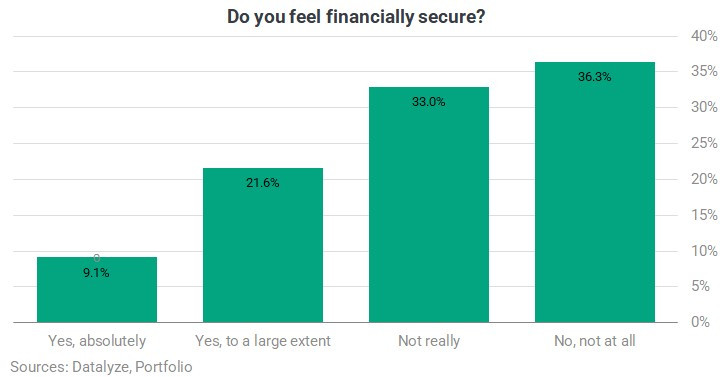
The survey results show that only 31% of the population feel more or less financially secure, while 69% feel not very or not at all secure. Among the most vulnerable groups, 41% of women, 42% of 40-64 year olds and 44% of those with only primary education chose the worst option.
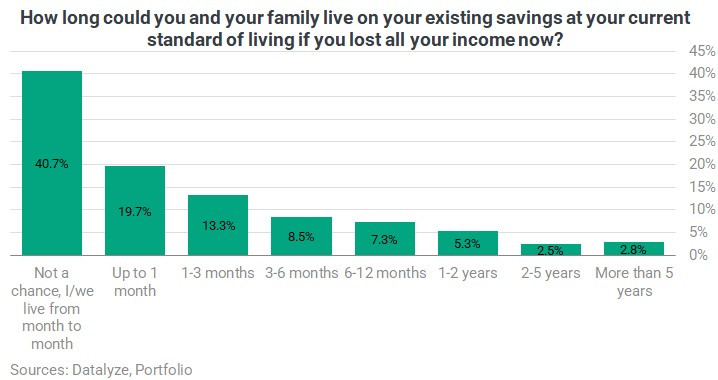
Only 18% of respondents have enough financial reserves for six months, while 61% would survive for up to a month without income. 56% of those with only primary education and 49% of women said they live from one month to the next.
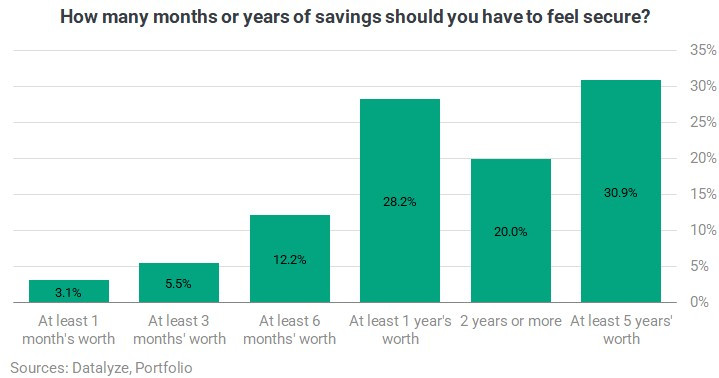
Half of all respondents feel that they need enough savings to live on for at least two years to feel financially secure. 43% of those with enough savings for more than six months would feel secure with at least five years of savings.
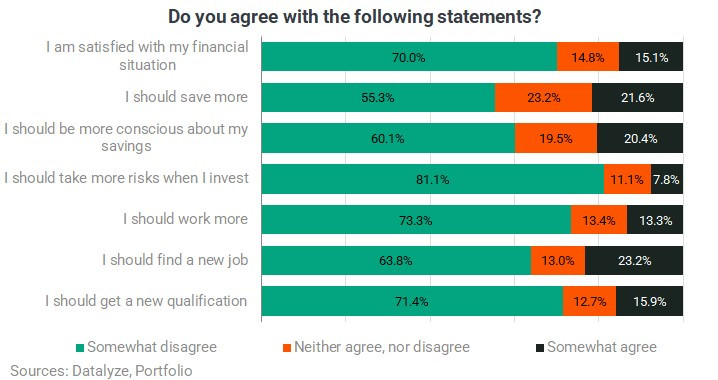
15% say they are more satisfied with their financial situation, 70% say they are not. 22% feel they should save more to improve their situation, 20% feel they should be more conscious about saving. 13% would work more, 23% would change jobs and 16% would get a new qualification to change this. Strikingly few people are confident about taking more risk: only 8% said they should take more risk when investing.
The most common non-regular types of savings are cash, fixed-term bank deposits and government bonds (due to their general cash-flow nature, current account money and cash in wallets were not asked about in the survey). 21% keep HUF at home and 9% foreign currency. While 6% own investment real estate, only 3.7% own a stock exchange and 3.3% own mutual fund shares. The proportion of stock exchange traders is highest among those with tertiary education, the entrepreneurial class, the self-employed, and interestingly but perhaps not coincidentally, the unemployed and those who feel financially secure.
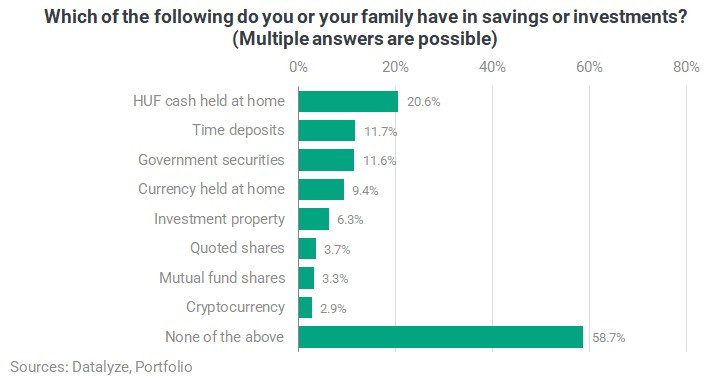
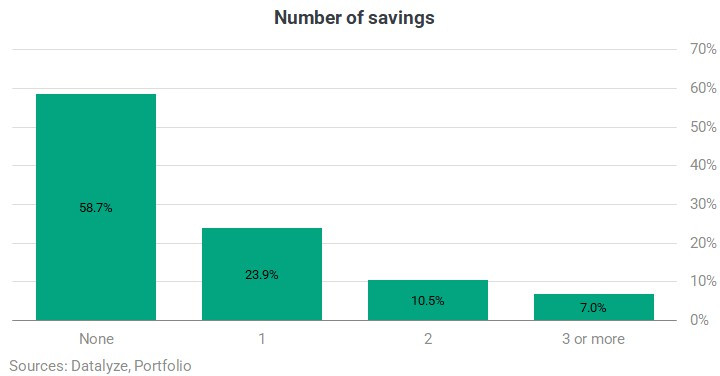
Only 17.5% of respondents indicated more than one form of savings that they have, while 59% have none of the above.
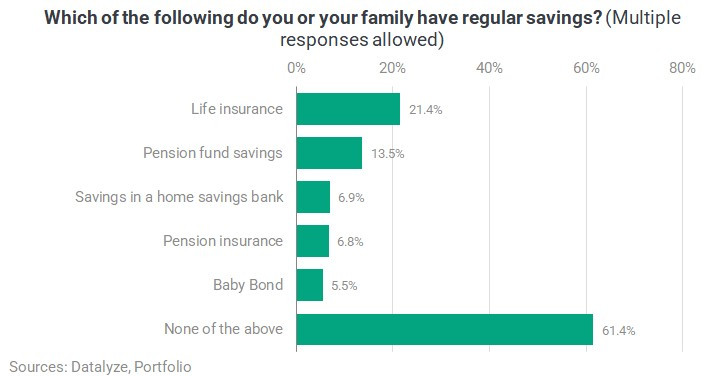
Of the regular savings, life insurance and pension fund savings are the most common, with more people having life insurance than cash at home. Home savings fund penetration has declined markedly with the end of state support in autumn 2018, and only a few people have a baby bond.
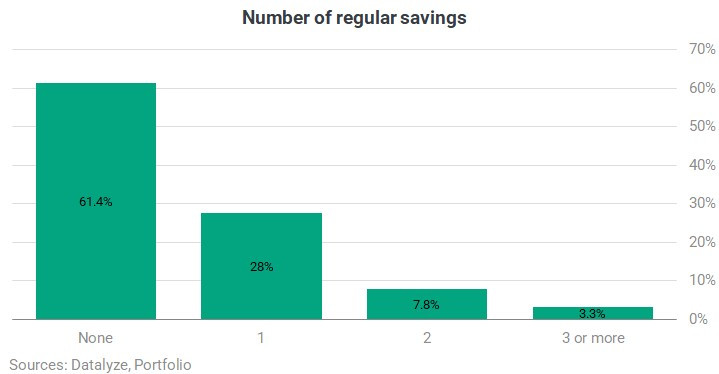
61% of respondents have no savings at all, while 3% have more than three types of regular savings.
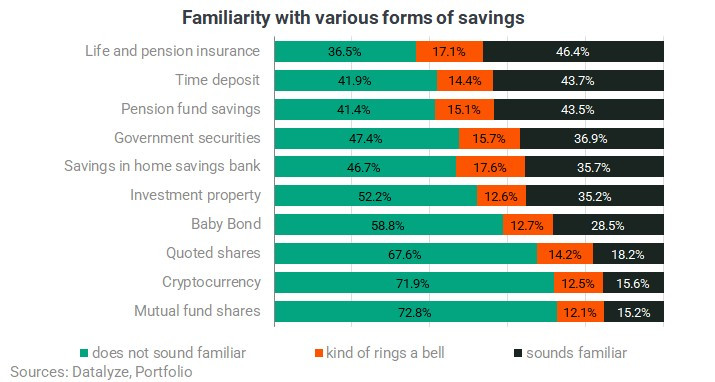
By their own admission, life and pensions insurance, fixed deposits and pension savings are the most familiar savings vehicles, but the proportion of people choosing the best, "more familiar" option is below 50% across the board. A surprisingly low 15% say they are "more familiar" with mutual fund shares, with even more people being more familiar with cryptocurrencies.
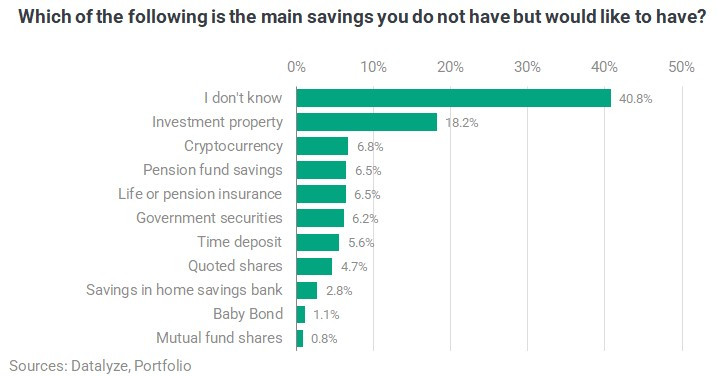
If they had to choose a new form of investment or savings, most people would choose investment real estate and cryptocurrency, with pension funds and life insurance for savings purposes coming in neck and neck. The laggard is the investment share fund in this field as well: there is hardly anyone in Hungary who does not have one but is actively looking for one.
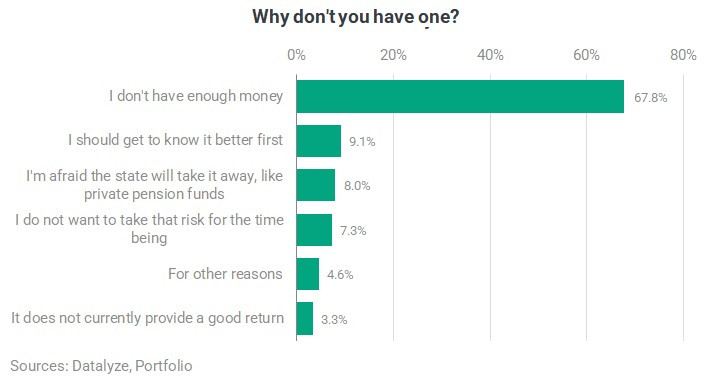
Unsurprisingly, two thirds of respondents do not have the savings they want because they do not have the money. Only 3% cited the low yields currently available as a reason, so it seems that even for fixed deposits this is not necessarily the primary deterrent.
In times of high inflation, a relative majority of respondents think that investment property and government bonds are the best protection, with the poor performance of the inflation-tracking baby bond in this area probably due to the product's lower profile.
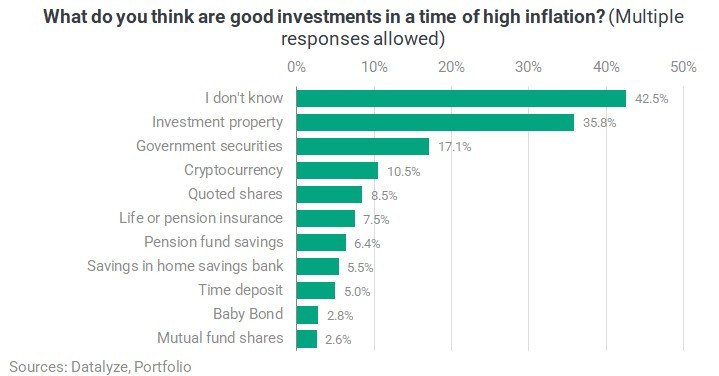
Cryptocurrencies as speculative instruments have done well in terms of the perception of inflation protection, and many believe that their importance will be enhanced in the future. Investment real estate also came second after the "don't know" option when asked what will be the most popular investment in 10-20 years' time. Stock market shares and pension savings also performed well in this area.
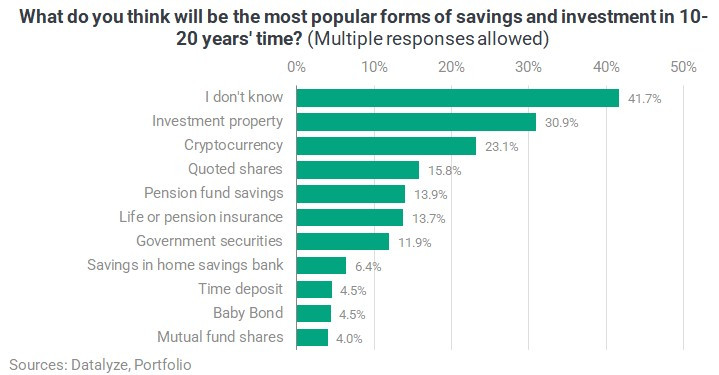
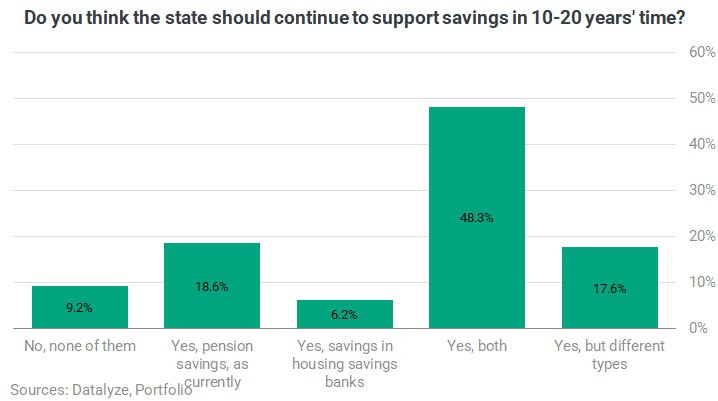
A high proportion of respondents (91%) think that the state should support some form of savings. 48% would give this support to housing savings in addition to pension savings and 6.2% in place of them.
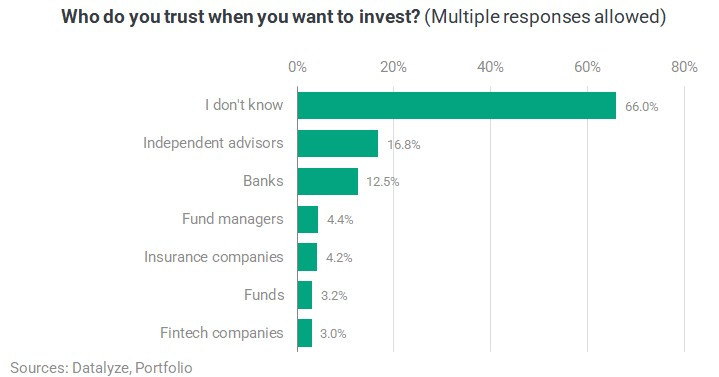
The question on who the public trusts to make investment decisions produced a disappointing result, with two thirds unable to answer this question. Independent advisors were cited by 17% and banks by 13%.
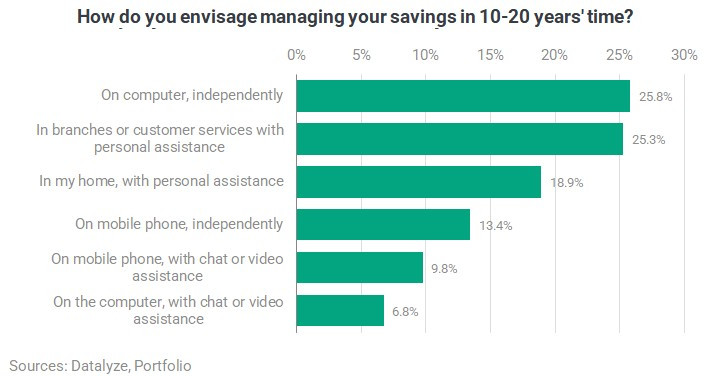
41% prefer branch or customer service and 19% prefer face-to-face help at home over online options, but most people use or would use the latter independently on a computer.
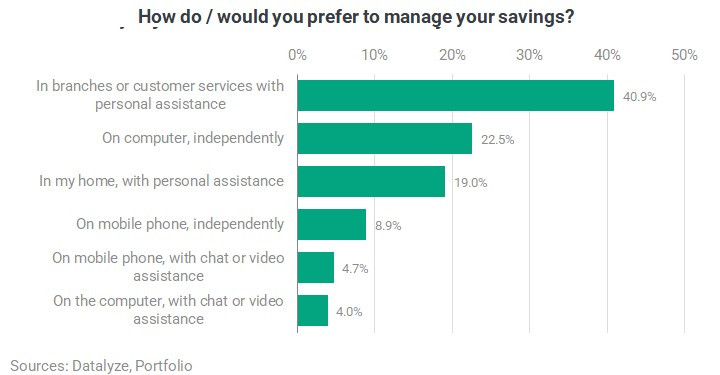
But the future vision is different from the recent practice: in 10-20 years, not 41%, but only 25% would manage their savings in person at a branch or customer service, while the proportion of those preferring to receive personal assistance at home may remain unchanged. Only 14% currently put using a mobile phone first when it comes to savings and investments, but in 20 years' time, 23% would consider it their primary means of access.
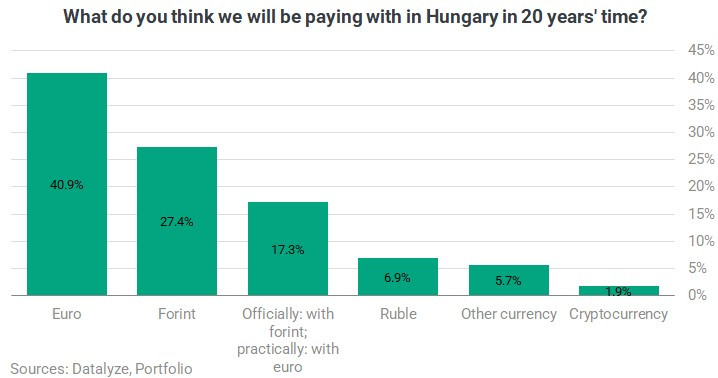
Finally, the survey also asked about the vision of the future of the currency: 58% of respondents believe that in 20 years' time people will be using the euro in Hungary, but only 41% because it will be the official currency, while 17% believe that it will only come about through spontaneous euroisation. 7% think the economy will run on roubles and 2% on cryptocurrency. The response showed a clear correlation with educational level: those with higher education are the most likely to expect the introduction of the euro.
Cover photo: Getty Images