Little progress towards climate neutrality - Hungary and the EU also increased their emissions after Covid


Hungary signed into law in 2020 to become climate neutral by 2050. However, achieving this cannot be done overnight, but will require continued commitment and action over several decades. We need to know what is happening in order to provide the right policy response. You find Hungary's First Climate Neutrality Progress Report here.
The second report published by Green Policy Center discusses, among other things, the international situation and Hungary's relative climate performance compared to other countries, summarises the development of the most important macro-indicator from a climate policy perspective, Hungarian greenhouse gas (GHG) emissions, based on the National Emissions Inventory Report, and compares historical GHG emissions data with a revised set of indicators. Based on these, the main findings of the report are:
- Hungary's international performance in tackling climate change was average, but there were areas where it was ahead of some benchmark countries. In the Green Future Index, Hungary ranked 29th out of 76 countries, down 5 places from last year, while Austria moved up and the Czech Republic finished lower.
- The trend of reducing Hungarian greenhouse gas emissions towards climate targets has not yet started in 2021, and emissions increased by 2% compared to 2020. This should come as no surprise, as the 2020 figures were low due to the effects of the Covid-19 lockdowns, while in 2021 the rebound started. However, if the distorting effect of the pandemic is removed, it can be seen that by 2021, no meaningful changes to reduce emissions have begun, or at least the results are not yet visible.
- The transport sector was the main contributor to Hungary's GHG emissions growth in 2021. Emissions from this sector increased by 10% in one year as of lockdown measures were lifted. The was increase also at buildings, mainly due to increased heating demand due to colder winters. GHG emissions from power generation, agriculture and waste management have decreased slightly. Industry and fluorinated gases (F-gases) show stagnation. Land use, land use change and forestry as a carbon sink sector absorbed significant GHGs in 2021.
- There is still a significant data gap on climate neutrality indicators, so progress on 4 of the 11 dimensions (buildings, finance, lifestyles and just transition) cannot be assessed. In Chapter 3 of the report, there were 56 data gaps out of a total of 89 indicators examined under 11 dimensions. However, two years (2020 and 2021) are now included here, so the percentage has not changed significantly from the first report, with around 31% of data missing this year.
- Of the remaining 7 dimensions, 2 (industry and technology) have moved in a positive direction overall, while 5 (energy, agriculture and land use, transport, carbon extraction and climate governance) have stagnated over the period. These results, as well as the sectoral trends, show that the climate neutrality transition has not yet started at the right pace, and there was rather stagnation or slight improvement, the latter typically due to technological shifts. There is also a perception that the 'soft' dimensions, which are not closely linked to technology but rather to individuals, are receiving less attention for the time being.
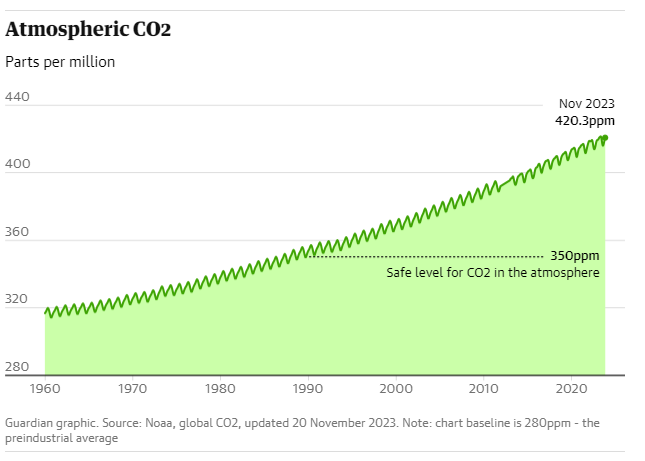
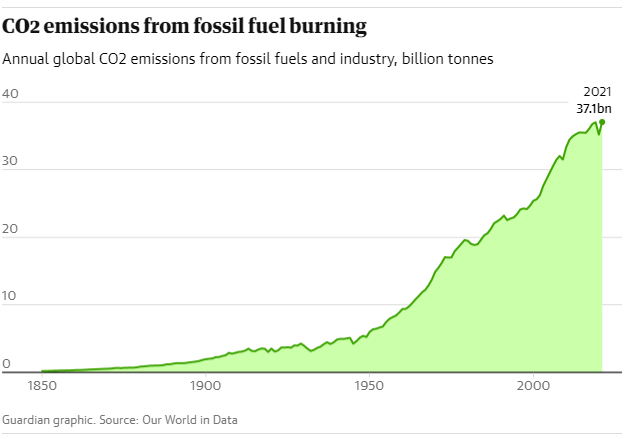
The Guardian has explained the climate crisis in just 10 charts in an article published on Thursday. It is definitely worth a look.
Cover photo: Shutterstock



