Hungary in Top5 in new car registrations in the EU


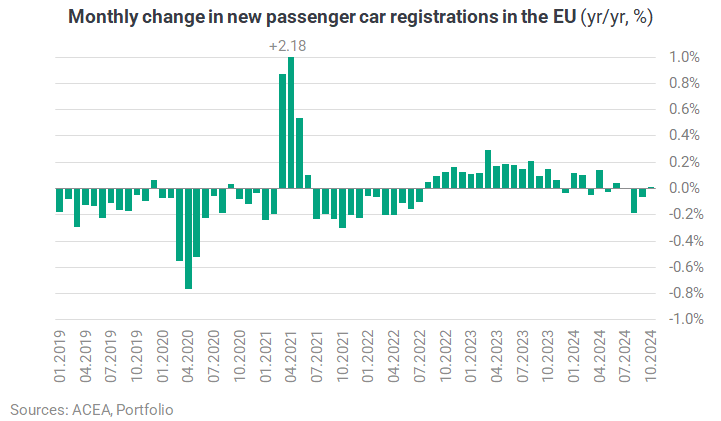
EU car market grows
In October 2024, new EU car registrations reversed their decline, recording a modest 1.1% increase, according to the latest data by the European Automobile Manufacturers' Association (ACEA). Spain led the way with a robust 7.2% growth, while Germany rebounded with a 6% increase following three months of decline. Decreases were recorded in both France (-11.1%) and Italy (-9.1%).
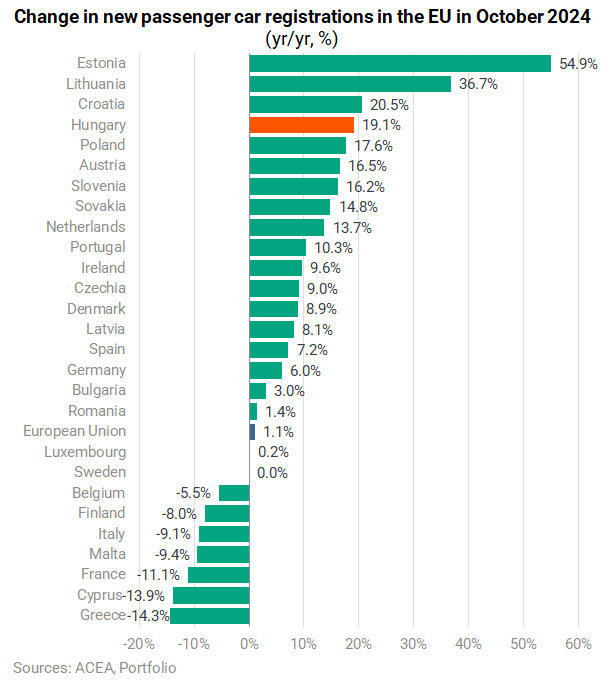
This brought new EU car registrations back up after two months of decline.
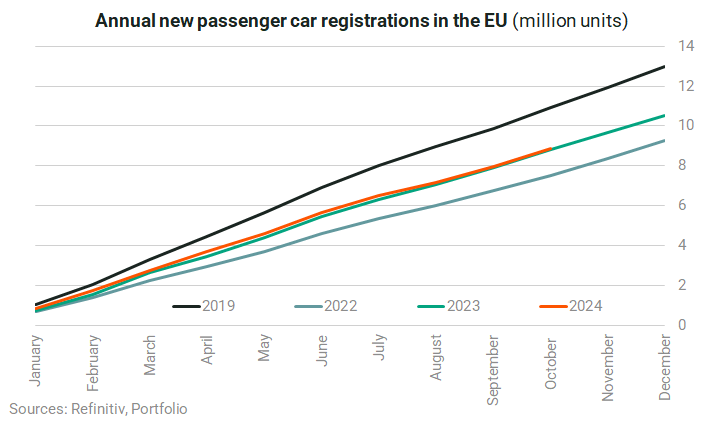
Ten months into 2024, new car registrations remained stable (+0.7%), reaching 8.9 million units. The markets in Spain (+4.9%) and Italy (+0.9%) performed positively, while declines were witnessed in France and Germany (-2.7% and -0.4%, respectively).
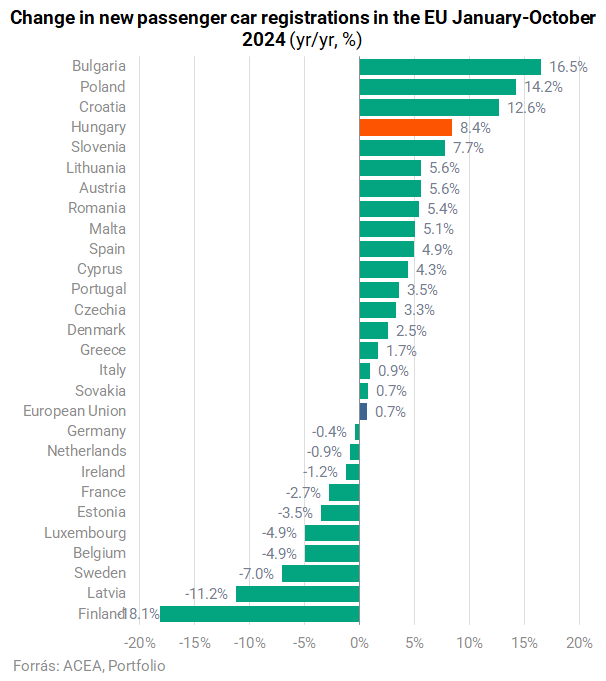
A total of 8.9 million new cars were registered in the EU in January-October.
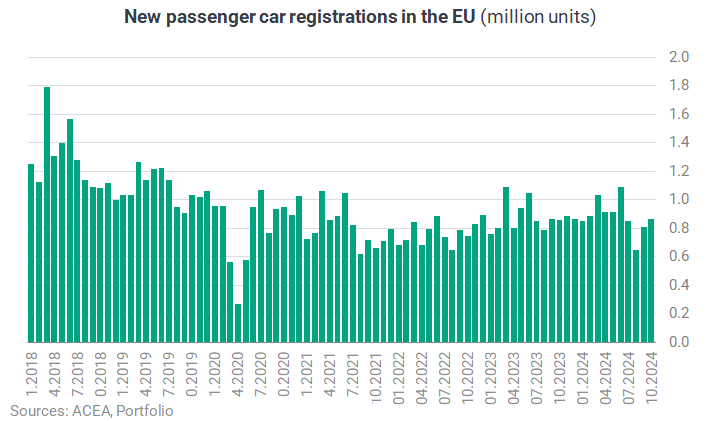
Although new EU car registrations are significantly higher compared to 2022 levels, the market is still characterised by much lower volumes compared to pre-pandemic 2019 levels.
Battery-electric vehicles
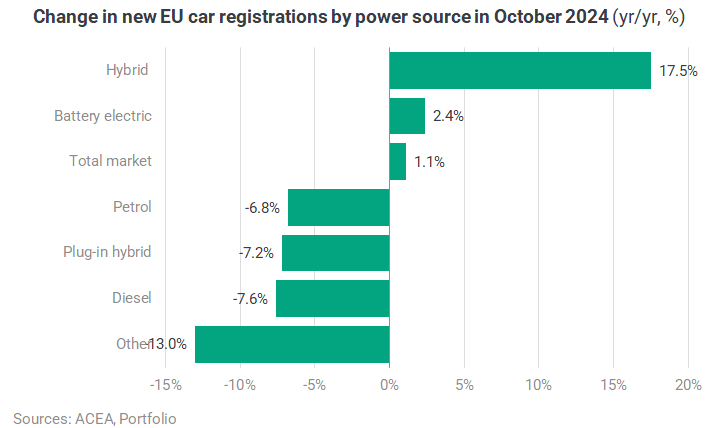
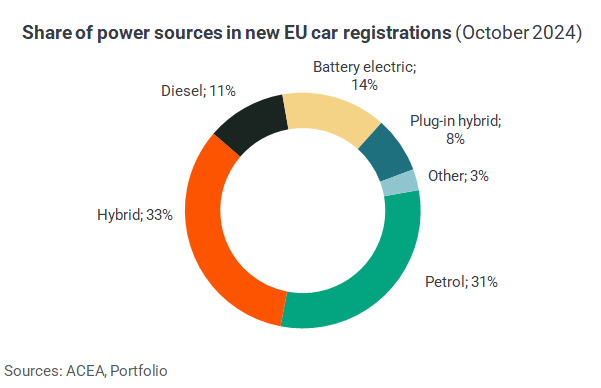
The battery-electric car market share for October 2024 remained stable at 14.4%, with new registrations up 2.4% year on year.
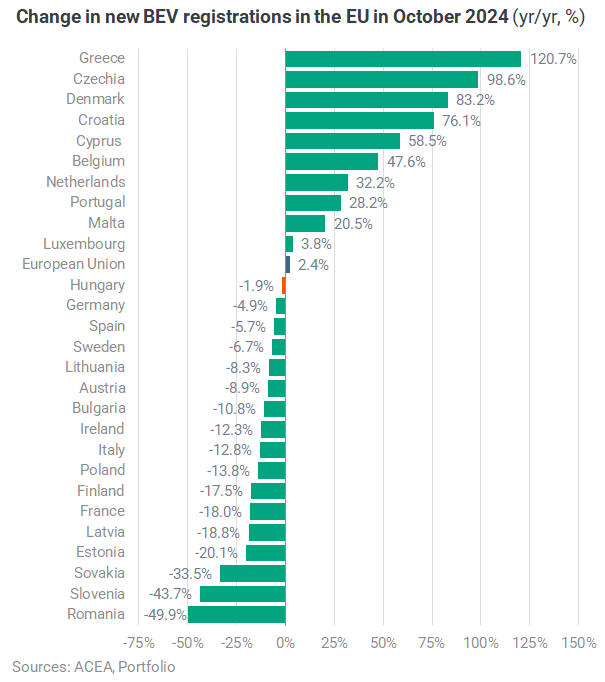
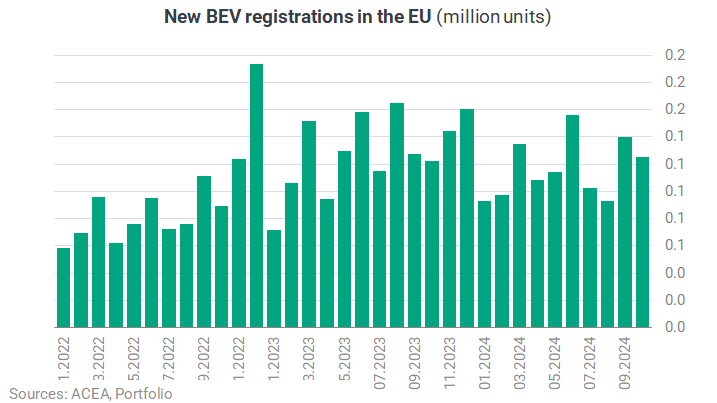
A total of 124,900 BEVs were newly registered last month,
with registrations reaching 1.2 million by end-october.
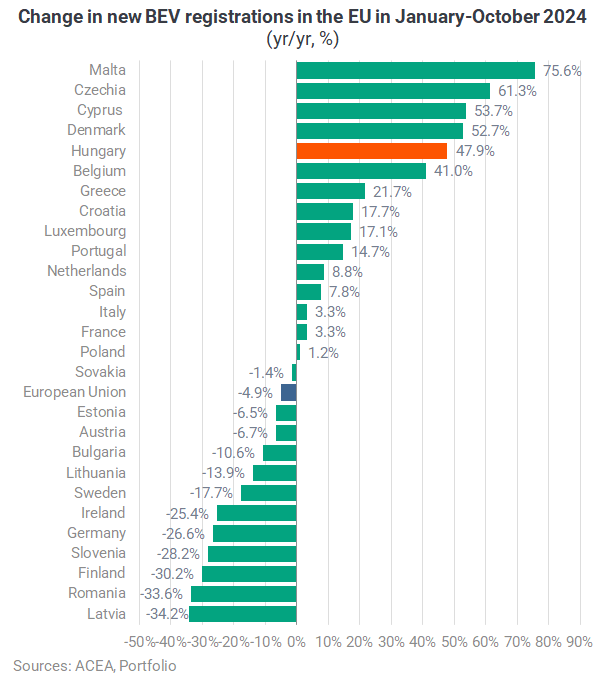
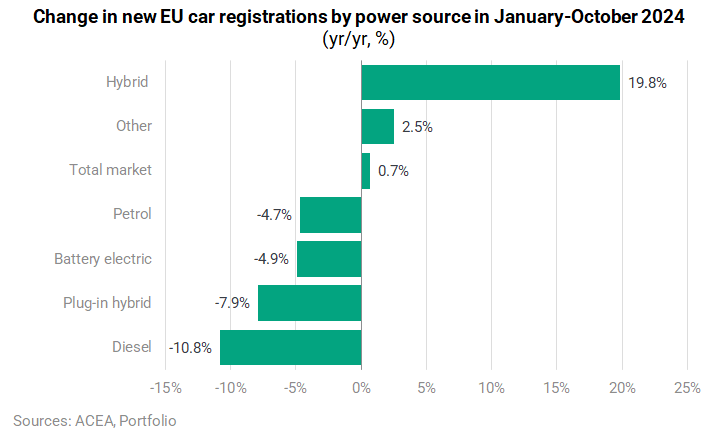
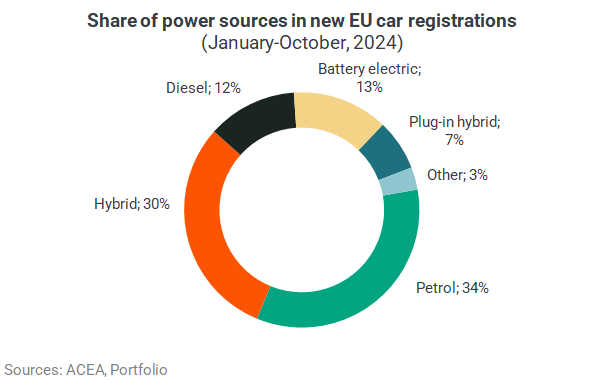
The year-to-date volumes dropped by 4.9%, while market share also fell to 13.2% from 14% last year.
The decline is mainly due to a significant drop in registrations in Germany (-26.6%), which is linked to the phasing out of state aid for the purchase of EVs.
Hungary has seen the fifth highest annual growth in new bev registrations in the EU in the first ten months.
Other power sources
- Plug-in hybrid car (PHEV) registrations fell by 7.2% last month, following significant declines in France (-26.9%) and Italy (-24.9%). In October, plug-in hybrids accounted for 7.7% of the car market, down from 8.4% last year. Year-to-date volumes were also down, decreasing by 7.9% compared to the same period last year.
- Hybrid-electric (HEV) registrations increased by 17.5% in October, with market share rising to 33.3%, up from 28.6% last October, exceeding for the second consecutive month petrol car registrations. This is the second consecutive month that the market share of HEVs has exceeded that of petrol cars.
- In October 2024, petrol car registrations dropped by 6.8% overall. France experienced the steepest drop, with registrations plummeting by 32.7%, followed by Italy with a 10.1% decline. Spain recorded a more modest decrease of 1.6%, while Germany was the only major market to show growth, with petrol car registrations increasing by 3.7%. Petrol cars now account for 30.8% of the market, down from 33.4% in the same month last year.
- The diesel car market declined by 7.6%, resulting in a 10.9% market share last October. Overall, decreases were observed in almost two-thirds of EU markets.
This is how new registrations of cars changed in October compared to the same month of 2023 (by power source):
The pie chart below shows the share of each power source in total registratiosn for October, with HEVs remaining in the lead.
New EU car registrations in the first ten months changed like this in annual terms:
January-October data show that petrol cars still had the highest share in total new registrations.
Hungary
new passenger car registrations in October were up 19.1% year on year in hungary.
This seems to indicate that sales, which went into a downturn in the spring, have started to recover again in the autumn.

It is noteworthy that after a steep rise in recent months, registrations of battery-electric cars were 1.9% lower than in the comparable period.
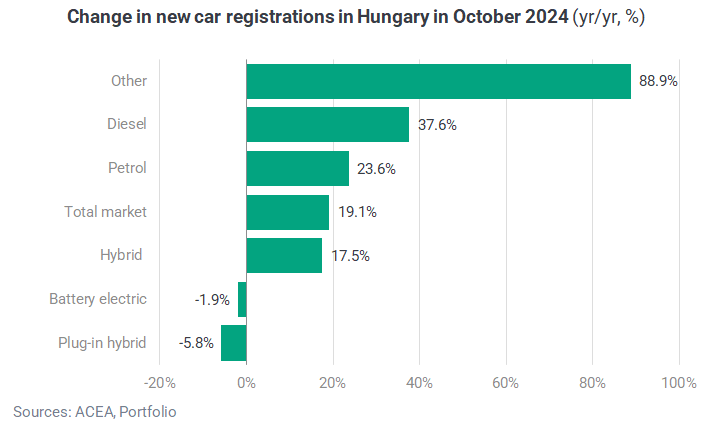
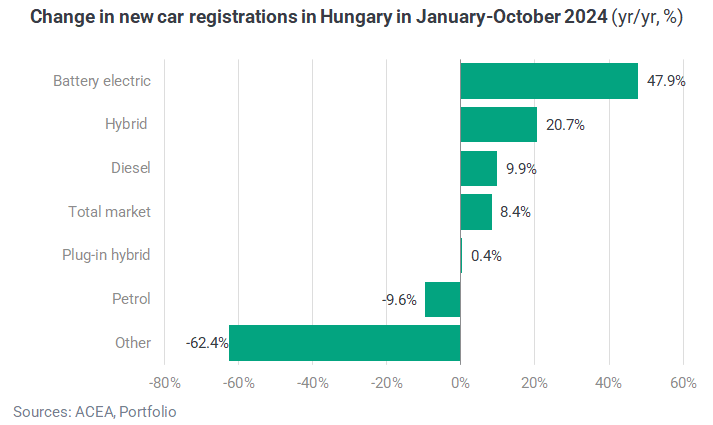
The Hungarian car market has grown 8.4% year-to-date, above the EU average and
the fourth highest increase in the bloc so far this year.
Although pure electric cars are showing a surge in registrations, it is worth noting that they account for only 7.2% of this year's total sales of 99,000 units.
Manufacturers
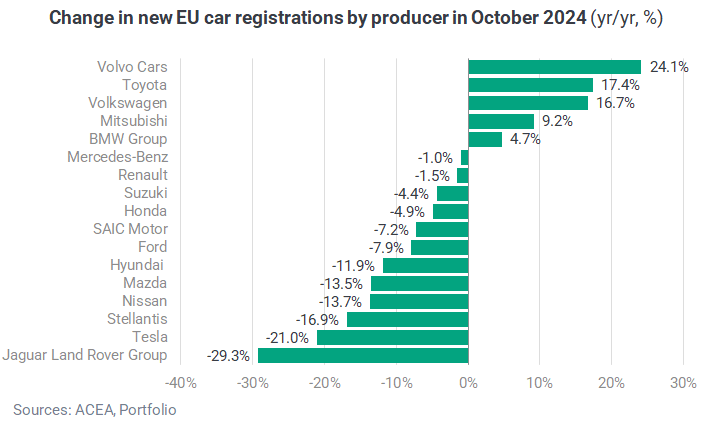
New registrations fell for most manufacturers in October, but Volkswagen, the biggest player, pulled up the numbers and managed to increase its market share significantly, to 28.7% from 24.9% last October.
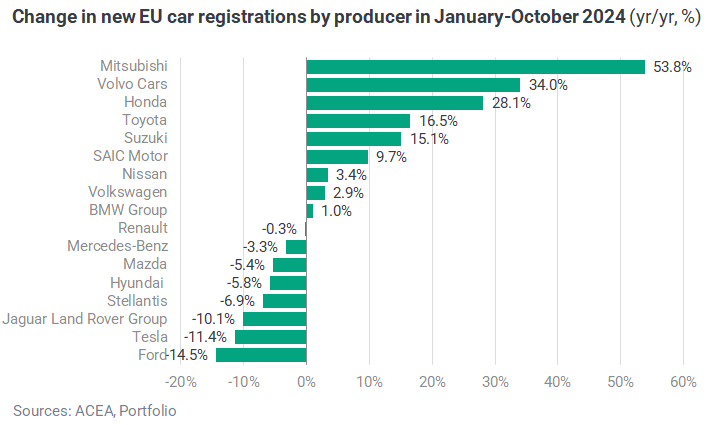
The ten-month figures look less favourable, especially for European manufacturers. Almost without exception, only Asian manufacturers managed to achieve meaningful growth, while registrations of European and US brands either remained at roughly the same level as last year or fell.
Cover photo (for illustration purposes only): Getty Images