Next target for Márton Nagy in the fight against inflation: the insurance sector


Battle against inflation continues
“We will continue to fight against price increases, to this end I met today with representatives of insurance companies such as Generali, Allianz Hungária, Groupama, Alfa Vienna Insurance Group, NN, SIGNAL, CIG Pannónia, BNP Paribas and Magyar Posta Biztosító” - said Márton Nagy on his Facebook page.
The Minister added:
After food retailers, banks and telecoms companies, insurance companies are next in line. The aim remains the same: to protect the Hungarian population from price increases!
What is the background?
Premiums have indeed risen significantly in recent years, which is the natural result of contractual indexations following the previous year's inflation (with a lag depending on the policy anniversary).
In home insurance, for example, despite the campaign which also had a downward effect on prices, the National Bank of Hungary (MNB) recorded average premiums 17.1% higher at the end of 2024 than at the end of 2023, while the level of claims expenditure did not change significantly. In compulsory motor insurance, average annual premiums rose by 8%, more than double the 3% annual increase in claims expenditure.
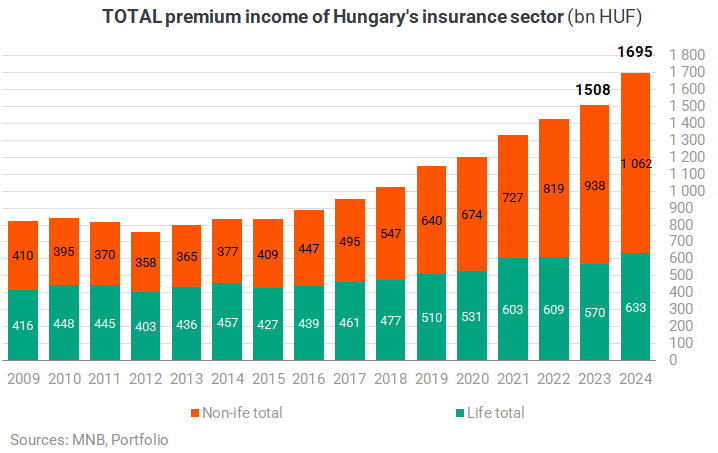
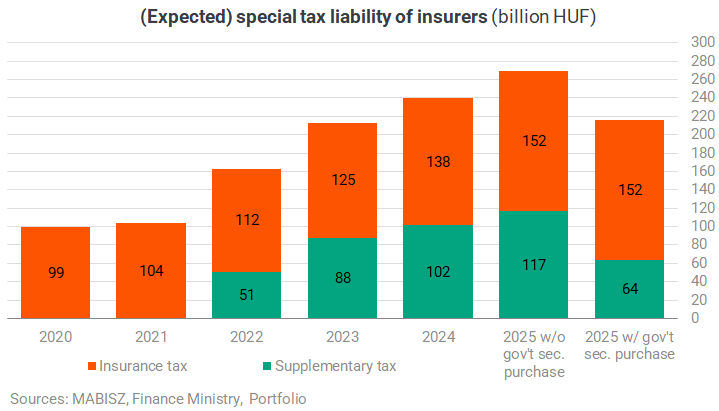
At the same time, as general inflation subsides, insurance is expected to become much less expensive than in recent quarters, so there does not seem to be much justification for capping premiums. Particularly in light of the fact that the insurance sector is one of the most overtaxed sectors in the national economy, as our chart below shows. This is how it could happen that out of every 100 forints of premiums paid, 14 forints of extra tax and 3 forints of insurance profit were generated last year.

This year, insurers have been given the opportunity to offset their extra profit tax (also known as surtax) at sector level by increasing their holdings of government securities by around HUF 200 billion, so that their total special tax burden could fall from HUF 240 billion last year to less than HUF 220 billion (only by this much, because in the meantime the “traditional insurance tax” and the extra profit tax base will also increase together with premium income).
So the stakes in the current negotiations seem to be
what proportion of this €20 billion reduction in the special tax burden will be passed on to customers by insurers in the form of premium reductions or a reduction in premium increases.
Either way, this is likely to negatively affect insurance intermediaries, who typically earn their commission income on a pro-rata basis.
Last week, insurers already received some bad news: the government will keep the extra profit tax at the same level next year, which is expected to mean a nominal increase in the burden on the sector, as the tax base, premium income, is increasing.
How did it go at the banks?
With regard to the banks, what happened a few weeks ago was that the entire sector bowed down to the government's will, and on the one hand they voluntarily, one by one, complied with the demand of Minister of National Economy Márton Nagy, that they should withdraw from the bank account fee increases they have implemented since December (in our view, in a perfectly legal manner), and on the other hand they undertook not to pass on the increase in their internal operating costs and the inflationary impact to the population until mid-2026.
It is possible that similar action will be taken by insurance companies.
Cover photo: Minister of National Economy Márton Nagy's Facebook profile