Another Chinese carmaker is eyeing Hungary as location for its first European factory

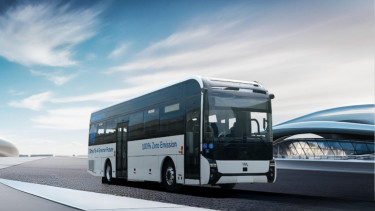
Could Hungary be chosen by yet another Chinese car manufacturer?
Last week, Hong Kong played host to the tenth annual Belt and Road Summit, which is organised by China's Belt and Road Initiative, launched in 2013. During the event, journalists were able to interview Cliff Zhang, the CEO and founder of the Hong Kong-based investment firm Templewater.
The expert first mentioned that they currently have no direct investments in Europe, although they do have partnerships in several European countries. Their investments are focused on Asia, and there are currently no plans to change this. However, the fund's investors include American and Western European institutions that recognise the potential of Asian markets.
There would be nothing particularly newsworthy about Zhang's statement so far, but he declared the following in the middle of the conversation:
Last year, I was part of a Chinese delegation in Budapest, alongside Ling Ji — China's Vice Minister of Commerce — as our company, Wisdom Motor, is currently planning to build a manufacturing plant in either Hungary or Romania.
My Romanian colleague and I immediately perked up when we heard this, but Zhang did not reveal any further details at first. He added that Wisdom Motor is considering serious international expansion, starting with the opening of a plant in one of the Gulf countries, followed by another in Central and Eastern Europe. In terms of timing, he said that the former plant will almost certainly be built and that an official announcement is expected soon, and
expansion into Europe also seems very likely.
After the conversation, we contacted Wisdom Motors through their official channels with further questions about the investment. We also sent Cliff Zhang additional questions in writing. Although the car manufacturer did not respond officially, Zhang revealed further details to Portfolio.
The businessman emphasised that, in recent years, Wisdom has delivered electric and hydrogen-powered vehicles to more than 25 countries around the world, including the United Kingdom, Germany, Austria, Switzerland, Denmark and Sweden in the European market.
When considering potential European expansion, Hungary is a strong contender for investment,
emphasised the head of Templewater. He added that the country's EU membership provides access to the European common market and that its central location creates excellent connections to both Eastern and Western Europe.
He also mentioned the following advantages: Hungary's long history of attracting foreign investment; its long-standing good economic relations with China; and its membership of the Belt and Road Initiative. The skilled workforce and economic policy environment also work in our favour.
We are currently conducting market analysis and feasibility studies to ensure we take the right steps in the European market. However, we expect expansion to begin within 12–18 months,
Zhang outlined the possible timeline.
The size of the planned factory will depend on its final location, but Wisdom currently estimates that
it can be built with an investment of approximately $30–50 million (£23–39 million), which could provide 500 jobs and enable the production of more than 10,000 buses and trucks per year for the European market.
About Wisdom Motor
In the absence of further information, we have tried to form a picture using publicly available data. Wisdom Motor currently manufactures electric and hydrogen-powered buses, trucks and vans in China. They have also completed a prototype of a self-driving tractor. According to their website, their current product range is as follows:
| Wisdom Motor's product range | ||||
| Product | Range (km) | Battery capacity | Length (metre) | Passenger capacity |
| DD12 double deceker electric bus | 420 | 450 kWh | 12 | 110 |
| DD12 double decker hydrogen bus | 420 | 80 kW-os hidrogén cella | 12 | 91 |
| V10 single decker pure electric bus | 300 | 210 kWh | 10 | 66 |
| V11 single decker pure electric bus | 350 | 385 kWh | 11 | 85 |
| V12 single decker pure electric bus | 330 | 385 kWh | 12 | 98 |
| V12 single decker hydrogen bus | 420 | 100 kW-os hidrogén cella | 12 | 91 |
| V7 pure electric mini bus | 330 | 114 kWh | 7 | 28 |
| V7 hydrogen mini bus | 400 | n.a. | 7 | 28 |
| C12 hydrogen touring coach | 300 | 100 kWh | 12 | 62 |
| C8 pure electric coach | 230 | 210 kWh | 9 | 35 |
| Hydrogen truck | 1000 | 12*145 liter | 8 | 38.3 tonnes |
| Pure electric logistic van | 230 | 143 kWh | 6 | 18 tonnes |
| L4 autonomous tractor | 46 | 149 kWh | 6 | 75 tonnes |
| Sources: Wisdom Motor, Portfolio | ||||
Clearly, Wisdom primarily manufactures electric and hydrogen-powered buses, and they have introduced the first double-decker versions of both types in Hong Kong. Classic double-deckers similar to those in London are used for public transport in the Chinese city-state, and the Chinese company has produced environmentally friendly versions of these.
If the company were to start manufacturing buses in Hungary,
it would not be the first, as BYD, a Chinese electric bus manufacturer, already has a factory in Komárom.
According to publicly available reports, BYD Electric Bus & Truck Hungary Ltd. enjoyed a successful year in 2024, with its revenue almost doubling to €137 million from €71 million. However, the company ended the year with a loss of €19.5 million, primarily due to soaring material costs.
Currently, there is no information available on the number of units that Wisdom Motor has manufactured or sold to date. The company's shares are traded on the Hong Kong Stock Exchange under the name Beijing SinoHytech. According to its 2024 report, released in April,
- Wisdom's operating income was 366.7 million yuan in 2024, down from 800.7 million yuan the previous year. This decline was largely responsible for the increase in losses.
- Wisdom's losses increased to 456.4 million yuan (around $64.1 million), almost doubling compared to 2023. This is due to the fact that battery production is still in its early stages and their market share is limited. In addition, the selling price of batteries fell more sharply than costs decreased due to competition. Furthermore, credit risk costs reduced profits further. The company's management is doing everything in its power to address these negative factors.
- Operating results have been negative for a long time, largely due to capital investments, which pose a risk in themselves. The report highlights that an inability to attract further financing, coupled with negative operating results, could lead to a negative capital position.
- The share price has changed little over the past year, currently standing at HK$23.5. However, in recent months, it has fluctuated between HK$18 and HK$35.
According to the company profile on Templewater's website, Wisdom has sold and delivered eight types of product and more than 230 vehicles to 13 regions in the three years since its inception in 2019. On the one hand, this may mean that not all 13 types have reached the manufacturing or sales phase yet. On the other hand, selling 230 units is rather 'modest', which could explain the weak cash flow figures. In other words, this is an emerging technology with the potential to be hugely successful in the coming years. Wisdom is leading the way, but its products are currently in the design and market entry phase.
What does Cliff Zhang have to do with any of this?
Cliff Zhang, quoted at the beginning of the article, says he grew up in Canada and then pursued a career as an investment banker, first in North America and then in Hong Kong. He subsequently teamed up with Investec to found the Templewater capital partnership.
According to a South China Morning Post article, the company had assets under management worth US$1.5 billion in May last year, which made it a minor player in the market. By contrast, Investec is a major global player with over US$60 billion in assets under management.
Cliff Zhang is currently Chairman & CEO, and founding partner at Templewater, which, together with Ballard Power Systems, acquired a majority stake in Wisdom Motor. Their current goals are to continue product development, expand internationally, and capitalise on the expected growth in demand for electric and hydrogen-powered vehicles.
In other words, even though he does not officially hold a position in the company, Zhang currently acts as the majority owner of Wisdom Motor. He also mentioned this during the conversation. While his plans for a possible investment in Hungary are certainly worth paying attention to, Wisdom Motor currently appears to be a promising but risky company in its early stages rather than representing a huge breakthrough.
If their potential investment in Hungary is realised, it will probably be much smaller than the factories of BYD or CATL, but it is significant that an increasing number of Chinese automotive companies are considering the Hungarian market as a potential investment opportunity.
Cover photo: Wisdom Motor