Compulsory car liability insurance campaign started in Hungary, drivers can now save a lot of money


The average premium for new compulsory insurance policies taken out in November tends to be lower than in other months of the year. This is partly because a higher proportion of people switching their compulsory motor vehicle liability insurance (KGFB) at this time of year have older, lower-value cars, and many drivers are in the higher categories of the bonus-malus discount system.
This year's campaign is set to be a special one, given that compulsory insurance premiums have fallen in recent months.
"Between January and October 2025, the average premium for passenger cars was HUF 54,600, representing an annual decrease of almost 4%. Based on expectations, average premiums will be slightly below HUF 33,000," said Márton Besnyő, regional managing director of the Netrisk Group for Austria and Hungary.

Last year's data also provides a useful basis for this year's campaign. According to official central bank data, the average premium for compulsory insurance was close to HUF 58,000 in the third quarter of 2024, while motorists who switched to compulsory insurance with the brokerage company last November signed new contracts with an average premium of HUF 33,500.
The difference in premiums between the two extremities of the bonus-malus system (B10 and M4) can be as much as sixfold,
which highlights the importance of an accident-free driving history. It is worth checking the offers from insurance companies, as drivers who switched their compulsory insurance during last year's campaign saved an average of HUF 18,000.
The Hungarian passenger car fleet is getting older, with the average age having gradually increased since the mid-2000s. The average age of passenger cars edged up to 16.3 years in Hungary by the end of June 2025. The average age of the fleet has been steadily rising since 2007 when it was just 10.3 years.
- The share of cars aged 2 years or less has risen in 2024 - but only to 6.1% from 5.7% in 2023.
- Only 7.7% of the entire fleet was aged 2 to 5 years, down from 8.8%.
- The share of those in the 5-10-year category went up to 14.3% from 13.5%.
- The share of cars aged between 10 and 20 years dropped to under 45% from over 48%.
- More than 27% of the passenger car fleet were older than 20 years, up from 23.6% in 2023.
It's quite dramatic to realise that more than 70% of the country's passenger car fleet hav been on the roads for over a decade.


We wrote about the age of the Hungarian passenger car fleet, including a regional comparison, in more detail here:
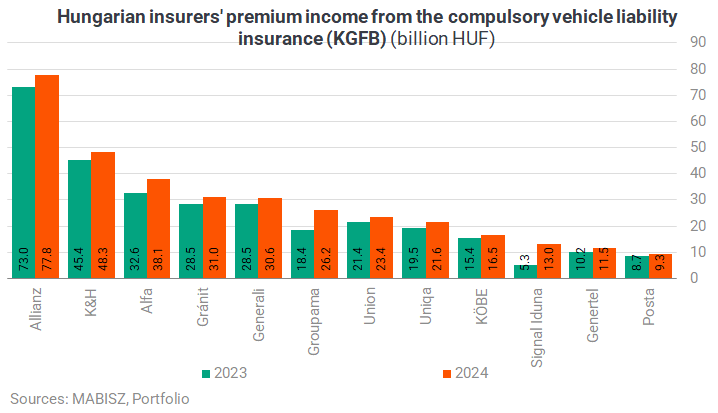
At the same time, the number of cars has also increased, reaching almost 4.3 million by the end of last year, compared to 3.8 million five years earlier. Last year, gross premium income in the compulsory liability insurance market exceeded HUF 346 billion, compared to HUF 230 billion in 2019.
Cover photo: Shutterstock