Hungary central bank ups benchmark rate again


This means Hungary’s benchmark rate has increased by 110bp in slightly more than a week. Last Tuesday, the central bank raised the base rate by 30bp and decided to separate it from the one-week deposit rate. This made the latter the benchmark rate, which was then raised by 40bp last Thursday. Today’s tender announcement contains another 40bp hike as the MNB is accepting deposits at a 2.9% interest rate.

The original objective of separating the base rate and the one-week deposit rate was to ensure the MNB could “react to financial and commodity market tensions”. This has not worked out initially as the forint fell to a historic low of more than 370 against the euro early this week.
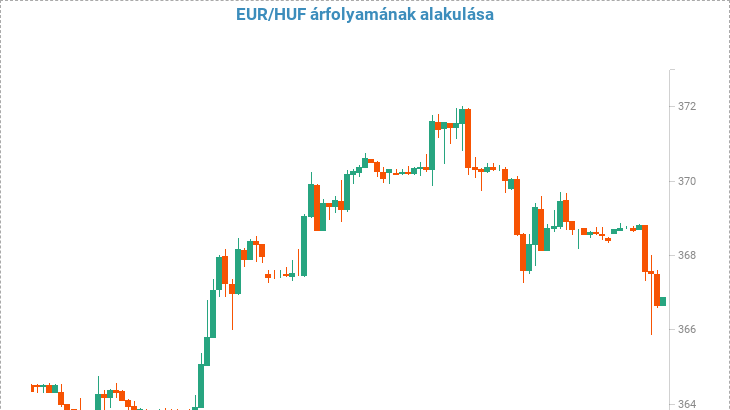
Of course, the one-week deposit rate will only become the benchmark if the central bank accepts all bids in the tender as it did last week, but anything else would be a major surprise. It accepted the full HUF 7,703.6 billion amount last week. This week’s result will be announced at 3 p.m.
With today’s decision, Hungary will have the highest benchmark rate in the CEE region, compared to 2.75% in Czechia and 1.25% in Poland.

The MNB is in a tough spot as the benchmark rate has come very close to the 3.05% upper limit of the interest rate corridor. This means the central bank has only 15bp left to raise under the current conditions. However, the Monetary Council will hold a non-rate setting session next Tuesday, where
it may decide to raise the interest rate corridor itself.
Analysts were expecting a 30bp hike and believe the benchmark rate could be slightly above 3% by the end of the year. However, if the MNB keeps hiking at this pace, the year-end interest rate will probably be higher than that.
The MNB decided to begin tightening monetary conditions six months ago when it realised inflation risk had increased considerably in Hungary as well as globally. It slowed the pace of rate hikes during the summer, but this did not help as inflation rose further while the forint weakened significantly. The central bank could get closer to its inflation goal through a stronger forint, but the current exchange rate is certainly not in line with its objectives.
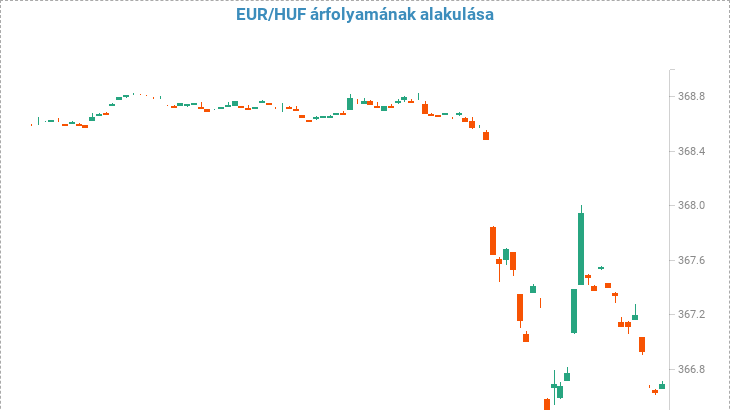
The Hungarian forint began firming against the euro even before the announcement, after it was leaked that the MNB would announce the tender earlier than the usual 11.50 a.m. time.
Cover photo: Shutterstock





