Painful rise in consumer prices not over in Hungary, inflation at nearly 25-year high


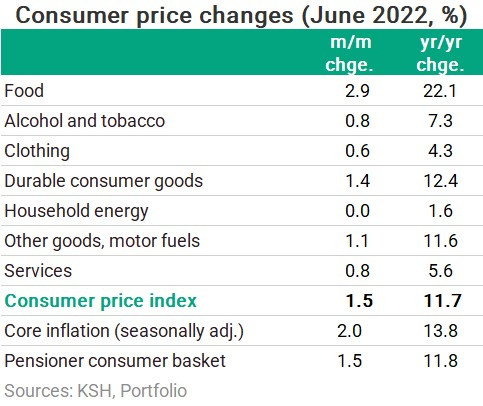
Analysts polled by Portfolio expected inflation to be 11.5%, so the 11.7% figure released on Friday morning was a hair above that. Only one analyst in our survey expected a higher figure. Last week, the MNB said that they projected inflation at around 11-12%, so it was not that difficult for analysts to estimate the June figure.

Core inflation jumped to 13.8% yr/yr from 12.2% in May, which is particularly interesting because some investors keep a much closer eye on this index than the headline figure. Hungary's CPI has already been among the highest in Europe, and while further acceleration was on the cards, its extent could be surprising.

According to KSH data, food prices continued to rise considerably, jumping 22% yr/yr and going up 2.9% month on month. Consumer durables are on the second place, with a 12.4% yr/yr increase, followed by other goods, including motor fuels (+11.6%). The monthly comparison shows a similar picture, with the price of food, consumer durables and motor fuels up by more than 1%.
It is worth highlighting the continued price increases for consumer durables in particular, which suggest that
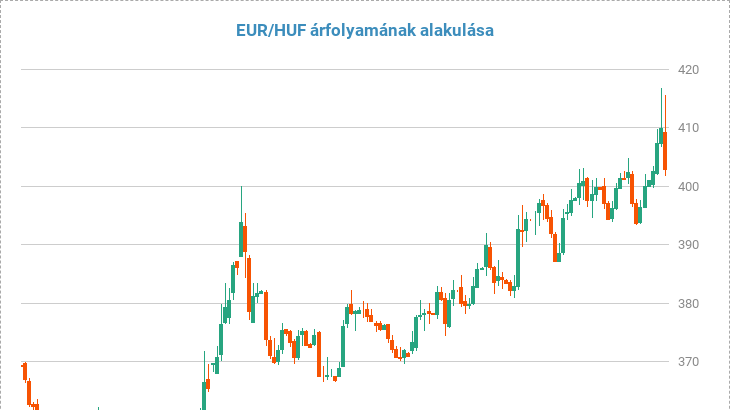
THE WEAK FORINT EXCHANGE RATE HAS ALSO STARTED TO FEED THROUGH TO PRICES, A TREND THAT IS EXPECTED TO INTENSIFY IN THE COMING MONTHS.
The causes of Hungarian inflation remain twofold, with international developments driving up prices, and global energy and food prices remaining particularly high. At the same time, we can also see domestic factors behind the process, such as the significant hike to the minimum wage at the beginning of the year, the personal income tax refund for families, the full payment of a 13th-month pension and the 'firearms money' for law enforcement staff. On top of these, there are the special taxes announced in June, which companies are also expected to try to pass on to consumers, and this could also push up inflation in the coming months.
Rising inflation is creating quite a serious challenge for the central bank as well, as expectations on the interest rate trajectory keep going up.
Investors expect the base rate to go well over 10%, with FRAs up at 12 to 13%. This is unsurprising, as the 1-week deposit rate was raised yesterday by 200 basis points to 9.75%, i.e. the benchmark policy rate is just a hair from a double-digit figure. The MNB is set to publish its own measures of underlying inflation later in the morning, and they are also expected to show further acceleration.

The brisk rise in core inflation, i.e. the inflation index that captures underlying processes, indicates massive inflationary pressures in Hungary. It appears that persistent inflationary pressures are becoming stronger in Hungary and are particularly difficult to overcome. Inflation is also increasingly being fuelled by the sharp depreciation of the forint, and tax hikes will also drive consumer prices higher. In light of this, it is no wonder that the real wages of an increasing number of employees have already started to decline (those whose wages were raised less than where inflation stands now). In the coming period there will be even more workers whose living standards will fall, and so they will demand further and further pay rises. This will lead to a critical price-wage spiral. With core inflation at a gallop, inflation expectations high, and corporations' price hike intentions at record highs, which the government is seasoning with tax increases, we can expect even higher inflation in the coming months.
- According to a summary from the statistics office, the price of margarine shot up the most in annual terms, by almost 60%, but the price cheese, dry pasta, bread, poultry, dairy products, eggs and bakery products all rose by over 30%.
- Pork prices rose by 11.3%, below average, chocolate and cocoa by 6.5% and sugar by 5.7%.
- Among durable consumer goods, the stats office recorded sharp price increases at kitchen and other furniture (+20.1%), household furniture (+19.7%), second-hand cars (+17.6%) and new cars (+12%).
- The price of household repair and maintenance articles increased by 29.6%, while the price of pet supplies rose 27%, the price of personal care articles by 14.8% and the price of automotive fuel by 11.2%.
- The price of services rose by 5.6%, including +26.1% for taxis, +20.6% for repair and maintenance of housing, +15.6% for repair and maintenance of transport equipment and +10.5% for holiday services.
- In one month, compared to May, margarine was up 12.7%, rice 6.6%, cheese 5.9%, dairy products 5.1%, poultry 4.7%, bakery products 4%, dry pasta 3.7%, milk 3.6%, non-alcoholic beverages 3.3%, eating out 3.1%, bread 2%, and seasonal food 1%, the KSH said.
- The price of consumer durables rose by 1.4%, including kitchen and other furniture (+2.9%), household furniture (+2.4%) and used cars (+2.2%).
- Prices of alcoholic beverages, tobacco and services rose by 0.8%, with the price of holiday services up by 8.8%, taxi fares up 3.7% and sports and museum admissions up by 3%.
Cover photo: Getty Images





