20% inflation in Hungary - It's a question of when, not if


Another big leap
We are going to see another significant rise in inflation in September, as higher household utility bills are already included in the methodology of the Central Statistical Office (KSH). Thus, the price increase could be significantly higher than the 15.6% in August, and the only questions is by how much.

Estimates by the central bank (MNB) also suggest that inflation could be around 20% in September, said Deputy Governor Barnabás Virág during a background talk with analysts after a rate-setting meeting two weeks ago.
The analysts surveyed by Portfolio expect an average of 20%, and the question is whether the rate of inflation has managed to stay below that mark for the time being. Four of the eight analysts believe that the annual rate of inflation could already have exceeded the new psychological limit.

The significant acceleration of inflation is being fuelled by the modification of the conditions of the overheads reduction, in addition to the factors that have been in place so far, namely the soaring energy prices and the volatile forint exchange rate, said Tamás Isépy, an analyst at Századvég Economic Research.
Unfortunately, we should expect further upward inflationary effects on top of the partial abandonment of the overheads reduction scheme. Prices of processed foods could have risen further and, presumably, unprocessed food prices could have also increased due to the drought. Agricultural producer prices jumped by almost 51% on an annual basis in July, so we continue to see a very strong impulse, pointed out Péter Virovácz, analyst at ING Bank in Budapest.
In his view, there are two other quantifiable items. One is the reform of the parking fee system in the capital, which could lead to drastic general inflation in this area. Although the weight of this item in the consumer basket is small, the extreme tariff hike could add roughly 0.5-1 percentage point to the headline inflation index. Finally, the increase in the price of telephone and internet services could add a few more tenths to the overall rate of price increases, as the pre-announced September price increase of one of the service providers will also be reflected in the price index.
And the accelerating price increase of consumer durables induced by the depreciation of the forint is only the icing on the cake,
added Virovácz.
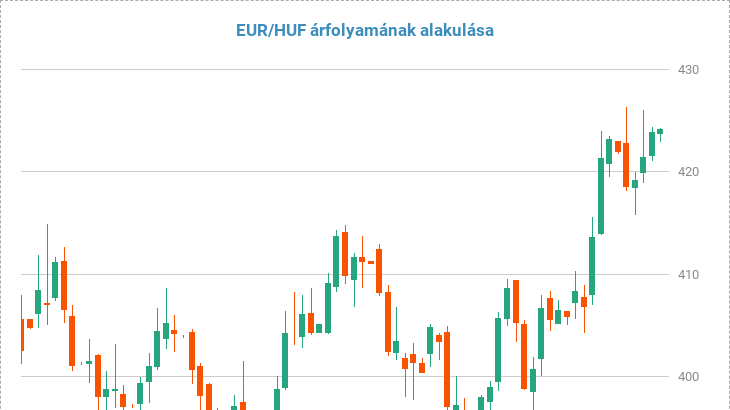
The impact of the fall in fuel prices may have been offset by the spectacular weakening of the forint against the euro and the dollar in market services and industrial goods over the past month, said Péter Kiss, Investment Director at Amundi. According to him, besides energy and fuel, we can expect a continuation of the price increase trends seen earlier in the main segments.
Ágnes Halász, an analyst at UniCredit Bank, agreed with her colleagues, saying that around two-thirds of the September surge could have been due to the rise in overheads. A sharp rise in utility bills and the deteriorating economic environment may now be reducing demand for and price pressure on non-essential goods and services, she added.
It will definitely be an exceptional month, with forecast uncertainty higher than usual,
noted cautiously Orsolya Nyeste, analyst at Erste Bank.
How far can inflation rise? What about the price caps?
The biggest question about inflation remains how long consumer prices will rise and when the pressure will peak. If we are lucky, we will not see a jump like the one in September in the subsequent months, the annual rate may creep up slowly for a short while, but analysts expect it to peak just above 20%. From January onwards, the base effect is expected to significantly reduce the annual rate of price increases, as repricing really gathered pace in January this year. Due to the large scale of the price increases, the benchmark is now a higher price level, so this statistical effect may moderate the annual change in the inflation rate.
Although food inflation may continue to rise and the 67% yr/yr producer price index for domestic industrial sales suggests that there is still room for further ascent, the increasingly higher base will moderate the rise in the annual inflation rate somewhat in the coming months, Péter Virovácz pointed out. Unfortunately, it is more and more likely that the 12-month CPI rate in early 2023 will exceed even the Dec22 print due to the strengthening of second-round effects, meaning that it seems realistic to see essentially an "M" shaped inflation course, he added.

Of course, the fate of price freezes remains a serious issue, with measures on fuel and food in particular having an impact on inflation. As things stand at the moment, these measures will remain in place until the end of December, and analysts are speculating on whether they will be extended beyond that date.
Tamás Isépy, an economist at Századvég, believes that regulated prices for fuel and food will remain in place throughout next year, and that the government will only phase them out sometime in 2024. "It is expected that the price caps on food and fuel will end when the price cap on fuel does not cause an inflationary shock, so the market price of fuel will be very close to the regulated price. In my view, this will happen in mid-2023 at the earliest," said Virovácz.
According to Ágnes Halász, as food prices are expected to remain elevated inflation could stabilise around the current level this year, and from January onwards the fate of price freezes could decide the way forward.
However, the dramatic weakening of the forint poses a significant risk to our current inflation path,
she stressed.
In the case of food, the price cap will not be lifted in the foreseeable future, while in the case of fuel, this could theoretically be possible if the difference between market and the regulated prices narrows or if there are serious supply problems, says Mariann Trippon. According to the analyst at CIB Bank, in the latter case, even if the government does not want to abandon the measure completely, a gradual tightening and slow phasing out is conceivable.
Businesses are having to pass on much of the soaring energy costs, but this is more likely to be palpable from October. It is questionable whether holiday prices have fallen as usual with the end of the holiday season, but nevertheless, repricing can be expected from October, even in those establishments that manage to stay open, added Gergely Suppan, chief macro analyst at Hungarian Bankholding.
Cover photo: Getty Images





