It would take an extreme rate hike to stymie Hungarian forint sell-off - analysts


There has been a major forint sell-off since the outbreak of the Russian-Ukrainian war, weakening from 355 to 434 against the euro. The last two weeks have been particularly painful, with the exchange rate moving spectacularly fast away from the 400 psychological level - upwards.
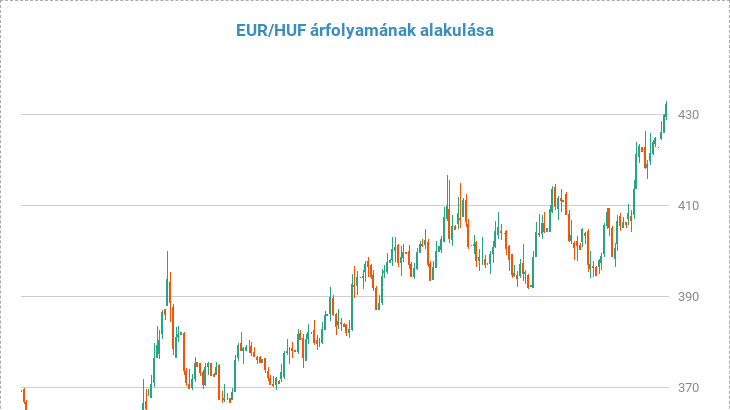
The central bank tightened forint liquidity further on Wednesday at a deposit tender as part of its latest efforts to shore up the HUF, but too much is stacked against it to provide relief any time soon.
Analysts polled by Reuters seem to see little alternative but to return to raising interest rates. Other liquidity tightening tools do not appear to be effective overall, and the domestic and international economic environment is not supportive at all, so even the loss of face by the central bank from restarting the rate hike, which was halted two weeks ago with a larger-than-expected 125bp raise to 13.00%, will have to be taken to stabilise the forint.
Rising inflation and a widening trade deficit is unlikely to ease pressure on the HUF in a risk negative global environment. Moreover the NBH’s declaration of ending the rate hiking cycle at 13% in September challenges the outlook further,
Citigroup analyst Eszter Gárgyán said in a note.
JP Morgan doubts that the liquidity-absorbing tenders would help the forint much without further outright rate hikes.
"The NBH is once again attempting to juggle multiple objectives in our view - delivering some tightening to bring stability to the FX market, while avoiding further outright rate hikes or undue negative growth impact," it said in a note on Tuesday.
We argue that policy rates need to rise to at least 16-17% to stabilize FX, based on comparable experience of economies with large BoP funding needs.
Citigroup's Gárgyán said a fall in European gas prices and the sharp decline in domestic demand may help prevent Hungary's trade deficit from deteriorating further in the coming months.
"But it may take some time until the improvement in structural balance, an agreement over EU funds and the liquidity measures provide some relief for the currency," she said.
In the meantime, the forint remains exposed to negative shifts in global sentiment and prone to weakness, which feeds into domestic prices, further complicating the central bank's efforts to curb inflationary expectations, economists say.
Péter Virovácz at ING in Budapest said the Hungarian market needed a very serious positive message related to a deal on EU funds that could end risk aversion.
Reuters also cited Finance Minister Mihály Varga as commenting on the forint on Tuesday:
"The dollar smashes everything around it. Of course we are trying to contribute to a stable currency with disciplined fiscal policy.
Our tools are limited, this is the world of monetary policy, it is there where the central bank needs to take appropriate measures if it wants to do so.
Cover photo: Shutterstock





