ANALYST VIEW - HUF firming to fizzle out, 440 versus euro could be closer than we think - SocGen


Hungary's central bank announced last Friday that it will offer a new one-day deposit facility bearing 18% interest, that is 500 basis points above the base rate and the one-week depo rate. This is the benchmark rate currently, with the MNB hoping it will be in place only temporarily, although it is unclear how long and how exactly the bank will give it up.
Also, the MNB will make it possible to tap its FX reserves to cover liquidity needs arising from energy imports.
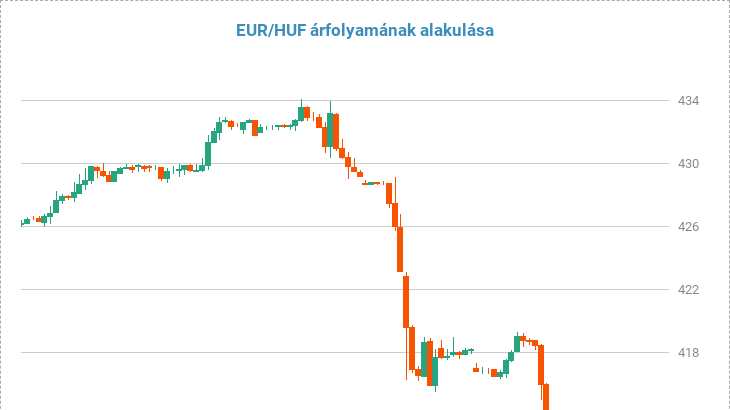
The announcement led to a rally in the HUF, as the currency strengthened by more than 2% against the EUR to around 412 by Tuesday from around 430 on Friday morning.
"In our view, these new measures provide important support for the forint amid the recent sell-off. Higher implieds will make it more expensive to short and makes the HUF substantially more attractive relative to peers. The MNB has some EUR 31 bn in FX reserves and can provide some support for the FX market in the next few months," Drimal said.
The MNB delivered a bazooka tightening to protect the forint,
commented Marek Drimal at SocGen.
While the aforementioned measures could provide key support for the forint in the following months, Drimal remains pessimistic about the outlook on the HUF, with several external factors overshadowing the positive ones.
He reminded that following the MNB’s announcement that it would end the rate hike cycle in late September (with a 125bp hike to 13.00%), the forint has lost more than 5% against the euro, and the EUR/HUF even exceeded SocGen's year-end target of 430. A substantial part of that move was reversed over the past few days.
Although the new 18% rate deposit facility boosts forint carry and tapping of the MNB’s reserves will ease selling pressures, we remain bearish on the currency,
he said.
Drimal's view is underpinned by both external factors and domestic/idiosyncratic factors.
The external factors are:
- a strong dollar environment and more tightening by global central banks;
- geopolitics – risk of further escalation of Russia’s war in Ukraine; and
- the energy crunch in Europe which is threating manufacturing supply chains, particularly in Germany and CEE).
The domestic/idiosyncratic factors are:
- Hungary's annual inflation to accelerate further and not to peak until 1Q23 at some 24% yr/yr;
- Drimal does not think the EU will release the Recovery and Resilience Facility funds for Hungary;
- he expects the EU to penalise Hungary in the rule-of-law conditionality mechanism; and
- the current account deficit is likely to widen further in the coming months on the back of likely export issues due to the energy crunch in Germany and CEE).
"HUF rates are likely to increase further. At the front end, they should incorporate this additionaltightening by the MNB in response to the HUF’s weakness, as we expect the 3m Bubor to increase toward 17% by year-end and we expect the curve to flatten," Drimal concluded.
In the environment described above, SocGen expects the forint to weaken back to 435 by the end of the year, with an even higher euro exchange rate of 445 expected in the first quarter of 2023. According to Drimal, the central bank will continue to raise interest rates in response to the renewed weakening of the currency, which may already be suggested by the upper end of the interest rate corridor at 25%.
Cover photo: Getty Images





