Drop in residential gas consumption pulls down inflation index in Hungary


In the context of the December inflation figures released today, the KSH also published the surprising data mentioned above, although the residential tariffs have remained unchanged since August last year (and will remain so until the end of April this year), so households pay HUF 101 per cubic metre up to the average consumption, and HUF 752.5 for the above-average consumption, according to KSH data. By comparison, the detailed inflation figures published today by the KSH show that the average price of piped gas fell from HUF 242 in November to HUF 212 in December, a drop of just 11.8%.
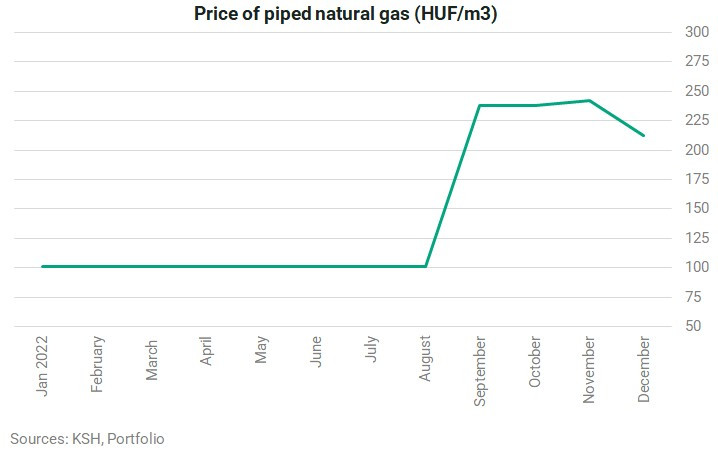
Regarding the seemingly strange gas price drop in December, it is important to note that the methodology guide issued by the KSH at the time of the August change in the utility bills already indicated that it would estimate the average price of gas consumed by the population in a given month and that this would be included in the inflation statistics.
So it is not a question of a price reduction, but of a 23% drop in gas consumption at the national level due to austerity measures and unusually mild weather in December, which has led to many families falling back below the average consumption limit and being billed again at HUF 101 per cubic meter.
This also brought down the national average price of piped gas consumption from 242 to 212 forints, and through that, slightly lowered the overall inflation indicator. The proportion of fixed gas consumption in the total consumer basket is 1.87%, so its monthly decrease of 11.8% reduced the monthly inflation indicator by 0.22%, a small amount.
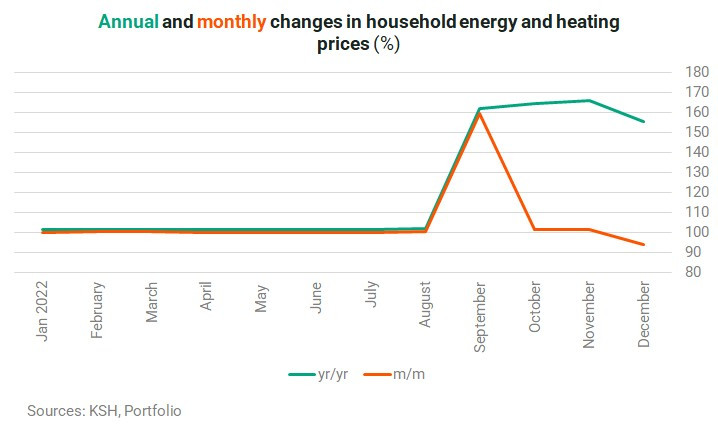
As the prices of other household energy items either stagnated or rose in December (see below), the overall effect was important in reducing the rate of increase in household energy prices by 6% on a monthly basis and by 55.5% on an annual basis, down from 65.9% in November.
How does the KSH calculate?
According to the methodological guidelines, "The Central Statistics Office (KSH) takes into account the change in the residential prices of gas and electricity in the calculation of the consumer price index in proportion to the households' exposure. Accordingly, the KSH estimates the total amount paid by the entire residential sector for the gas and electricity consumed by the entire residential sector at the old (before 1 August 2022) and the new prices. The ratio of the amounts to be paid at the old and new prices for the fixed amount of consumption in the base period, as calculated by the Agency's CPI calculation method, gives the price index for gas and electricity, respectively, as reflected in the CPI.
The calculations are based on the gas and electricity consumption data of the Hungarian Energy and Public Utilities Regulatory Authority (MEKH) at the level of the national economy and on the household consumption data of the KSH. The amounts to be paid are calculated by the KSH at the household level and aggregated to obtain the data at the level of the national economy. Thus, in making the calculations, the Office takes into account the distribution of gas and electricity consumption between households and, to the extent that information is available in the available data sources, possible differences in household structure (e.g. the discount for large families). This ensures that the price index includes a proper proportion of gas and electricity consumption between the unchanged and the higher price bands."
As indicated above: in December, household energy items were either stagnant or increased in price, except for piped gas, and this is shown in the graphs below on a monthly and annual basis.
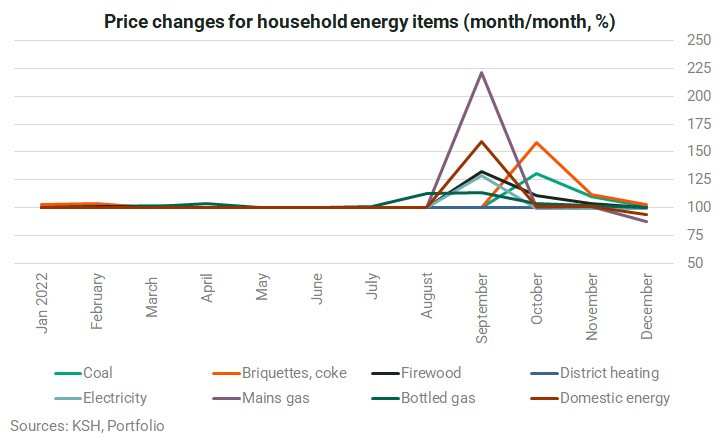
It is therefore worth noting that the price of household energy rose by 55.5% on an annual basis last year, with the price of piped gas up 97.8%, firewood up 58.6%, cylinder gas up 48.7% and electricity up 27.8% compared to a year earlier.
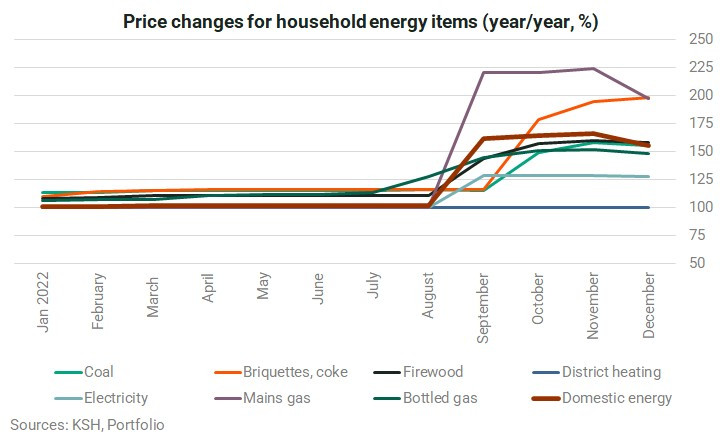
These significant year-on-year changes are also worth illustrating in nominal terms, because they are what we see on the utility bills. Above we have already shown the national average billed price of piped gas, which fell from HUF 242 per cubic meter in November to HUF 212 per cubic meter in December, but this was virtually the only price decrease during the month, because as we can see, the two types of electricity prices were essentially stagnant during the month.

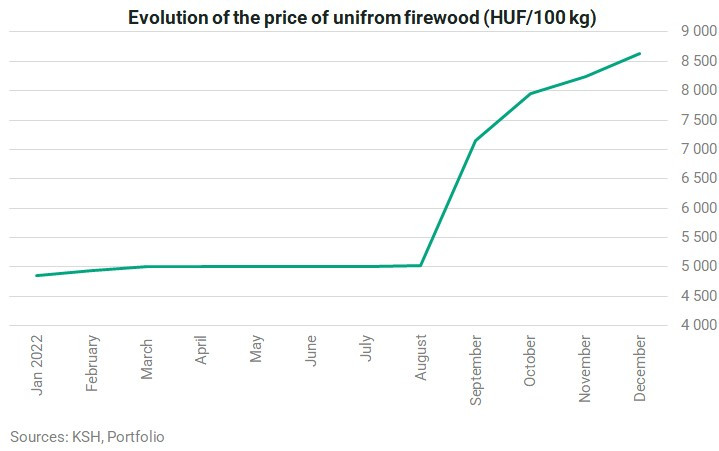
Meanwhile, there has been a further substantial increase in the price of firewood, which is supposed to be officially priced: according to the KSH, the national average price (per 100 kg) of HUF 8,240 in November jumped to HUF 8,630 in December, i.e. it has been rising steadily every month since August.
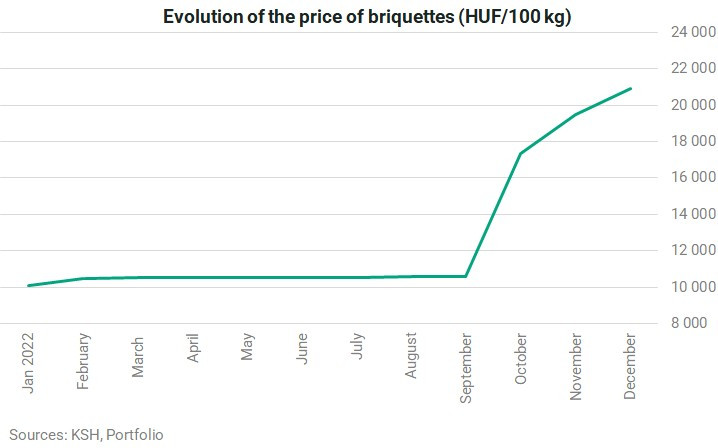
The price of briquettes has also been rising steadily and seriously since August, with the average price per cubic meter in December at HUF 20920, up from HUF 19470 in November, and more than double the price a year earlier.
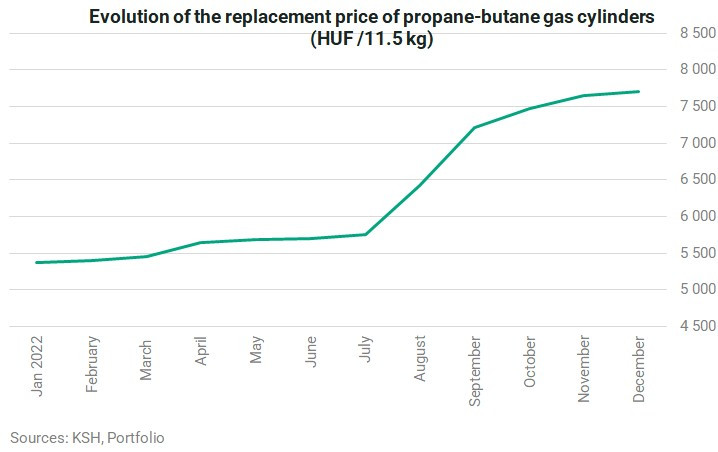
Finally, it is also worth noting how the average price of replacing a standard 11.5 kg gas cylinder has developed: the KSH also recorded a slight price increase in December from HUF 7,650 to HUF 7,700, which corresponds to an annual increase of almost 50%, as indicated above.
Cover photo: Getty Images





