Hungary competition watchdog to look into dramatic retail price surges


"The national competition authority is investigating business practices in the domestic trade for a number of food products (in particular substitutes for products with official price caps, such as certain dairy products), following the recent significant price increases in a number of food segments, which are increasingly burdening Hungarian consumers. Comprehensive investigations will explore whether competition may have been distorted or restricted on the retail markets for these products or at other levels of the value chain, or whether any infringements may have occurred that would give rise to competition proceedings against any of the operators in the sector," the GVH said.
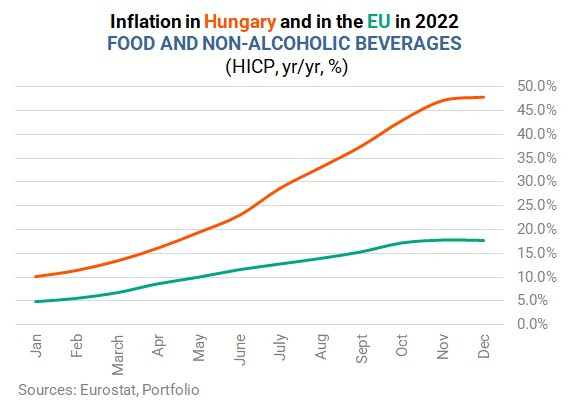
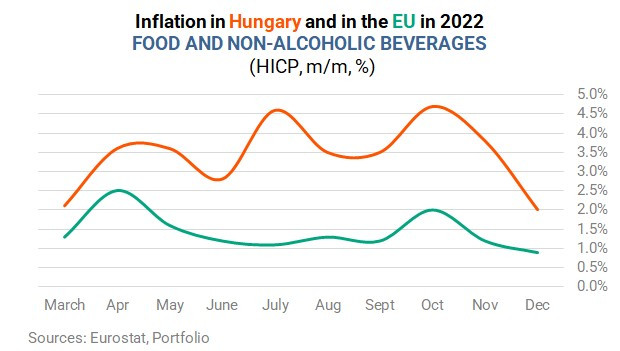
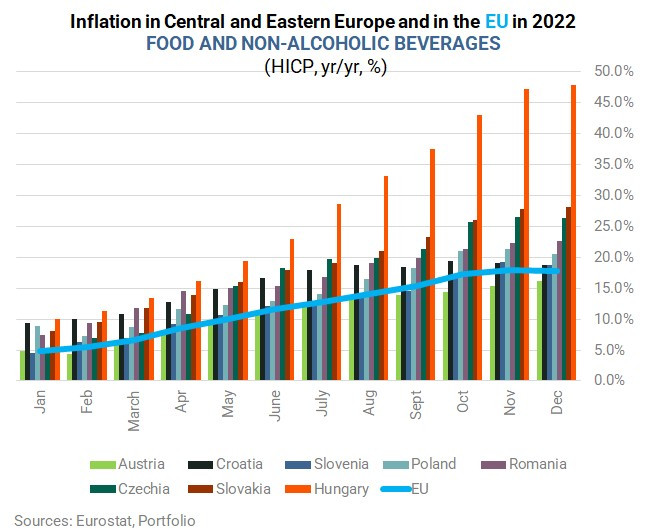
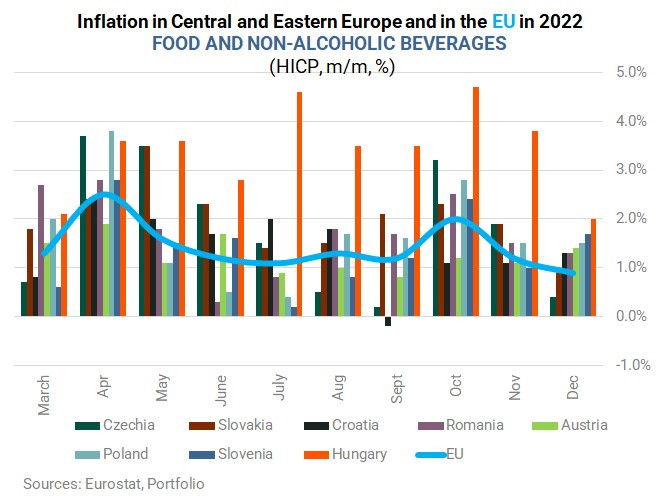
Hungary has the highest inflation in the European Union. And food prices are rising so fast that we are now among the most expensive countries in the world. In other words, the price increase in Hungary is much higher than in other countries of the EU.
It's worth looking at the economic facts behind the rise in prices. In Hungary, minimum wages were raised by 20% at the beginning of the year - before the elections - and such a major hike is unprecedented in recent times, which has triggered a price-wage spiral. Then, before the elections, the government gave families more than 1,000 billion forints, boosting demand and giving companies room to raise prices significantly (because rising demand means rising prices).
Furthermore, the forint depreciated dramatically last year - substantially outperforming the fall in the currencies of the region, catching up with the depreciation of the Turkish lira in some periods - and this was reflected in the prices of imported goods.
And as if this had not been enough, the government also imposed a special tax on the retail sector, which was of course built into prices, and so were the losses suffered during the food price freeze (which was extended several times), which we pay for when we buy products that are not subject to the price freeze. The new stockholding obligation (there must always be capped-price products in the shops) could push prices up further by increasing the losses incurred during the price freeze.
The central bank also revealed an unwelcome fact behind the price rise: the weak competitiveness of the Hungarian food industry.
All in all, there are a number of country-specific factors that have put Hungary among the countries with the highest food price increases in the world. And given the unpredictable business environment, when the price-setting power of players is strong, it is not surprising that the price of more and more goods and services carries a certain risk premium: "Off you go, foreign discounters!", as then government commissioner János Lázár put so eloquently in an interview with Portfolio in mid-November 2021.
"During the investigations, the national competition authority will, among other things, analyse the information collected from market players to identify the detailed reasons for the price increases, so that it can take the necessary steps to remedy any competition problems.
"The investigation will cover, inter alia, the pricing and sales practices of the largest domestic food retail chains. In addition, individual complaints and market signals are also being investigated by the FCA," the statement said.
"The national competition authority has made the issue of food inflation a priority, as it affects society as a whole. At the end of November last year, the GVH launched a series of consultations to gather information about the most affected markets and to raise awareness among economic operators of the importance of complying with competition law. This priority area is being addressed by a dedicated team of analysts at the national competition authority. The GVH has also started an international monitoring of the food inflation environment and a review of competition practices in EU countries", the statement concludes.
It is worth noting that last year saw an acceleration in the wave of retail shop closures, even as prices soared at an outstanding rate in Hungary. The worsening trend of shop bankruptcies is also due to government economic policy, with fewer and fewer people able to cope with the increasing burden. The Hungarian National Trade Association is also calling for price freezes to be lifted because many people can no longer bear the burden. The reduced competition and reduced supply resulting from shop closures could ultimately lead to higher prices.
Here are a couple of graphs showing Hungary's food inflation in annual and monthly terms, compared to the EU and to CEE.
Cover photo: Getty Images





