Appalling data show plummet in Hungarian retail sales


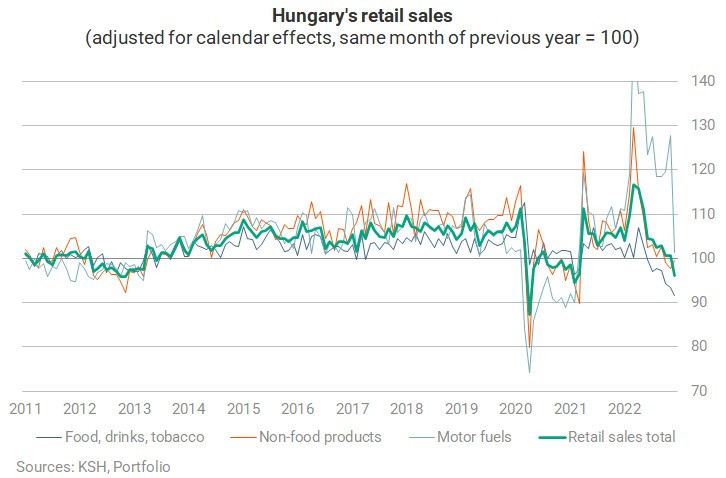
Even Christmas shopping brought modest sales figures last year, according to retail sales data released by the Central Statistical Office (KSH) on Monday. In December, consumption was already below the level of a year earlier, according to seasonally adjusted data.

As shown in the graph above, retail sales levels have been on a downward trend for months, and the decline gathered pace in December. The primary reason for this is the sharp fall in sales due to the phasing out of the fuel price freeze, and inflation rising to record highs, which significantly eroded the purchasing power of earnings. As a result, calendar-adjusted retail sales fell by 3.9% in the last month of the year compared to the same period of the previous year. This decline is reminiscent of the period of the Covid crisis, when some shops were closed.
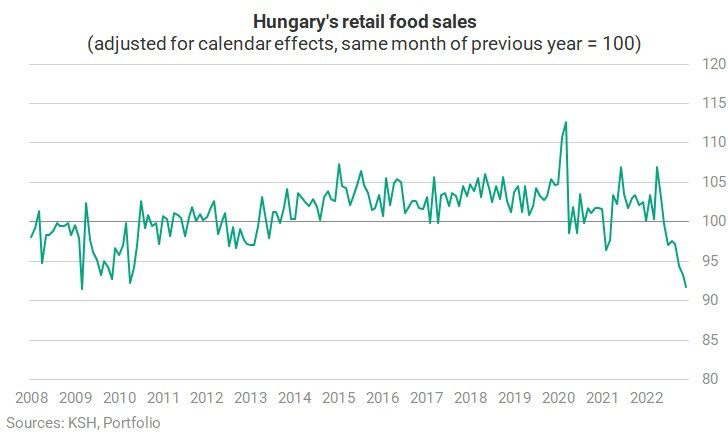
The biggest drop is in food consumption, where the decrease is already the biggest since the 2008-2009 global economic crisis.
The data make it increasingly clear that for those on lower incomes, the time of livelihood crisis has arrived. Those on the lowest wages are being hit by inflation of 30-35%, as the weight of food in their consumer baskets is greater and food inflation is nearly 50%. No other EU country has such devastating price rises.
Scandal mars data release
Portfolio reported over the weekend that the Makronóm Institute had access to the data earlier than anyone else. On Saturday, Portfolio received an email from Makronóm's communications company, in which the institute's head of macro analysis "kindly offered the Institute's professional commentary on recent retail data from the Hungarian Central Statistical Office for our attention for our use". Within an hour and a half, they must have realised that this does not look very good, and we received another email saying "Sorry, but the following KSH statistics are EMBARGOED until 8:30 am on Monday morning (02.06.), please take note." After this morning's release of the KSH data, it became clear: Makronóm did receive the retail sales data before they were supposed to, as their analysis had the exact figures the stats office released this morning.
According to detailed data by the KSH:
- The volume of sales decreased by 8.3% in specialized and non-specialized food retailing. The volume of sales decreased by 11% in non-specialized food and beverages shops accounting for 78% of food retailing and was essentially unchanged in specialized food, beverage and tobacco stores.
- The turnover of non-food retailing decreased by a total of 0.4% in volume. Sales volumes rose by 35% in second-hand goods shops, by 8.9% in pharmaceutical, medical goods and cosmetics shops, by 8.7% in textiles, clothing and footwear shops and by 4.4% in books, computer equipment and other specialized stores, while sales volumes decreased by 5.3% in furniture and electrical goods stores and by 5.5% in non-specialized shops dealing in manufactured goods.
- The volume of mail order and internet retailing accounting for 8.8% of all retail sales and involving a wide range of goods fell by 7.1%.
- The fuel price cap, which was phased out at the beginning of December, has led to a fall in the volume growth of sales at automotive fuel stations. For the month as a whole, the volume of sales increased by 1.3%.
- Sales in motor vehicles and motor vehicle parts and accessories stores not belonging to retail data decreased by 2.1%.
Inflation remains markedly high at the start of this year and will start to retreat slowly and gradually. As a result, the contraction in real wages will continue, which could bring a further erosion in retail sales. A rebound is expected in the second half of the year, by which time inflation could be lower.
Cover photo: Getty Images





