Mortgage lending plummets in Hungary, most money withdrawn from accounts in a decade


The central bank has published recent credit and deposit statistics for the banking sector, which on the whole paint a rather gloomy picture, partly because of the high interest rate environment and partly because of inflation, which is by far the highest in the European Union.
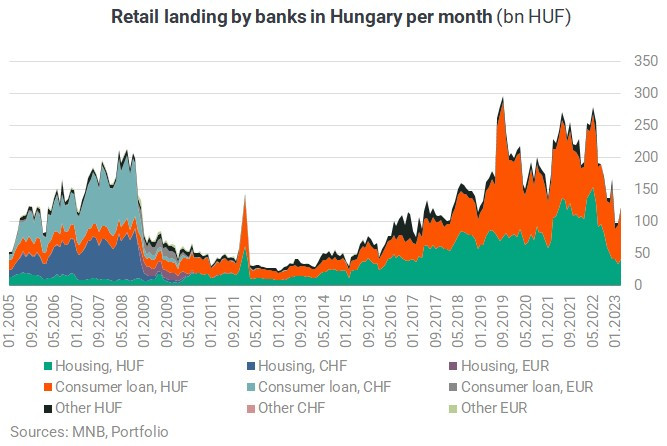
In retail lending, the volume of new contracts fell by 51% compared to March last year. The largest decline of 69% was in housing loans, with HUF 42 billion extended in March, the same level as between March 2016 and March 2017.
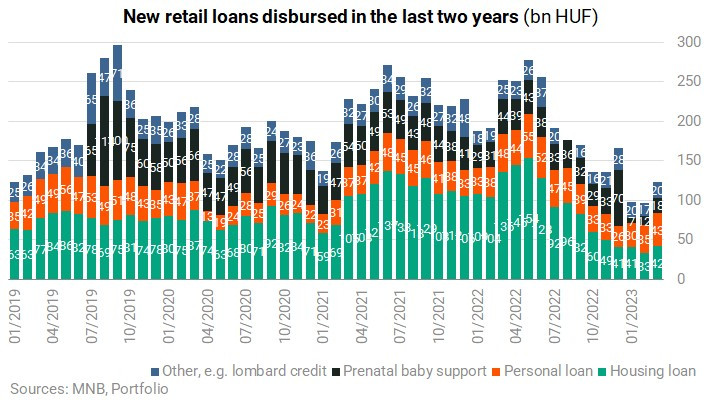
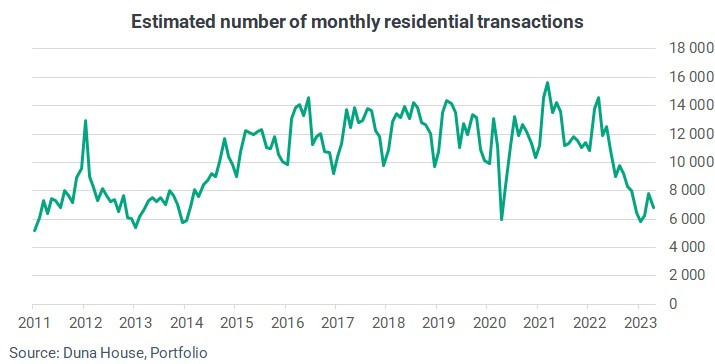
Personal loans show a smaller decline of 11.5%, while baby loans were down 58.5%. The latter sharp fall may be due to the fact that baby loans are also largely used for some housing-related purposes, but the volume of housing transactions is also falling, with the latest estimate from Duna House showing a 37% drop in April.
| Changes in new retail lending compared to the same period of the previous year | |||||
| Housing loan | Personal loan | Prenatal baby loan | Other | Total | |
| 2023 ytd (cumulated) | -66.9% | -9.3% | -64.1% | -7.3% | -49.8% |
| March 2023 | -69.4% | -11.5% | -58.5% | -17.2% | -51.4% |
| Sources: MNB, Portfolio | |||||
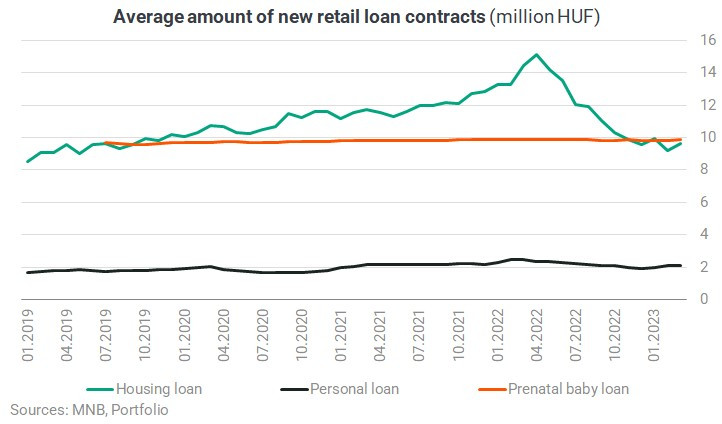
And lending tends to fall more in housing transactions, partly because the base was particularly strong due to last year's Green Home Programme, and partly because the average loan amount has also fallen sharply since then (households are trying to find other sources to finance their purchases): now the average new home loan is again below HUF 10 million, in line with the average amount of baby loans.
The number of housing loans fell by 54% and that of baby loans by 58% in March compared to the same month last year, while the number of personal loans increased by 2.5%, which may indicate an increase in the number of people interested in smaller amounts.
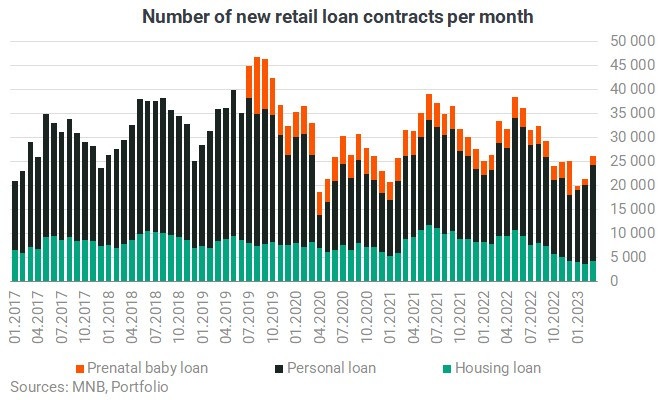
The chart below shows that the decline in retail lending is already visible in historical terms.
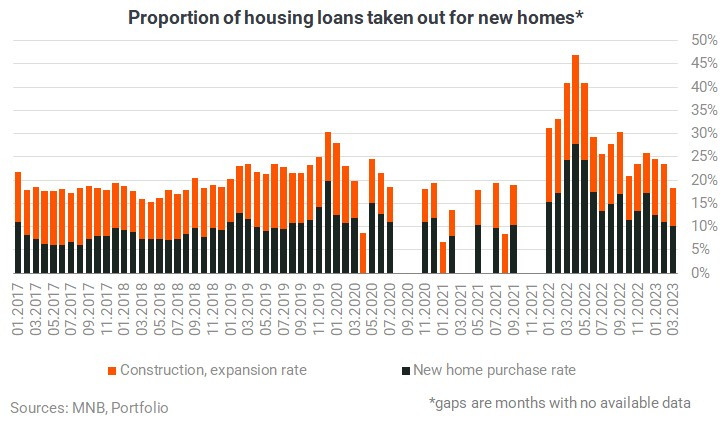
Only 20.5% of new home loans were subsidised loans in March, and even these failed to underpin the market.

The same can be said for the share of new housing within the purposes of use, which is now below 20%. This year, the second-hand housing market is also expected to drive mortgage lending.
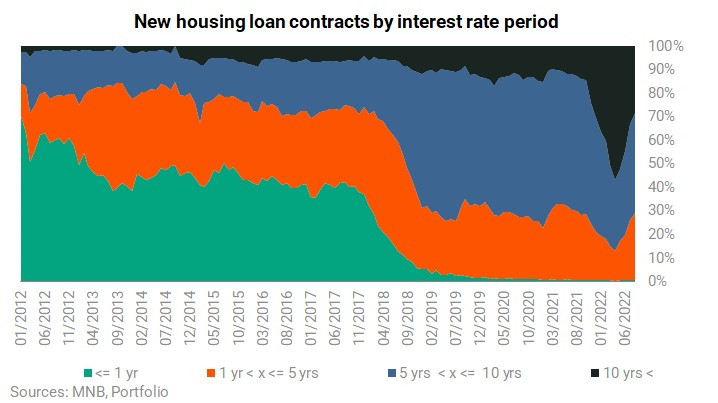
In terms of interest rate periods, the picture is now fairly balanced: about a third of loans are taken out with an interest rate period shorter than 10 years, a third with a 10-year interest rate period and a third with a fixed period throughout.
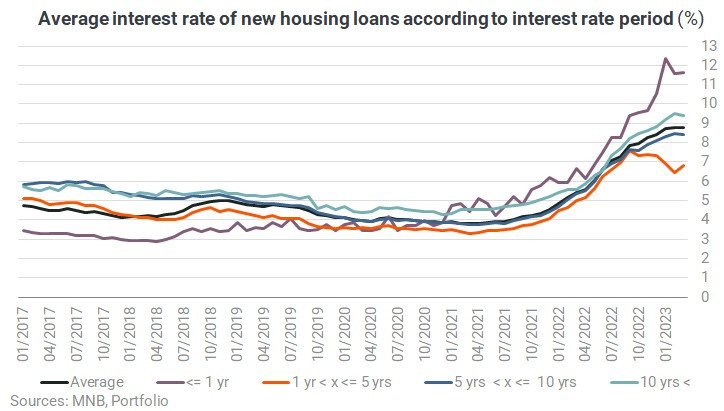
The average interest rate on new housing loans on the market has started to stagnate at a higher level of around 8.8% in recent months, with subsidised housing loans essentially consisting of the 3% family housing support programme (CSOK) loans.
Personal loan pricing is also broadly stagnant. The APR of an average personal loan in March was 19.0%, similar to the previous month.

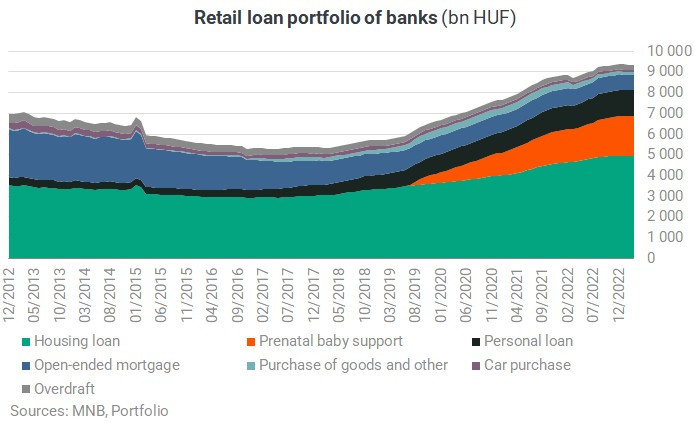
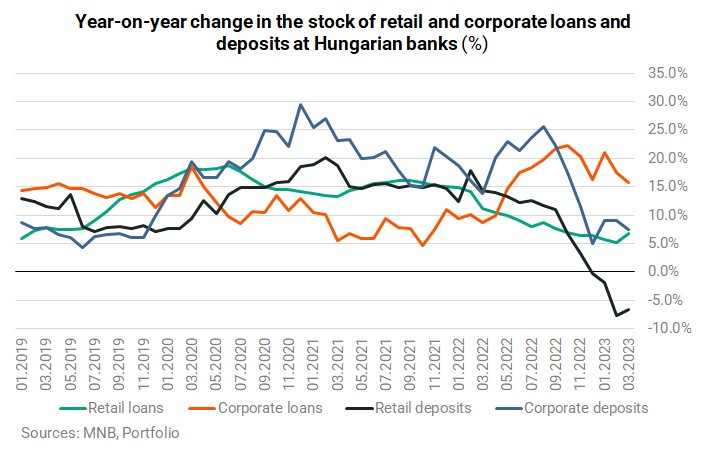
Unlike in January and February, in March the population borrowed slightly more than it repaid (i.e. was a net borrower), but credit growth has slowed recently, with household credit growing by only 6.8% in a year, including housing loans by only 5.7%. Baby loans account for 20% of retail bank loans.
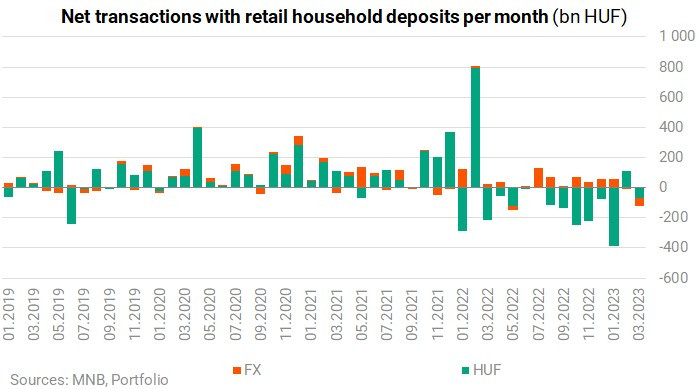
The picture is not rosier for retail deposits either. In 10 out of the last 12 months there have been withdrawals, including in March, when the net value of deposit transactions was HUF -120 billion.
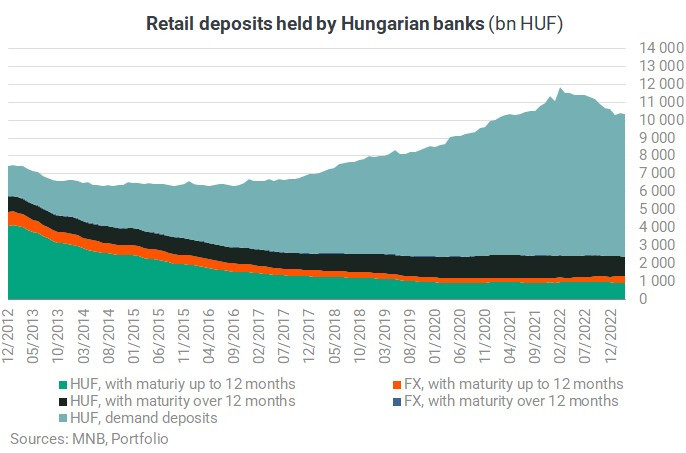
The last time (apart from February this year) that household deposits shrank by more than 6.7% in annual terms was in 2014.
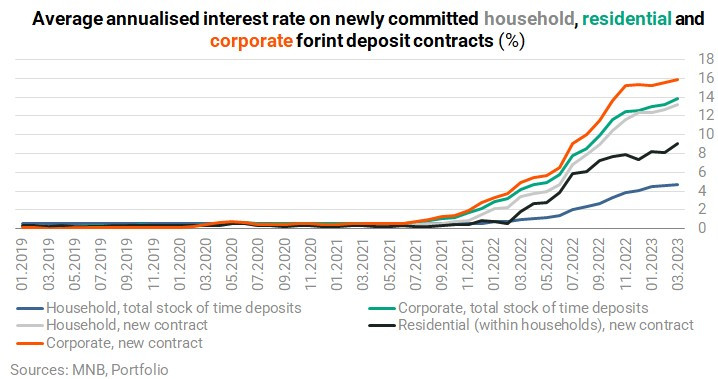
It's no wonder either, as banks are currently paying an average interest rate of only 4.7% on an average bank deposit, and this includes new contracts with high interest rates averaging over 13%, which were only available to private bank customers and the self-employed at most banks. The popularity of securities, especially investment funds and retail government bonds, has been growing at the expense of deposits:
As for corporate lending, it has also been particularly weak in recent months, with net lending also negative in March.
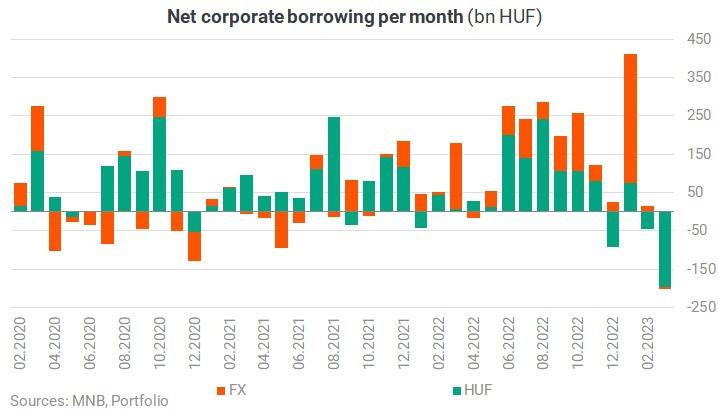
The Baross Gábor Re-industrialisation Loan Programme, launched on 1 February with a HUF 700 billion budget and extended to HUF 1,000 billion in March, has apparently not yet really taken off in March, with only HUF 65.5 billion of forint loan contracts and EUR 45.5 billion of euro loan contracts signed by firms.
In all likelihood, the statistics are expected to pick up in April - when the bulk of the contracting could take place - as the Ministry of Economic Development said in a statement that the programme had already reached HUF 504 billion in contracted stock on 20 April.
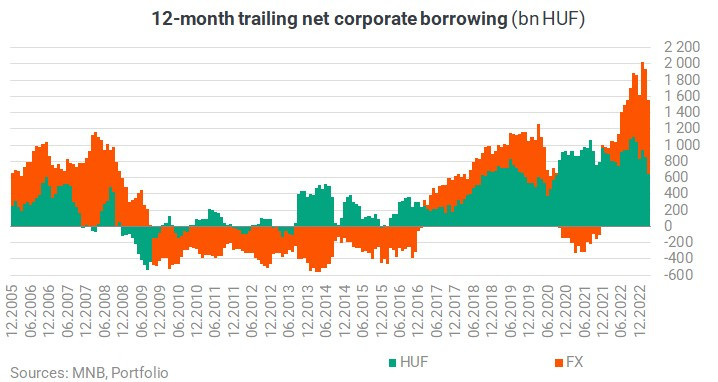
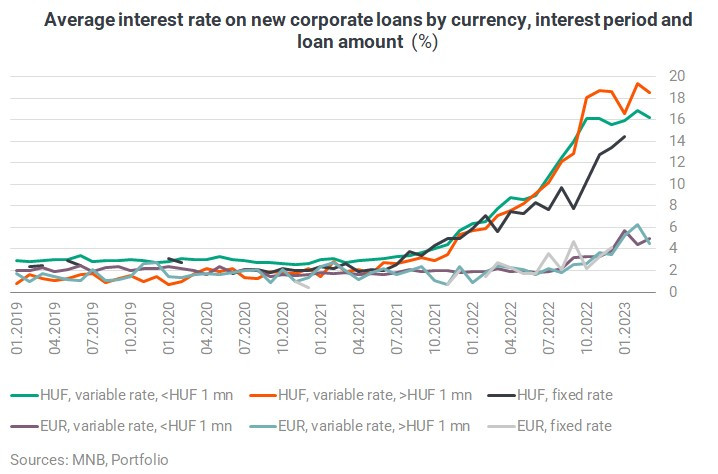
The statistics on corporate interest rates in forint clearly show why market loans are not popular, while subsidised loans are in high demand among eligible firms.
One of our charts above showed that, unlike the mass retail deposits, corporate forint deposits have seen significant interest rate increases, but corporate deposits have not been drastically restructured, with 32% of them being fixed-term deposits.
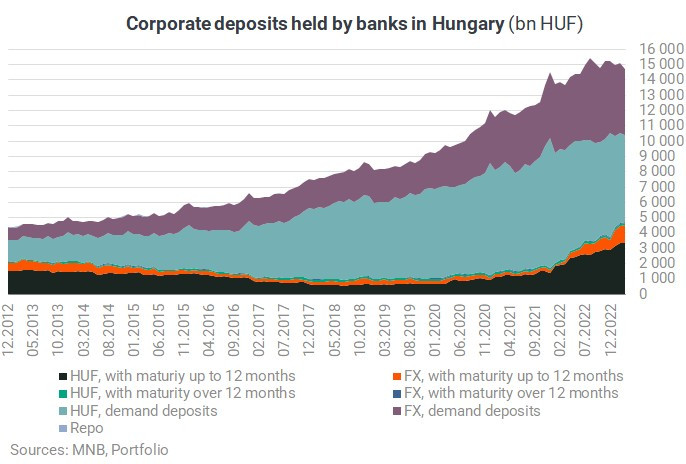
The dynamics in the various loan and deposit portfolios are already clearly showing a downward trend. Corporate credit grew by 15.7% and household credit by 6.8% over the past year. At deposits the respective figures are +7.5% and -6.7%.
Half of the audience at last week's Portfolio Lending 2023 conference, based on the results of an instant poll at the event, expects that neither corporate nor retail lending at Hungarian banks will grow in the next 12 months. They believe that corporate loans undoubtedly have better prospects for growth thanks to the government's credit stimulus.
Cover photo: Getty Images





