Surging interest rates will cost Hungary an arm and a leg next year


Surging interest rates bring immense burden
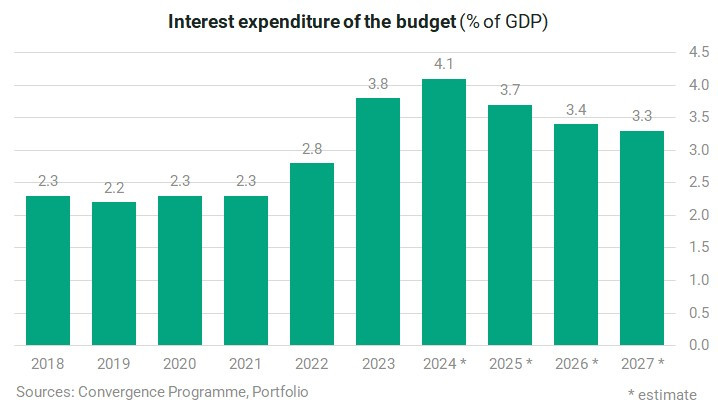
In recent weeks, we have repeatedly addressed the fact that interest rate rises will be accompanied by a significant extra burden on the budget this year and in 2024. The government estimates that interest expenditure will jump from 2.8% of GDP in 2022 to 3.8% this year, and further to 4.1% in 2024.
In nominal terms, this means that the amount, which was close to HUF 1.9 trillion in 2022, will jump by HUF 1 trillion this year, and then, after a further HUF 500 billion increase, it could peak at around HUF 3.5 trillion next year.
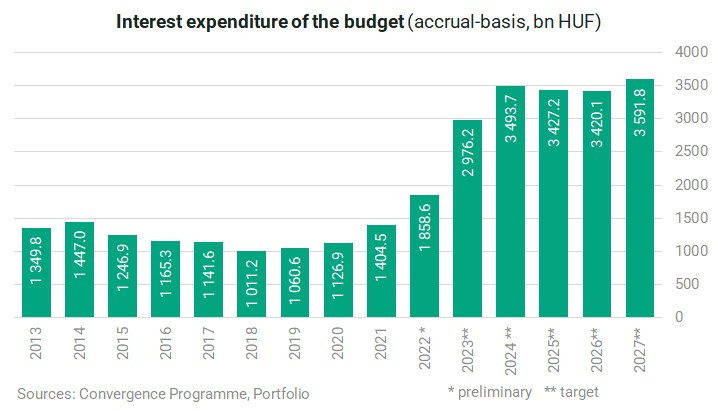
This is the best case scenario because data for the first four months of the year show that this year's target could already be in jeopardy, with the budget having paid out HUF 756.8 billion in debt service by the end of April, more than double the amount seen in the same period last year. So there is already a real risk that the 2023 target will not be met, and further risks are on the horizon for 2024.
For example, at the beginning of the year, central bank Governor György Matolcsy projected interest expenditure at 4.6% of GDP, which would be 0.5 ppts higher than the 4.1% target, which would already lead to a marked increase in spending.
According to the 2024 budget bill submitted to the Parliament, gross interest expenditure could amount to HUF 3,144.8 billion, which could be partly offset by interest income of nearly HUF 400 billion. These figures should be treated with caution because
a year ago, when the 2023 budget was adopted, it included only HUF 1,400 billion in interest expenditure, while now would be happy to get away with double that this year.
There are also some interesting facts about the composition of interest expenditure planned for next year, one of the most important being that
2024 could be the first year in which the budget pays the largest amount of interest to the public.
According to the proposal, the budget could pay HUF 1,228.6 billion in interest on retail bonds and HUF 1,198.1 billion in interest on HUF bonds sold on the wholesale market in 2024. The former amount could more than double compared to the 2023 targets, while the latter would be virtually stagnant.
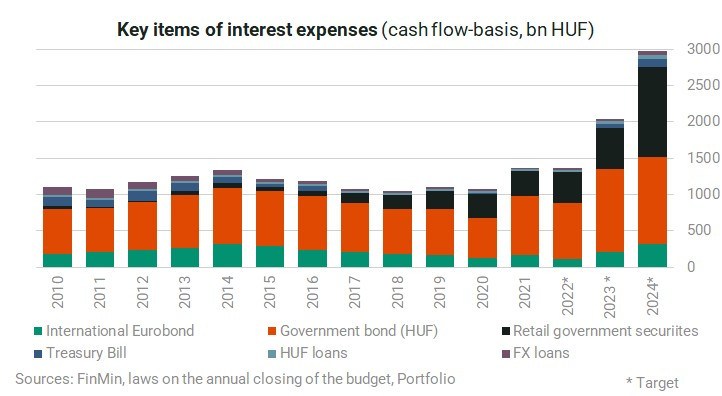
In the light of the bloated public interest expenditure, the high share of retail financing is a positive factor, so that interest income is going to the public. This is partly the aim of the development of the retail government bond market over the last ten years, to keep as much interest expenditure as possible at home.
Central bank loss is another drag
Another indirect consequence of skyrocketing interest rates is that the MNB already had a loss of HUF 402 billion last year. This means that the government does not need to recapitalise the central bank for the time being, but the loss in 2023 could be several times higher. This could add hundreds of billions of forints to budget spending in 2024.
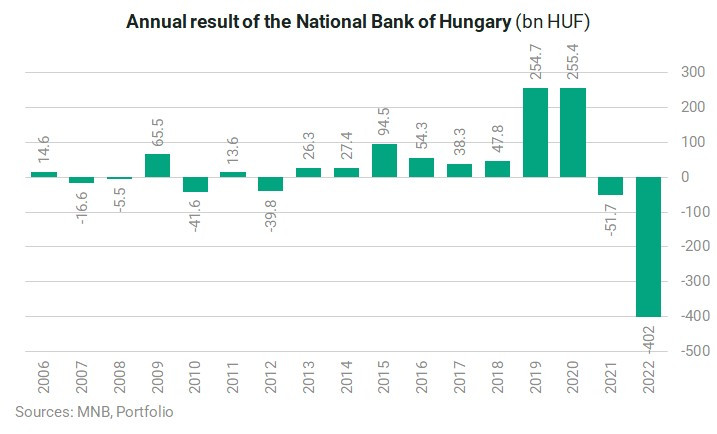
Last year, it was mainly the profit booked on the forint exchange rate that saved the MNB from even bigger losses, but this gain could be much smaller in 2023, based on the cost of foreign exchange reserves. In addition, the so-called equalisation reserve within the central bank's own funds could fall to virtually zero, from HUF 750 billion last year. This means that, including the loss, the MNB's equity capital could fall by up to HUF 2,000 billion.
This could mean an extra burden on the budget of HUF 300-400 billion a year over five years, even based on the amendment to the law adopted earlier this year.
The problem is that the draft budget does not take this burden into account at all, which means that an item of up to 0.5% of GDP could appear in the budget, which could wipe out a large part of the room for manoeuvre.
Overall, the surge in interest expenditure and the mandatory reimbursement of the central bank's loss could mean spending of up to 4.5-5.0% of GDP, while the government aims to bring the overall deficit below 3%. This would imply a significant primary surplus in the budget, which has hardly been seen in Hungary in recent decades.
In addition to the huge interest payments, the government's deficit reduction plan implies that the primary balance (excluding interest payments) could turn into a surplus in 2024 and then gradually increase to over 2% by 2027.
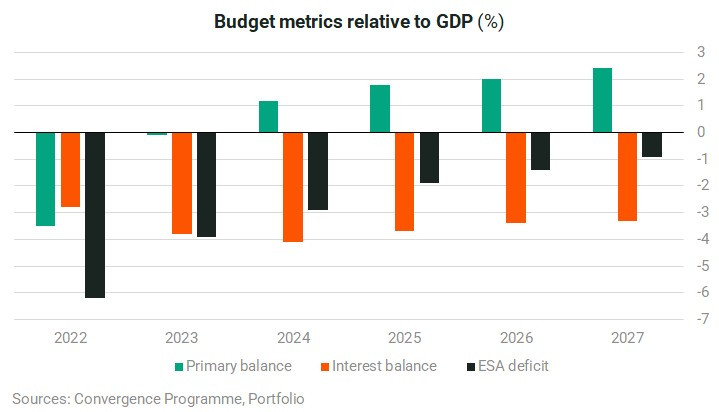
As said above, this would require a highly disciplined fiscal policy due to spiking interest expenditure, and there will be little scope for a possible increase in the budget shortfall in the coming years, especially as the windfall tax should be phased out by the end of 2024. Not that the government has kept its earlier promise to eliminate this "temporary" tax at the end of this year.
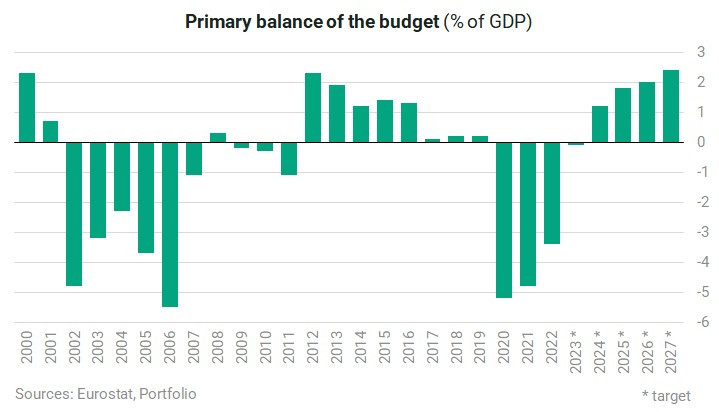
The boldness of this objective is also attested by the fact that since 2000, the government has never managed to achieve the primary budget surplus of 2.4% of GDP that it plans to achieve by 2027. Twice, in 2000 and 2012, the general government came close, with a surplus of 2.3%.
Cover photo: Getty Images





