Harbinger of austerity: Hungarian gov't launches Public Expenditure Review Task Force


Plan for reform taking shape
The Government Decision 1262/2023 (4 July) on the Review of the Efficiency of Public Expenditure was published in the Hungarian Official Gazette, which lists in detail over several pages the tasks of the government and its members in the thorough review of public expenditure.
The decision states that the government has taken its decisions to ensure the swift implementation of the measures under the reform of the Hungary Recovery and Resilience Plan, aimed at improving the efficient use of public spending through expenditure reviews.
The full content of the resolution shows that the government is preparing a major overhaul, and as a first step it wants to review what the state spends on, how much does it spend and how efficiently. It will be interesting to see what conclusions are reached after the review of public spending and the utilisation of the various tax breaks, and to what extent and how the proposals are implemented. For example, whether the government might, as a result of the preparatory work, abolish or restructure certain spending or tax breaks.
In any case, it sends out a message that the first round of the extremely wide-ranging scrutiny of the expenditure side of the public purse has included sensitive areas such as family allowances. In any case, it is a positive message that this time it seems that the government is finally not planning to make savings on the expenditure side of the state budget all across the board at the same time, but that structural aspects may also be given greater weight.
But it is also a good message that the government has already set a quantified savings target in the document (a 3% reduction in health spending is also expected), thus clearly setting the direction for stakeholders in the field. The overall message is that the Hungarian state, which has been suffering from fiscal alcoholism (overspending, over-expansion) for years, cannot go below a certain level of spending, so a review of the structure of spending is now needed.
It is important to note that this is the start of a pre-decision process, this government decision will not solve the short-term budgetary problems in 2023 and 2024, but later on, if the government implements a spending rationalisation and reduction programme on this basis, it could lead to a lasting improvement in the general government balance in the medium term.
The decision, which consists of 15 key points and two annexes, allocates tasks to each of the ministers concerned and sets specific objectives.
The first task is given to Mihály Varga, Minister of Finance, who is to ensure the coordination and implementation of expenditure reviews and to establish a unit within the Ministry of Finance responsible for coordinating and implementing expenditure reviews within the Ministry of Finance with immediate deadlines. This department should work closely with the Public Expenditure Review Task Force, also established by another decree published in this Official Gazette, in the development of legal and organisational rules for expenditure reviews, and in the planning, implementation and monitoring of public expenditure reviews.
The first specific task is that by 31 December 2023, the government must review spending and related tax credits for health and family support and housing in 2023, but an important proviso is that it must do so up to a level of at least 10% of government spending in that year, based on the final accounts for 2021.
The second specific task is that, by 31 December 2024, the government must review its spending on education and public investment in 2024, again with the proviso that it must do so to the extent of at least 10% of government spending in that year, based on the final accounts for 2022.
The Minister of Finance is also responsible for developing a similarly detailed work plan for 2024, in consultation with the other ministers concerned, and must do so by 29 February 2024. That said, it very much looks like a long-term, permanent project on the part of the government, as it is preparing to
carry out spending reviews every year after 2024,
and Mihály Varga will have to make a submission by February each year on which additional spending reviews will be carried out in that year, based on criteria of the scale, variation, priority and effectiveness of spending. The Finance Minister is also responsible for submitting a quarterly report to the government on the progress of the spending reviews.
The Finance Ministry will be assisted in this new kind of decision-preparatory work by the newly established Public Expenditure Review Task Force. After consultation with the Task Force, the Minister will prepare a report setting out the results of the spending review, measures and policy options for savings and efficiency gains in the spending areas concerned, and recommendations on possible follow-up measures. This shall be carried out by 31 January each year following the year of the review. This report will be submitted each year to the relevant committee of the National Assembly and to the Fiscal Council.
The results of the government's work on the spending review will also be reflected in the budgets. Finance Minister Mihály Varga has also been tasked to "present in the general explanatory memorandum of the draft annual budget law the findings of the 2023 and 2024 reviews and their outcome in line with the 'comply or explain' principle".
Finally, the final point of the resolution requires the Finance Minister to
submit a final report to the government by 31 December 2025 showing that the four spending reviews for the period 2023-2024 together covered at least 20% of government spending.
Health, family benefits, and housing in the crosshairs
The decision states that "the purpose of the expenditure review is to examine in detail the adequacy of public expenditure in the areas under review, in particular its positive social impact, its contribution to economic growth and its impact on the budgetary position and the medium-term sustainability of public expenditure".
The government has also set clear and quantified targets for expenditure in 2023.
- In the area of health, the aim of the 2023 review is to "review the structure of public health expenditure and its alignment with policy objectives, and make recommendations for more efficient resource allocation based on the outcome of the review".
- A review of health spending will aim to achieve savings of at least 3% in each expenditure area, with associated efficiency gains and the potential for redeployment to areas of expenditure with higher health gains, taking into account current policy objectives.
- The aim is also to make recommendations to improve the values of some public health indicators in the longer term, following a comparison with the Visegrad 4 countries.
- Conducting a review of the structure of public expenditure on family and housing support and related tax benefits and their alignment with policy objectives, and making recommendations for a more efficient allocation of resources based on the results of the review.
- A minimum of 3% savings in some expenditure areas related to family and housing support and related efficiency gains should be achieved, and depending on the results of the review, certain forms of support should be better targeted, and the possibility of reallocating budget resources to priority areas should be explored, taking into account current policy objectives. These objectives are to steer demographic trends in Hungary in a positive direction, to encourage family formation, to increase the fertility rate, to strengthen the financial security of families, to improve the reconciliation of work and family life and to ensure a predictable family policy in the long term.
The specific areas of expenditure that would be touched
The government also sets out in detail the work plan and methodology for the spending review for 2023 in the decision. These set out the expenditure lines that the government expects to review.
For health, these will be the items subject to review:
- Tasks related to the National Public Health Strategy
- Consolidated specialised care
- High-value pharmaceutical financing
- Expenditure on pharmaceutical subsidies
- Pharmaceutical subsidy provision
- Subsidies and loans for other medical equipment
- Aid for custom-made medical devices
For family support and housing, these will be the headings concerned:
- From support for certain social and child welfare tasks of municipalities: Support for family day nurseries; Support for day nurseries and mini day nurseries
- Car purchase grants for large families
- Targeted support for student loans for those on childcare assistance (GYES) and childcare allowance (GYED)
- Support for empowerment and volunteering programmes and tasks / Support for empowerment, volunteering and crisis management programmes and tasks
- Support for social, civil and other organisations in the field of family and youth affairs, community and talent support programmes and tasks
- Support for young people's first successful language exam
- Contribution towards driving licences for young people
- Relevant part of appropriations for programmes in the fields of children, youth and family policy
- Family allowance
- Maternity allowance
- Childcare support services
- Child rearing allowance
- Childbirth leave compensation
- Start of life grant
- Advance payment of child support
- From the appropriation for municipal social services: fees for the care of children in the home
- Personal income tax: family tax base allowance and first-married couples' allowance; personal income tax exemption for mothers of four; personal income tax exemption for mothers under 30; personal income tax exemption for those under 25
- Duties: duty-free inheritance; exemption for housing with family home building allowance (CSOK)
- Baby grants
- Support for student loan schemes
- Housing subsidies
- Domestic day nursery, family day nursery development programme for non-state operators
- Pension contributions paid by the insured person: Family contribution allowance
- Social contribution tax: tax relief for women entering the labour market with three or more children
- Infant care allowances
- Sick pay from appropriations for childcare sick pay
- Childcare and adoption allowances
- Nursing services, maternal, child and youth protection
- Breastmilk supply
A kind of think tank will be set up
In another decision, the government set up the Public Expenditure Review Task Force. Its task is to contribute to a detailed examination of the adequacy of public expenditure in the areas under review, with particular reference to its positive social impact, its contribution to economic growth and its impact on the budgetary balance and medium-term sustainability.
In line with international practice, the Task Force has a two-tier structure. The Steering Board acts as the strategic steering body, while an expert working group is set up to review each area of expenditure in detail.
The Chair of the Steering Board is the State Secretary with responsibility for public finances in the Finance Ministry, and the other permanent member is the Deputy State Secretary with responsibility for the budget in the Finance Ministry. Depending on the area of expenditure under scrutiny, the Steering Board shall also include the state secretary appointed by the ministers responsible for
- tax policy,
- public investment,
- family policy,
- healthcare,
- supporting the development of government strategies
- education
- state aid for housing,
- housing policy
- vocational training.
The following bodies may delegate members to the expert working group:
- the President of the State Audit Office,
- President of the Central Statistical Office (KSH),
- President of the Hungarian State Treasury,
- Governor of the National Bank of Hungary (MNB).
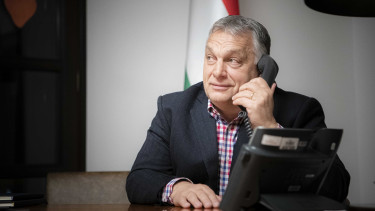
Cover photo: MTI/Prime Minister's Press Office/Zoltán Fischer