Hungarians may breathe a sigh of relief after price surges, but new risk looms


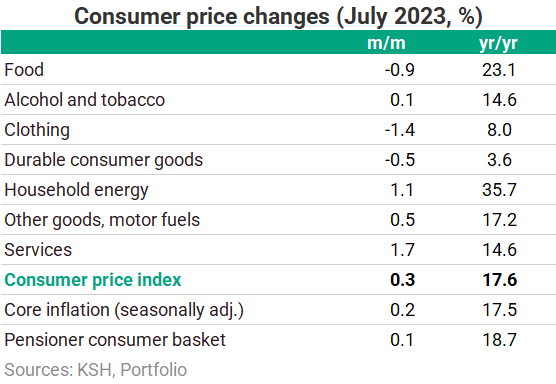
Inflation in annual terms fell to 17.6% in Hungary in July, as expected, so there is a realistic chance of reaching single digits by the end of the year. In March, the annual rate of price increases peaked at 25.7% and has been falling at accelerating pace since then.

On a monthly basis, prices were still up, but prices for clothing, food and consumer durables were down compared to June. In addition, the base effect is increasingly contributing to the decline in inflation.
Read more about Hungary's place in the EU inflation rankings by clicking on the link below:
According to a survey by think tank GKI, the inflation expectations of the population fell to 46.4 points last month from 47.6 points in June. The peak was recorded at 83 points last September, before the index retreated to 60 points this spring, from where it dropped further as inflation subsided.

The evolution of inflation expectations is of particular importance because anchoring them is essential to successfully rein in the price rise. Indeed, if expectations remain elevated, this may indicate a persistent price pressure. In that case, workers will expect employers to raise wages at a higher rate, which may contribute to the occurrence of a price-wage spiral.
A warning sign in the GKI survey may be the proportion of companies planning to raise prices. This has continued to fall in industry and trade, but in construction and business services, the number of companies planning to raise prices has gone up again.
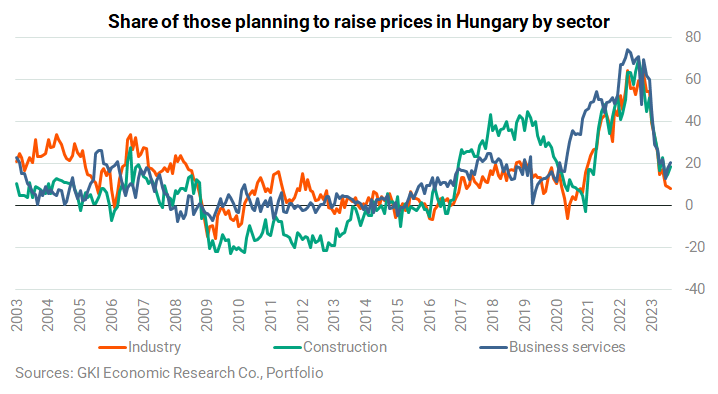
In the construction sector, the share of those who said they would raise prices in the next period went up from 14.9% in June to 18.7%, the highest since May. And in the services sector, one in five firms are now planning to raise prices, also the highest proportion since May. It seems that,
with inflation falling, businesses in these two industries are once again smelling blood.
And this could risk inflation being stuck high in the period ahead. In the case of services, inflation has already shown signs in recent month that reducing prices will not be easy, and the latest survey suggests that this trend could persist in the period ahead.
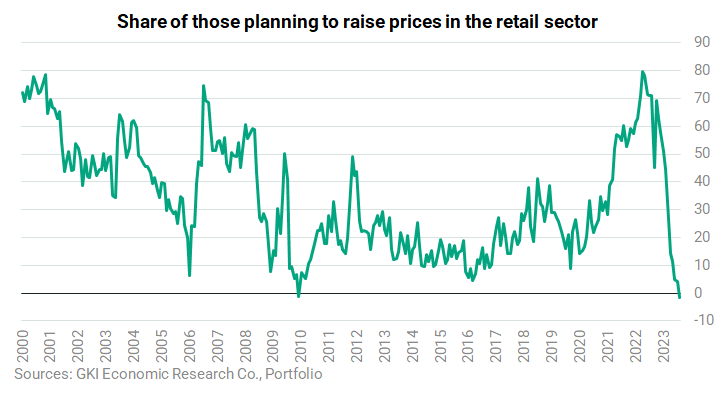
In trade, on the other hand, the share of those planning to raise prices has fallen into negative territory, meaning that no one is planning further price increases.
such a phenomenon is unprecedented in the history of the survey.
Government measures may have contributed to this, as price caps were eliminated, but the introduction of mandatory sales discounts and the launch of a price monitoring system have clearly triggered a price competition in the sector. In addition, the weakness of the retail sector is encouraging retailers to grab as large a slice as possible of the shrinking demand.
This risk is not specific to Hungary, as there are now concerns almost everywhere in the world that the fall in energy and food prices will be followed by a sustained rise in services prices, which could lead to a sustained higher inflation path than in the past. In the short term, this may be helped by sustained wage increases, but in the longer term it may be exacerbated by deteriorating demographic trends.
Cover photo: VioletaStoimenova via Getty Images