Hungary's inflation has fallen further but could disappoint many


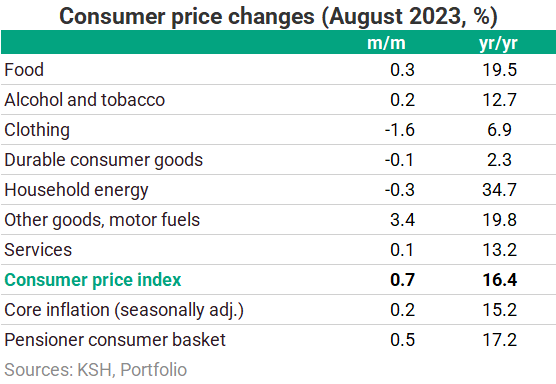
Inflation in Hungary fell further to 16.4% yr/yr in August from 17.6% in July, the KSH reported today. The last time we saw a lower headline figure was in June last year. However, analysts were expecting a slightly bigger drop, with a median forecast of 16.2% and the highest estimate at 16.5%, i.e.
the actual data was very close to the top of the forecast range.

On a month-on-month basis, the increase was 0.7%, which cannot be labelled as moderate, so the base effect, the dropping out of last year's large price shock from the index, is a significant contributor to the decline in the 12-month index. Core inflation declined to 15.2% from 17.5% the previous month, while pensioner inflation was 17.2% in August.
The short-base core inflation indicator continued to fall, an important sign that disinflation is holding up despite the small negative surprise. The quarterly annualised price index fell to 3.6%, which is actually close to price stability. In other words, the minor surprise to the upside in the headline inflation figure was driven more by effects outside core inflation (and therefore thought to be less persistent), which is good news for the structure of inflation.

Analysts say meeting the government's year-end single-digit inflation target is not at risk, with most experts expecting inflation to be below 10% by November, meaning the positive trend could continue in the coming months.
As for the August print we may have mixed feelings about it when look at the specifics. Rather surprisingly,
the month-on-month decline in food inflation has failed to continue.
Once again, the KSH recorded a 0.3% increase in this segment, so the annual index of 19.5% is mainly the result of the base effect. Although the government had previously had high expectations for the online price monitoring system and the extension of the compulsory discount sales, these do not seem to have been able to help cut food prices in any meaningful way so far.
Also unpleasant was the rise in fuel prices, but this was expected in advance and was perhaps less of a surprise. On the positive side, however, monthly inflation in services eased significantly, to just 0.1% in August from 1.7% in July.
The data are unlikely to have a material impact on the monetary policy of the central bank (MNB), as inflation continued its retreat as expected. Thus, the Monetary Council is expected to lower the benchmark rate by another 100 basis points at the end of September, bringing it into line with the base rate of 13%. At the same time, the central bank may even highlight a renewed rise in food prices as a risk factor.
Annual changes
Compared to August 2022, the sharpest food prices increases were recorded for sugar (67.9%), snacks (29.6%), chocolate and cocoa (25.8%), pastries (20.1%), and bologna and sausages (19.7%). Within this product group, the price of flour fell by 10.4%.
Household energy rose by 34.7%, including 47.1% for piped gas, 25.3% for electricity and 25.2% for cylinder gas. Vehicle fuel prices rose by 31.1%. Services prices went up by 13.2%, including motorway toll, car rental and parking by 24.6%, sports and museum admissions by 20.4%, vehicle repair and maintenance by 19.4%, holiday services by 18.1%, housing repair and maintenance by 16.2% and taxis by 16.1%.
The price of alcoholic beverages and tobacco increased by 12.7% on average, including alcoholic beverages by 16.4%. The price of durable consumer goods rose by 2.3%, including kitchen and other furniture by 11.2%, heating and cooking equipment by 9.5%, new cars by 6.9%, household furniture by 6.1% and used cars by 8%. The prices of pet food leaped by 34.8%, washing and cleaning products by 30.2%, personal care articles by 18.3% and household repair and maintenance articles by 8.4%.
Monthly changes
Compared to July, the KSH recorded the following food price increases sugar +54.6%, pork +7.3%, poultry +2.5%, snacks +2.3%, cooking oil +1.5%, chocolate and cocoa +1%, while prices dropped for flour (-11.5%), eggs (-9.5%), seasonal food (potatoes, fresh vegetables, fresh domestic and tropical fruit in total) -5%, butter and spreads (-4.4%), bread (-2.3%) and dairy products (-1.9%). Vehicle fuel prices rose by 8.2%. Clothing prices were down 1.6% and household energy by 0.3%, with electricity down 0.6% and mains gas unchanged.
Cover photo: Getty Images





