Huge turnaround in Hungary's external balance


The improved external position was due to the combined effect of an improving energy balance due to falling energy prices, lower import demand due to diminished domestic demand, falling inventories and rising exports, according to the data published by the National Bank of Hungary (MNB) on Tuesday.
In Q2 2023, Hungary’s seasonally adjusted net lending (i.e., the combined balance on its current and capital accounts) amounted to more than €1.2 billion in the second quarter of 2023. The external financing needs for the four quarters thus fell to 4.1% of GDP, with the last financing capacity (seasonally adjusted in a top-down approach) for the second quarter of 2023 already showing a surplus (financing capacity) of 2.4%.

The country's debt indicators were mixed, with gross external debt as a share of GDP declining slightly to 68.8%, while working capital outflows saw net external debt rise to 14.6% from near its historical low.
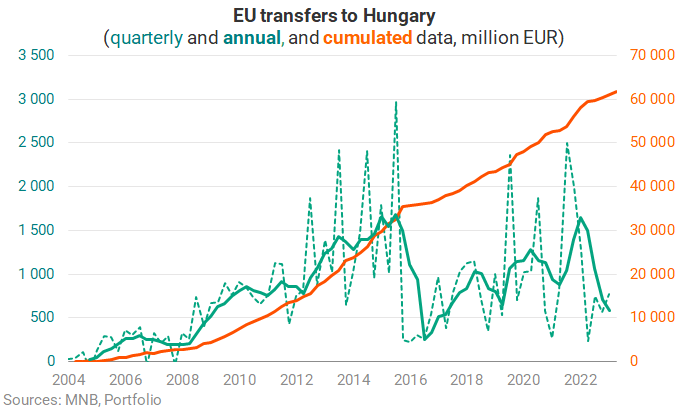
The slowdown in EU funding has also led to fewer commitments, which is already visible in the trend in EU transfers. However, this has a much smaller impact on Hungary's ability to finance than the huge improvement in the energy balance.
Cover photo: Getty Images





