Hungary inflation falls sharply in September


Inflation was 12.2% in September, in line with preliminary expectations, with analysts polled by Portfolio expecting an average of 12.3%. The current rate of price increases is the lowest since June last year, meaning that the pressure on domestic consumers is easing noticeably. However, the current rate is
still expected to be among the highest in Europe.

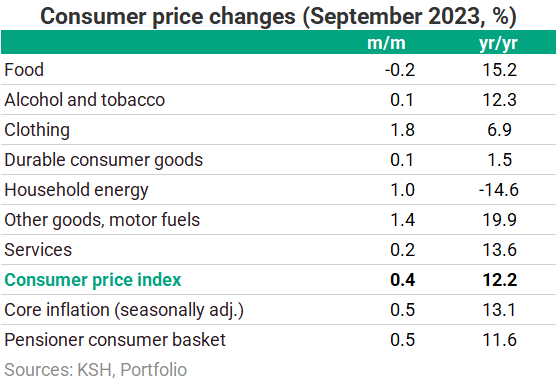
Core inflation was 13.1%, down from 15.2% in August, while the price index for the pensioner's basket of consumer goods fell to 11.6% from 17.2% the previous month.

Looking at individual product groups, it is perhaps surprising that food prices fell by 0.2% on a monthly basis, while analysts had expected a minimal increase. Thus, on an annual basis, the rate of price increases in this category slowed to 15.2%. Only other articles and fuels rose by a higher rate - 19.9% - over a year, with a monthly increase of 1.4%. The increase was also above 10% for services and for spirits and tobacco. On the other hand, household energy saw a significant price fall of almost 15%, the result of a change in the overheads reduction that was included in the statistics last September, which brought a significant one-off jump in prices, and which has now been removed from the base.
In other words, the pleasant surprise was food prices in September and the painful factor was the rise in fuel and clothing prices.
The newly released statistics are unlikely to have a significant impact on the National Bank of Hungary's (MNB) monetary policy, as they were in line with analysts' expectations and the central bank had also projected a rate of around 12%. Thus, the question remains as to how the Monetary Council will proceed after the merger of the base rate and the policy rate at the end of October, how much it will lower the 13% rate.

- Looking at the prices of individual products, the biggest increases over a year for food were for sugar (61.3%), chocolate and cocoa powder (26.1%), snacks (26%) and soft drinks (24%).
- Within this product group, the price of flour fell by 13.9% and that of margarine by 1.2%.
- Within household energy, the price of piped gas fell by 33.5%, electricity by 3.2%, firewood by 18.7% and cylinder gas by 9.7%.
- Vehicle fuel prices increased by 35.4%.
- Services rose by 13.6%, including 22.2% for motorway use, car rental and parking, 20.2% for holiday services, 17.5% for sports and museum admissions, 16.9% for vehicle repair and maintenance, and 21.7% for travel to work and school.
Over a month,
- food prices fell by 0.2% on average, with flour down 3.4%, seasonal food (potatoes, fresh vegetables, fresh domestic and tropical fruit combined) down 3%, sugar and dry pasta down 2.6% to 2.6%, eggs down 2%, margarine down 1.8%, dairy products down 1.7%, milk down 1.5%, non-alcoholic beverages down 2.4%, fruit and vegetable juice down 0.9% and pork up 0.8%.
- Vehicle fuel prices rose by 3.3%.
- Clothing was 1.8% more expensive, household energy 1% more expensive, firewood 7.7% more expensive and piped gas remained stable.
Cover photo: Copyright by Tom Werner via Getty Images





