Hungarian investments could be threatened by the new immigration law


The government's plans to change immigration rules quickly caused alarm among managers of major Hungarian Shared Service Centres (SSCs) and Business Service Centres (BSCs). Presented to parliament, it has attracted attention mainly because of guest workers and the new paid residency, guest investor status,
but market operators and immigration experts say it significantly reduces the employment opportunities for non-EU nationals with secondary education or non-specialist qualifications.
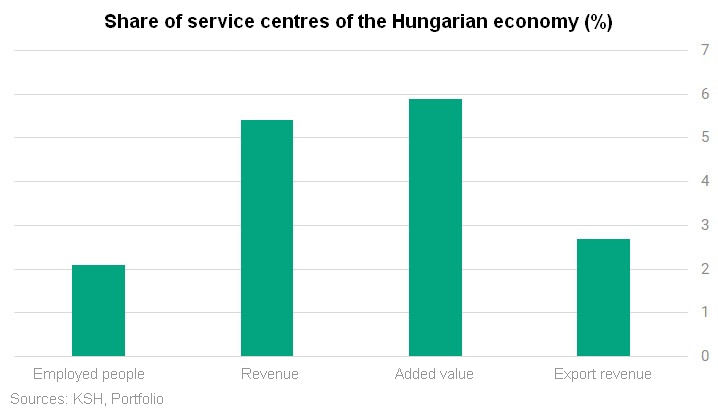
The problem is that the conditions of residence of one of the largest groups of workers, in a sector that employs around 2% of the total workforce, would be worsened, while the turnover of the firms concerned exceeds 5% and their added value is close to 6% of the national economy. Moreover, salaries in the sector are higher than average wages, exceeding HUF 850,000 gross.
"While the current draft law creates a number of new categories of immigration, these are mainly specific conditions for two categories: the import of low-skilled guest workers, typically in manual jobs, and the employment of people with higher education qualifications. Thus, the conditions for workers with secondary or non-specialist tertiary education are the same as for unskilled migrant workers and are very unfavourable,
whereas the previous regime did not impose such strict qualification conditions for work permits, it was equally strict for all, but the conditions were equally attractive,
Helpers Hungary, a company offering business and immigration management services, told Portfolio.
As they explained, the current legislation also stipulates that a third-country worker must have the necessary qualifications to fill the position. In practice, however, this means that if the position requires a higher education qualification (FEOR 2), you must prove that you have a higher education qualification. Whereas if only a secondary education is required, a school leaving certificate (FEOR 3. 4) is sufficient. (FEOR is the Hungarian standard classification of occupations.)
Under the system still in force, the conditions for hiring a third-country national included that the employer had to testify that it had a need for labour, submit a pre-employment contract detailing the job, the proposed salary and the date of employment, the duration of the employment relationship and the place of work.
You also had to prove that you had the necessary qualifications (which in many cases were not a university degree, but, for example, language skills). The permit was valid for a maximum of two years, but could be extended for a further two years, family reunification was allowed for the duration of the stay and you could apply for a permanent residence permit after three years if you met additional conditions.
This allowed workers to build their careers, plan ahead and their employers to do the same. It is also worth adding that after three years of continuous residence in Hungary, they could be eligible for a national residence permit, whereas now this possibility is taken away from guest workers and those with a residence permit for employment purposes.
| Hungary's planned immigration options | |||
| Type of permit | Conditions | Duration | Notes |
| Work residence permit | - Actual work done for someone else, for remuneration - Authorised scope of occupations | Up to 2 years, with 1 year extension option, but not beyond 3rd year. | Cannot be based on additional rights. - May not be granted national residence card. - Family reunification excluded. |
| Hungarian Card (highly-skilled worker) | - Tertiary level professional qualification. - Actual work done in managerial/owner status. | Up to 3 years, with optional 3-year extension. | - Specific categories (sportsperson, performer, film production). - Conditions of social coexistence must be met. - Family reunification authorised. - May be granted national residence card. |
| EU Blue Card (highly-skilled worker) | - High level of education, higher education or professional qualification. - Suitable employment, health and housing conditions. | Minimum 2 years, maximum 4 years, renewable by 4 years. | - Authorised to stay in EU - Family reunification authorised. |
| Corporate Card (Relocation of business) | - A director or employee of a legal entity operating under a legal basis or under a contract of settlement. | Up to 4 years, with extension option. | - Family reunification authorised. - May be eligible for national residence card. |
| National Card (specific citizenship) | - Serbian or Ukrainian citizen. - Actual work based on an employment relationship. | Over 180 days, up to 2 years, with possibility of 3-year extension. | - Application for residence permit on other grounds not possible. |
| Sources: Portfolio summary | |||
For work permits (which previously covered all work permits regardless of qualifications), no higher education qualification would be required, but the possibility of family reunification would be removed and the residence period would be limited to 2+1 years for these permits. Thus, many workers who are currently working with a secondary education (e.g. in an SSC or IT company because of their language skills)
lose the opportunity to plan for the longer term with their employer or to settle in Hungary with their family.
The Hungarian Card, an unfortunate naming choice, offers a three-year scheme, which can be extended for the same period, but it requires a higher education qualification, and is intended for highly qualified employees and small company founders in managerial or ownership positions, but even for the latter it is only applicable if the company owner has a relevant higher education qualification and not only manages the company but also works in it.
The planned Company Card is not for ordinary employees either: it is offered to managers of newly established or relocating companies, although the possibility to apply is left open for employees, but family reunification is excluded.
As indicated by Helpers Hungary, they are confident that this legislation will be amended to remedy the situation of classic expats. As the experts told us, the short permit period and the exclusion of family reunification for expatriates in potentially high-paying positions would make the system less attractive.
New regulation may be harmful for present and future investment
Noémi Csaposs, head of the National Association of Human Resource Management, has a similar view, saying that the introduction of the regulation in its current form could in time create a serious competitive disadvantage. This is because the middle strata, which is already above the low-skilled but without higher education or vocational training, is excluded from this regulation.
The foreigners concerned, working in SSCs, BSCs or knowledge centres, are doing high added value work, even if they often do not have a higher education degree, she said. Se told Portfolio that language skills are often the key to these jobs, making non-EU workers vital for companies because they are native speakers of less common languages. But there are also a number of foreigners working in skilled intellectual jobs who have degrees in other fields but have been trained by companies to do a key job.
This problem can occur in many types of jobs: typically, it is no longer programmers or IT specialists who fill IT support or helpdesk positions, but people with a degree or a bachelor's degree, for example.
Csaposs believes that the legislation is more about expectations based on qualifications rather than actual experience or practical knowledge. Although the draft legislation is ambiguous on various points, it is possible that, for example, a residence permit allowing intra-corporate transfers may not be granted to a professional with specific knowledge but without the relevant degree or diploma. A real-life example might be someone who is an electrician but, for example, is programming robotic arms in a manufacturing company that is now relocating here.
"In this area, it is not a question of hiring foreigners instead of Hungarians, because all Hungarian companies are looking for Hungarian workers first. The country also benefits because we are talking about skilled, well-paid foreigners who pay taxes and consume here," she added.
She noted that the heads of several SSCs and BSCs already present are also concerned that immigration rules will be tightened in this way: according to Noémi Csaposs, the measure could put Hungary at a global competitive disadvantage compared to neighbouring countries.
This could even scare off potential new investors, but also existing ones, because it imposes a considerable bureaucratic burden on companies in the long run, with unfavourable residence conditions.
As these are intellectual jobs that do not necessarily require a physical presence - for example, there are many service centres in Hungary serving American or Asian companies and clients - existing service providers can relocate if they find it unduly burdensome to employ third-country nationals.
Csaposs added that many foreign students study in Hungary, and it would be in the country's interest for them to work here and start a family in Hungary. "Children born here go to school here, learn Hungarian and then go to work in the country," she said. Csaposs believes that this could be an important factor in the face of worsening demographic indicators. She said it could also be in the national interest to make it easy for foreigners already studying at Hungarian universities to find jobs if the state spent money on their education.
She believes that even if change is needed - although abuses are not common - it should be done through stricter enforcement of existing rules and more frequent checks.
The proposed change will throw the baby out with the bathwater,
she warned.
No precise figures are available on the proportion of third-country nationals with a secondary education who received a work permit in Hungary, but the expert stressed that many Americans and Asians also came to the country in this way.
Change is still possible
We contacted the Ministry of Economic Development, which is responsible for employment, to find out why the regulation was not included in the case of the strata discussed in the article, and what feedback they have received from employers so far. The ministry said it has not yet received any comments on the subject.
It was also indicated that "the draft law on general rules on the entry and residence of third-country nationals is a framework law,
the detailed rules will be set out in implementing regulations to be issued later.
They stressed in their response that "the aim of the tightening of the law and regulations is to protect Hungary from migration and to protect Hungarian jobs."
They also wrote that they want to clearly regulate who can stay in Hungary and for how long, and in this spirit the draft law regulates the titles and conditions of employment of the persons concerned, and makes it clear that guest workers can only be employed in Hungary under the strictest rules.
Neither work nor other stays can be unlimited and cannot be automatically extended,
they concluded their e-mail to Portfolio.


Cover photo: Getty Images





