Hungary's inflation drops to under 8% in November


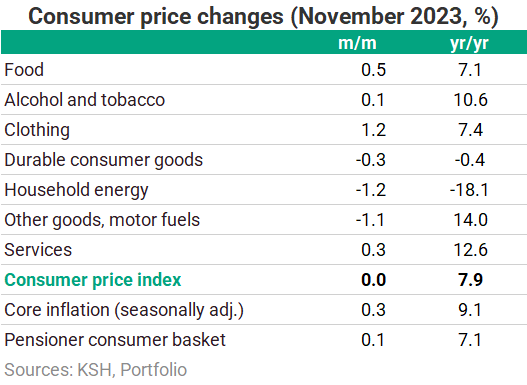
The fall in inflation to below 10% in October was no small surprise, and the November figure also surprised on the downside. The stats office reported today that consumer prices rose by 7.9% compared to November 2022, while core inflation was 9.1%.

Inflation was last lower than this in December 2021, almost two years ago.
Looking at the individual product groups, the annual price increase for food was below average for the first time in a long time, rising by 7.1% in a year, while prices were up 0.5% compared to October. Above-average increases were recorded for alcoholic beverages and tobacco, fuels and services, where the annual increase remained north of the 10% mark. Household energy and consumer durables, on the other hand, dampened the annual figure.
Analysts now expect inflation to fall to around 6% by December, but believe that 2024 will be more challenging. The excise tax hike on fuel to be effective on 1 January and the hike to the minimum wage (15%) and the wage minimum for skilled workers (10%) could trigger price increases again, as could the planned introduction of the mandatory deposit return system, the cost of which could be passed on to prices.
In other words, disinflation is unlikely to continue at the current pace next year, with most analysts expecting price rises of around 5% in a year's time.
The data did not come as a major surprise, so it is unlikely to have any material impact on monetary policy. It may have been slightly lower than the MNB's preliminary estimate, but this is unlikely to encourage the central bank to cut interest rates more than it has done so far. It said rates the pace of monetary easing will remain 75 basis points, and it is most keen to retain its credibility.

The question is, of course, what impact the scandal that has erupted in recent days questioning the reliability of the statistics of the KSH will have on the inflation figures. Some experts are talking about "pressure from the top" in respect of inflation data, and on Thursday Eurostat, the statistical office of the European Union, acknowledged it was in talks with the Hungarian statistical office.
Cover photo: Getty Images





