Hungary is the only country in the EU with passenger car registrations down in Jan-Nov


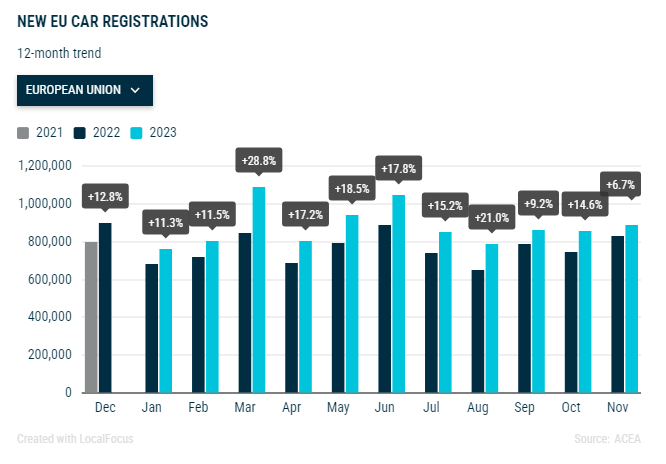
In November 2023, new car registrations grew by 6.7% yr/yr to 885,581 in the EU, which follows a 14.6% growth in October.
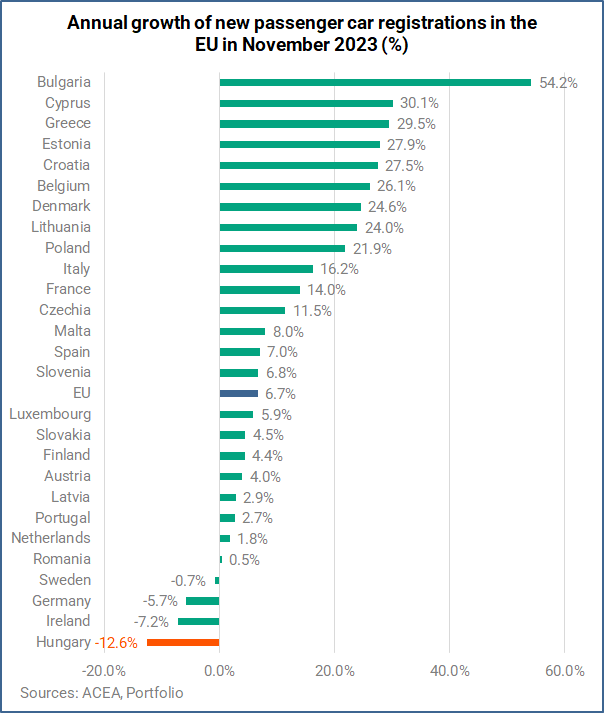
There were substantial double-digit gains in some markets, including two of the largest: Italy (+16.2%) and France (+14%). Conversely, the German car market retracted, recording a 5.7% decline compared to November 2022.
New car registrations in Hungary declined by 12.6% yr/yr in November to 8,305 units, which places the country right to the bottom of the EU rankings, with only three other member states recording an annual drop here.
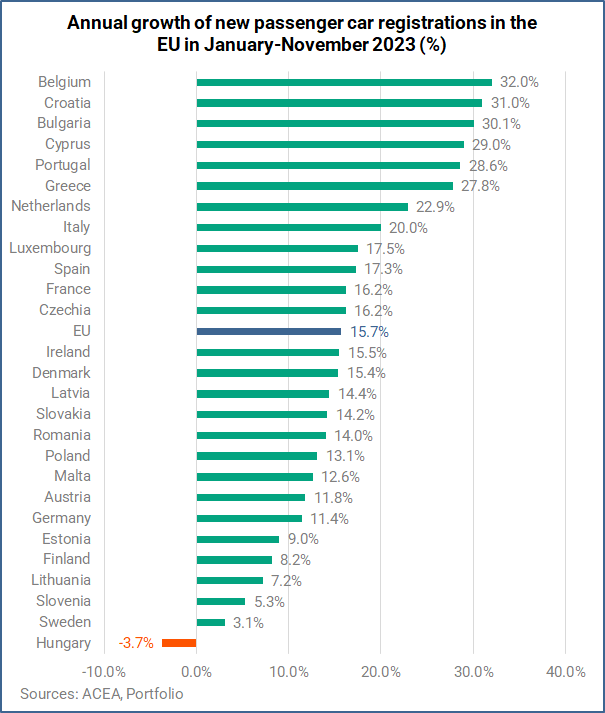
Eleven months into 2023, new car registrations increased by a significant 15.7%, reaching nearly ten million units (9.68 mn). With the exception of Hungary, all EU markets grew during this eleven-month period. The four largest markets notably contributed to this trend: Italy (+20%), Spain (+17.3%), France (+16.2%), and Germany (+11.4%).
A total of 99,743 new passenger cars were registered in Hungary in January-November, down 3.7% in annual terms.
In November, the battery-electric (BEV) car market share increased to 16.3%, a rise from 15% last year. The year-to-date share now holds steady at 14.2%, consistently surpassing diesel, which remained at 13.7%. Hybrid-electric cars (HEVs) were ranked second with a 27.4% market share, while petrol cars maintained their lead at 32.7%.
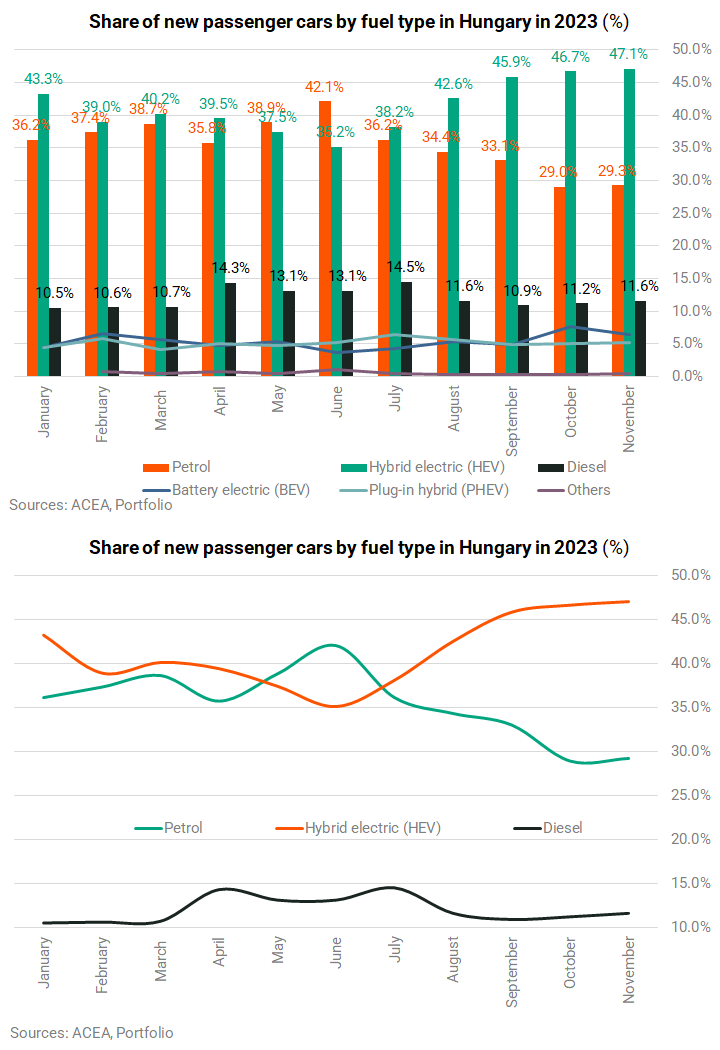
The market share of HEVs alone in Hungary rose to 47.1%, which is greater than that of petrol (29.3%) and diesel (11.6%) cars combined. The turnaround came in September, with the market share of HEVs rising to 45.9% from 42.6% in August, and the share of petrol dropping to 33.1% from 34.4% and that of diesel going down to 10.9% from 11.6%. (Note that the sharp drop in the market share of petrol-fuelled cars occurred in tandem with a moderate rise in the share of diesel cars in October.)


In November 2023, EU registrations of new battery-electric cars (BEVs) surged by 16.4%, totalling 144,378 units. Several markets contributed to this growth with double and triple-digit percentage gains, most notably Belgium (+150.2%), which is now the fifth-largest market by volume. However, battery-electric car sales experienced a setback in Germany, declining by 22.5%. Despite this, the year-to-date volume reached nearly 1.4 million units, reflecting a substantial 48.2% increase compared to the previous year, representing a 14.2% share of the EU car market in this period.
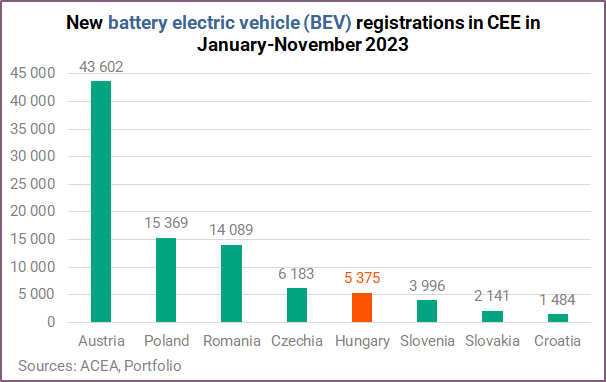
BEV registrations in Hungary dropped by 6.5% yr/yr in November - there were only six member states that showed a decline here - , but jumped by 24.1% in the first 11 months. While the latter figure may seem favourable, in EU terms it marked the second-smallest growth after Croatia (22.8%) and compares with a +48.2% EU average.
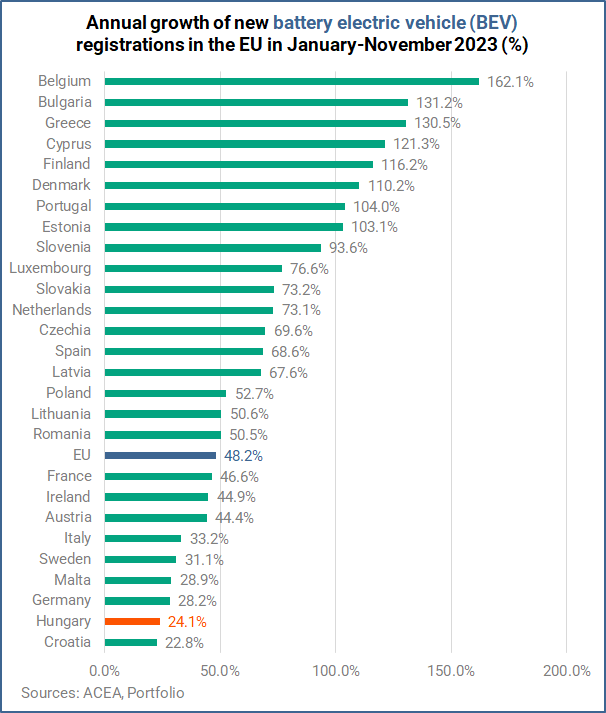
Here's Hungary's BEV sales in regional comparison too.
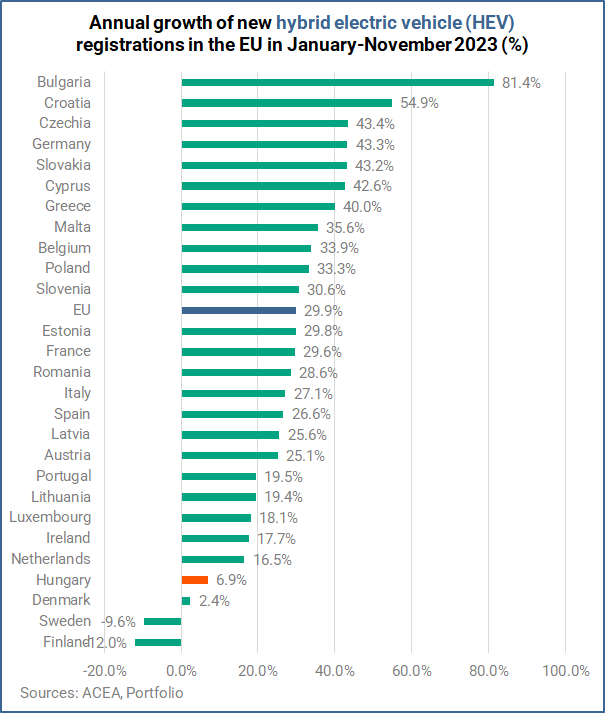
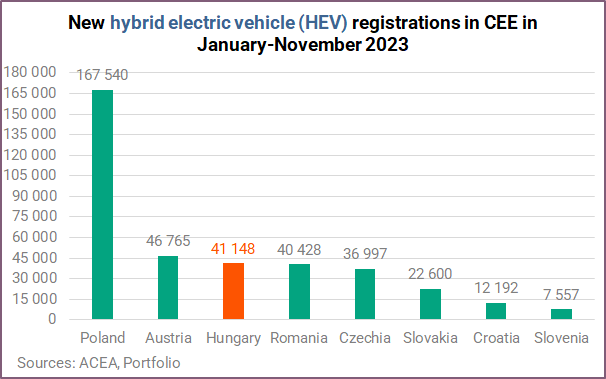
In November, new EU registrations of hybrid-electric cars (HEVs) surged by 28.7%, driven by double-digit growth in the three largest markets: Germany (+38.4%), France (+35.8%), and Italy (+30.2%). This led to a cumulative 29.9% increase, reaching almost 2.5 million units sold as of November – over a quarter of the EU market share.
The biggest increase in January-November was recorded in Bulgaria (+81%), followed by Croatia (+54.9%), Czechia (+43.4), Germany (+43.3) and Slovakia (+44.2%), while Hungary (+6.9%) is fourth from the bottom.
In contrast, sales of plug-in hybrid electric cars (PHEVs) declined by 22.1% to 72,002 units in November. Despite notable increases in Belgium (+43.8%) and France (+17.8%), these gains were insufficient to offset Germany’s substantial decline (-59.3%) – the largest market for this power source. Consequently, the market share of plug-in hybrid cars fell from 11.1% last year to 8.1% in November this year.
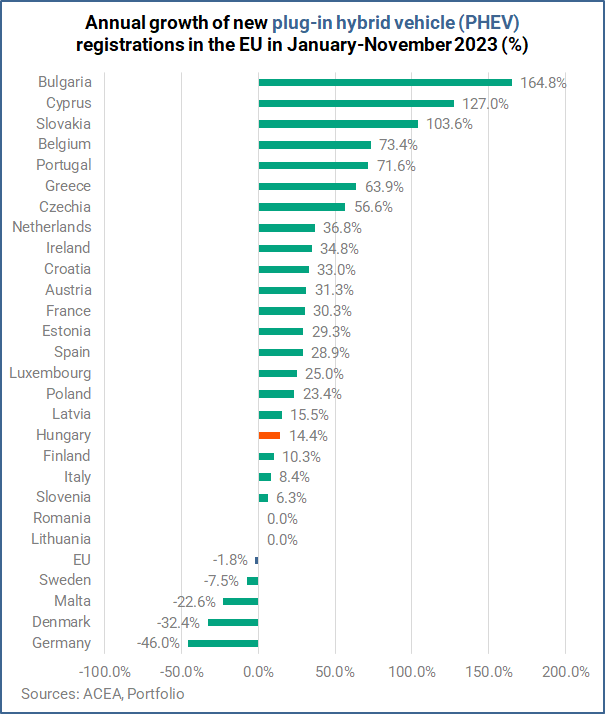
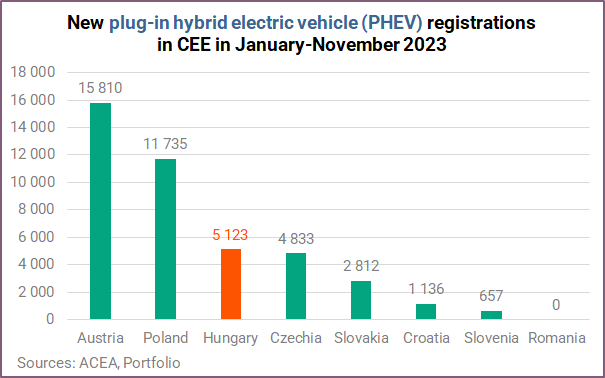
In the first 11 months, EU PHEV sales actually declined by 1.8%, with four member states reporting declines. Hungary's sales rose 14.4% yr/yr, which was the fourth smallest growth rate. As for the volume of PHEV registrations, however, Hungary fared relatively well in Central and Eastern Europe.
Petrol and diesel cars
In November 2023, the EU petrol car market grew by 4.2%, despite a continual decline in market share, which stood at 32.7% last month. Key markets like Italy (+20.2%) and Germany (+12.5%) saw significant sales increases, contributing to this overall growth. This resulted in a cumulative volume of 3.5 million units sold, reflecting an 11.1% increase and a 35.7% market share over the eleven-month period.
Conversely, the EU’s diesel car market continued its downward trend in November, contracting by 10.3%. This decline was observed in most of the bloc’s markets, including the four largest: France (-28.3%), Spain (-22.8%), Italy (-7.4%), and Germany (-1%). Despite this overall decline, diesel car sales grew in certain Central and Eastern European markets, such as Poland (+13.8%). In November, diesel cars represented a market share of 12.2%, down from 14.5% in the same month last year.
In the first 11 months, petrol car sales in the EU were up by 11.1%, while diesel car sales declined by 5.5% yr/yr. Belgium and France recorded a 29.5% and a 28.8% contraction in diesel car sales.
In Hungary, the sale of petrol cars dropped by 23.3% yr/yr and the decline in diesel car registrations came to 8.6% in November. In January-November, the respective changes were -15.5% and -10.0%.
Cover photo: Getty Images





