Is this the long-awaited turnaround on the Hungarian lending market?


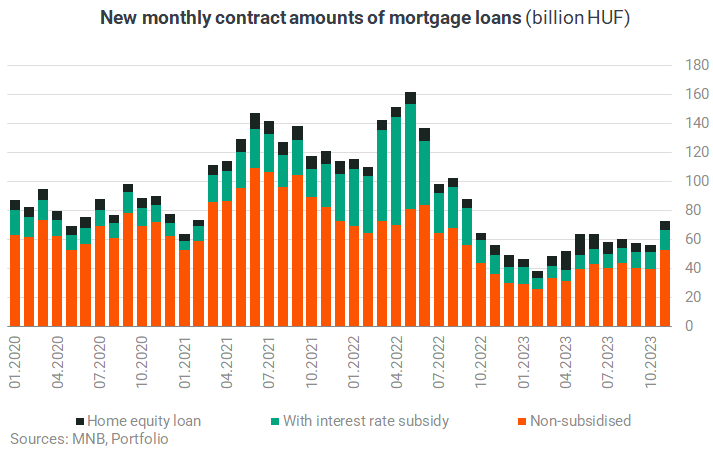
May 2022 was the last time that total household borrowing, including housing loans, increased on a year-on-year basis. Now, both have risen in November 2023, after 18 months: household borrowing expanded by 23% to HUF 167 billion and housing loans by 35% to HUF 67 billion. Both are a positive surprise compared to our own expectations.
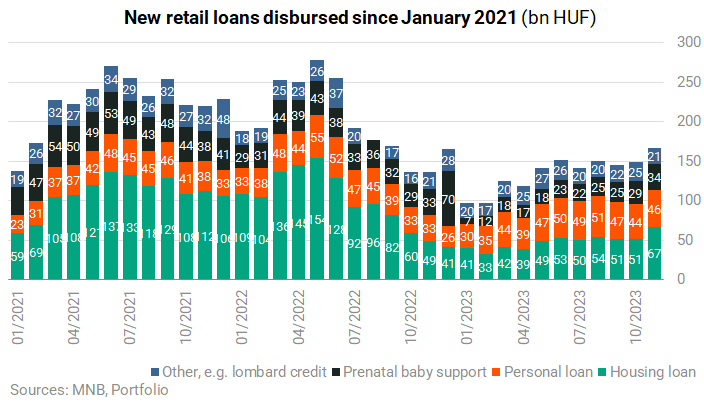
The full 2023 figures are still a month away, but based on the first 11 months of the year, the housing loan market was still down 54% and the Baby Loan market was down 40% last year compared to the first 11 months of the previous year. By contrast, the extension of personal loans, the third big driver of retail lending, grew by 3.5%, and was up 40% in November.

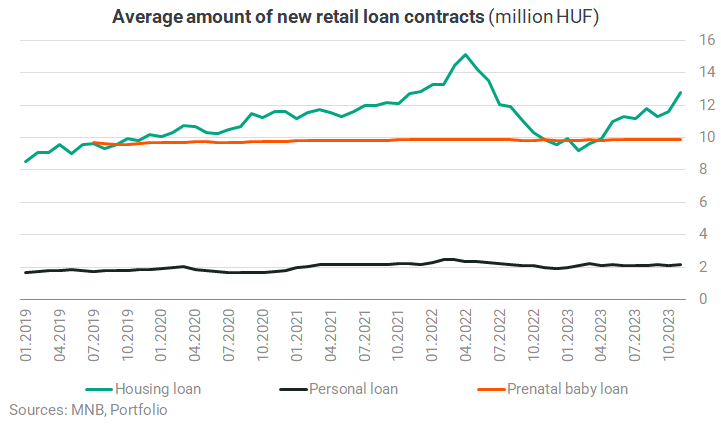
It is a perennial question whether the number of borrowers or changes in the average loan amount explain the changes. The former clearly dominated last year as a whole, but the increase in the average loan amount played a bigger role in the November growth: while there were only 4% more borrowers of housing loans than in November 2022 year, the average loan amount rose by 30% to HUF 12.8 million.
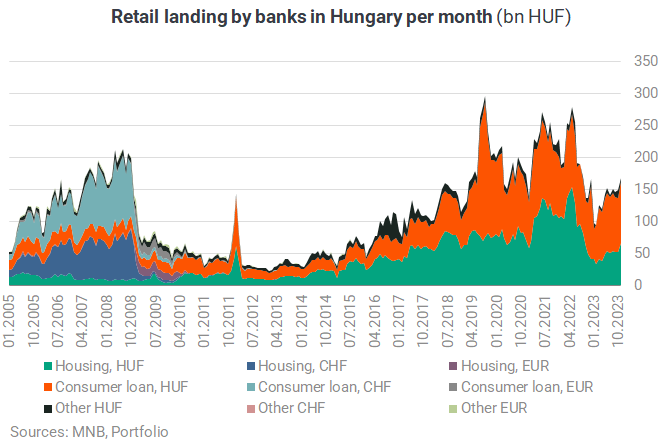
As can be seen in the chart below, which shows long-term trends in the retail credit market, the long-standing downturn was followed by a rebound in November. This turnaround is still fragile, of course, but the fall in interest rates (accelerated by the APR ceiling), the introduction of CSOK Plus and the recovery in the housing market bode well for the housing credit outlook. In the case of personal loans, consumption growth could be the main driver this year, but in the case of Baby Loans, a significant narrowing of the eligible population could have a more pronounced negative impact than a 10% increase in the maximum loan amount.
It would be logical to conclude that housing lending picked up at the end of 2023 mainly because parents who are no longer planning to have children (they are not eligible for CSOK Plus) were predictably excluded from CSOK and "urban" CSOK loans as of 1 January 2024.
The fact that the changes to CSOK rules led to demand for housing loans being brought forward to November is, however, tempered by the fact that the volume growth of interest rate subsidised loans was much lower (+6%) than that of market rate loans (+46%). It seems therefore that the impact of the interest rate reductions and the APR ceiling was stronger in the housing loan market than the CSOK changes.
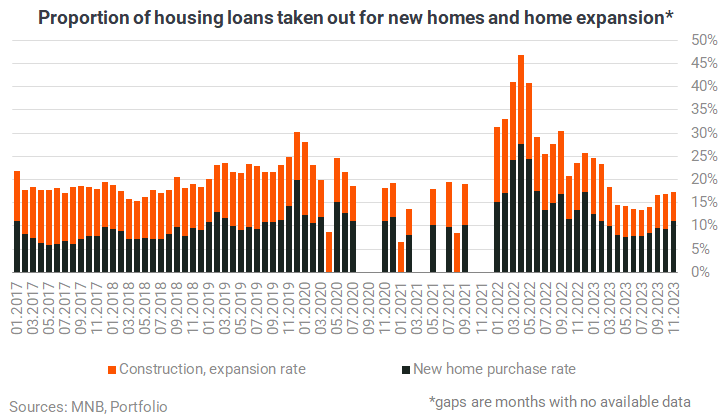
17% of new housing loans were used by households for new construction or extensions, indicating a small pick-up here compared to previous months.
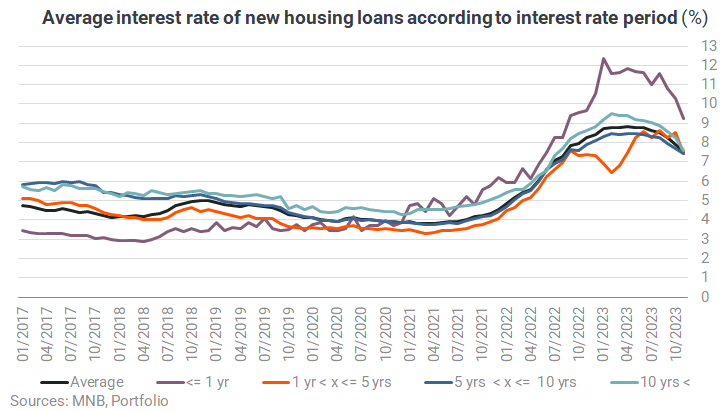
In November, households were already borrowing at an average interest rate of 7.3%, well below the then 8.5% APR ceiling, which was 1.3 percentage points lower than the peak in April.
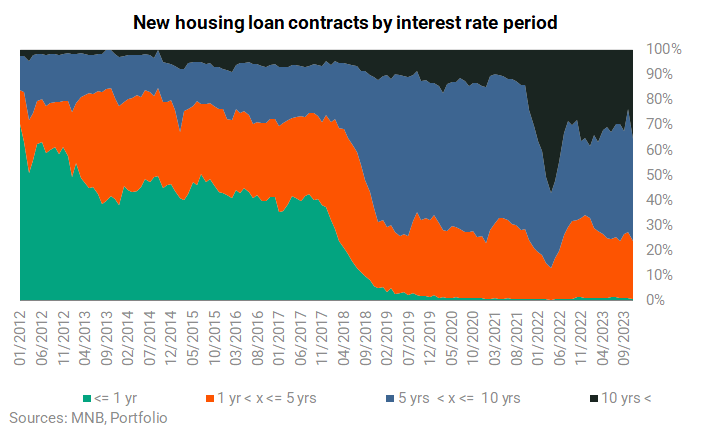
Housing loans with a 10-year interest rate period dominated with a share of 40%, but this share was also approached by housing loans with a fixed interest rate all the way up to maturity.
For consumer loans, we do not see as clear a decline in borrowing costs as for housing loans. The average APR of a personal loan, for example, was 19.0% in November, the same as in February-March.

Total bank lending to households stood at HUF 10,122 billion at the end of November, up by only 2.6% from a year earlier. Housing loans accounted for 49% of this total, almost exactly HUF 5,000 billion, showing an annual increase of only 1.2%.

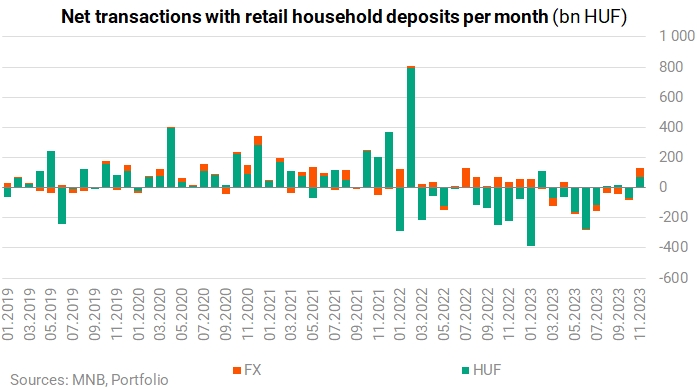
While we saw a pick-up in retail lending, November also saw positive figures for deposits. Retail deposits increased by HUF 128 billion on a transaction basis, a growth rate rarely seen in the last two years.
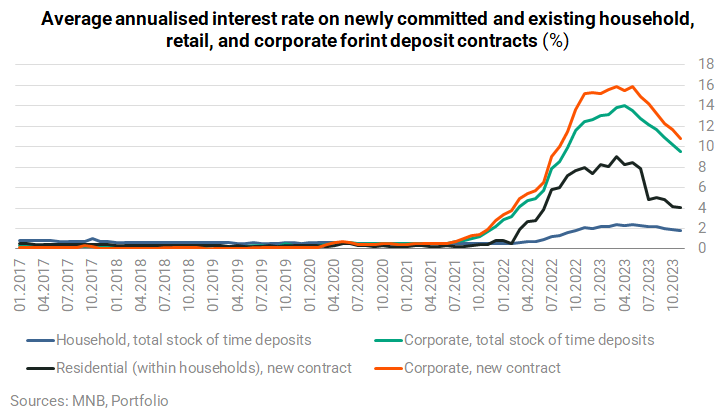
It is certainly not deposit rates that have captured the public's imagination, as they are falling much faster than mortgage rates, at least for new contracts. Banks paid an average interest rate of just 1.8% on total household deposits in November. For companies, it was 9.5%.
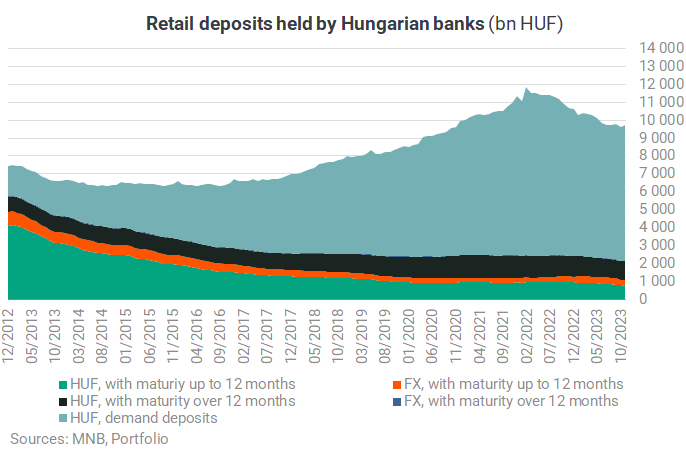
As a result of the persistence of near-zero deposit rates, 82% of retail deposits were without agreed maturity at the end of November. The proportion of term deposits has even fallen recently. Overall, household deposits stood at HUF 11,741 billion at end-November, down 9.2% year-on-year. This is mainly due to a shift of savings towards government securities and investment funds, rather than the exhaustion of savings due to inflation.
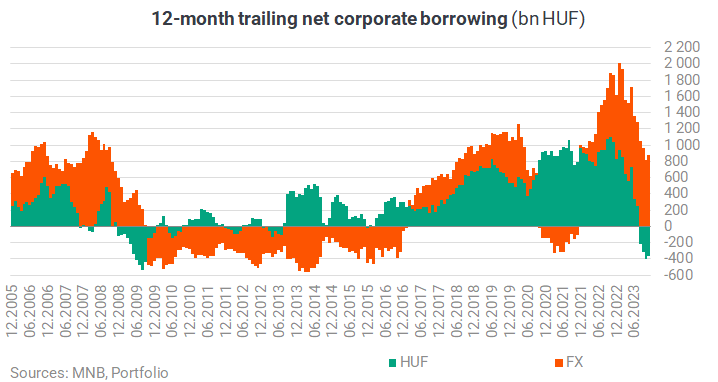
After a long period, November was also relatively strong in terms of corporate lending, with net borrowing of HUF 216 billion. Of course, the positive figures may be driven by large individual transactions, but we cannot say for sure at this stage.
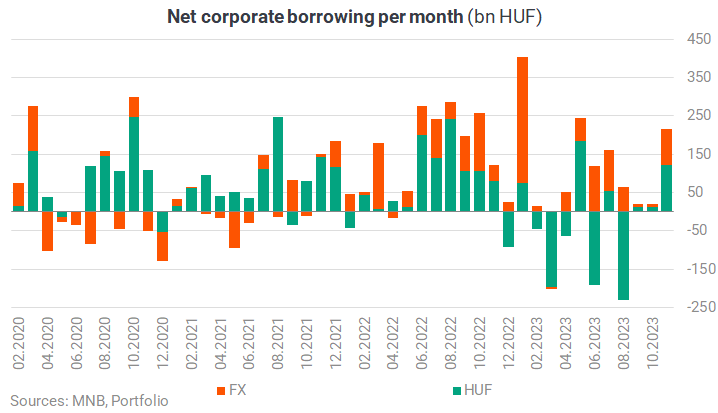
In any case, over the 12 months up to end-November, firms borrowed HUF 511 billion more than they repaid. This was enough to avoid a year-on-year decline in corporate loans: taking into account revaluations (see the strengthening of the forint), corporate loans increased by only 1.1% to HUF 12,368 billion compared to November 2022.
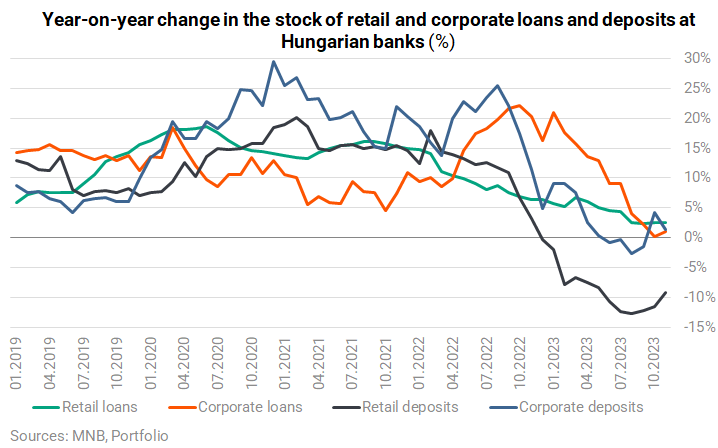
Our summary chart below shows that we seem to be leaving the trough in terms of banks' business portfolios. With the exception of retail deposits, we seem to have managed to avoid a year-on-year decline and to stand still in a near stagnation.
Cover photo: Getty Images