Hungary accumulates staggering budget deficit in late 2023


It was already a certainty that the budget gap would exceed 6% of GDP, but the 6.8% figure is still surprisingly high. The deficit could have been boosted by the balance of Eximbank, which is part of the general government, and the weaker-than-expected GDP growth in the last quarter could have made the deficit a tad worse than the last government target.
Mihály Varga, Minister of Finance, in his recent assessment, conspicuously did not mention that the accrual-based indicator was better than the 2022 one (instead he always referred to the less relevant cash flow indicator), which also suggested that the deficit could be around 6.5%.
The figure of 6.8% means that the deficit increased in 2023 (the financing requirement was 6.4% in 2022) and the gap has been extremely massive for the fourth year running, averaging 7% in Hungary. Last year's deficit was this extremely bloated even though the government stripped MVM down to the bone at the end of the year: the HUF 309 billion of retained earnings accumulated over many years were shovelled into the state coffers.

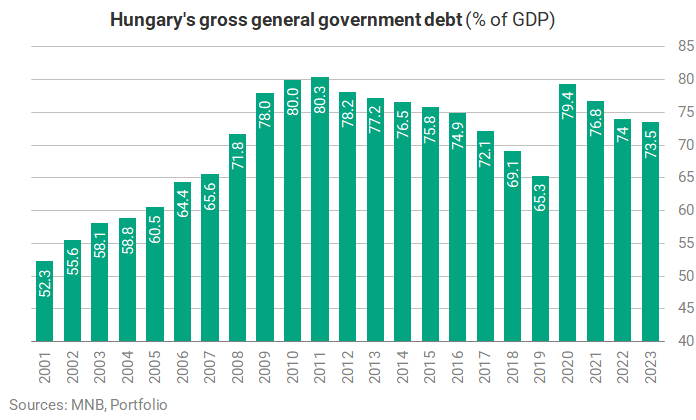
With a high deficit, the government debt-to-GDP ratio managed to fall by a marginal 0.5 percentage point. The end-year figure of 73.5% means that Hungary is still a long way from the 65.3% at the end of 2019. The convergence is unlikely to accelerate this year, with lower inflation no longer helping debt reduction as much, and the 4.5% deficit target (if achieved) likely to allow only a minimal further reduction.
Cover photo: Getty Images





