Unprecedented surge in Hungary's international reserves


The rise in January was to be expected, yet it is striking in the graph below:
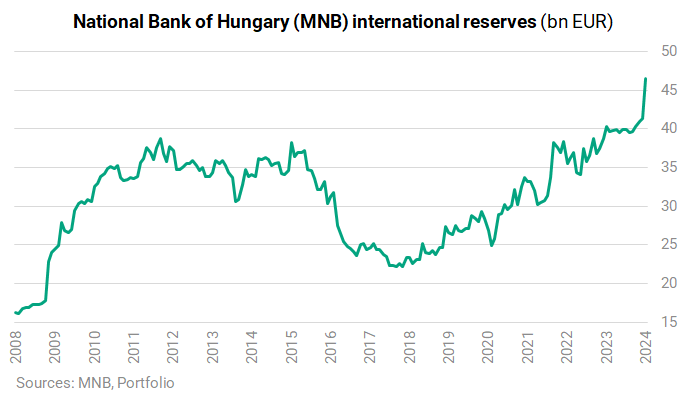
The sharp growth is mainly related to two key factors: in January, the Hungarian government issued USD 2.5 billion and then EUR 1.5 billion in international green bonds, and the resulting funds also boosted foreign exchange reserves.
In addition, a larger share of the partial unblocking EU funds (mostly the pre-financing of the Recovery and Resilience Facility) also arrived in January, with EU inflows of HUF 226 billion during the month, according to the Finance Ministry's recent data. These two items account for the bulk of the nearly €5.2 billion jump in international reserves, with the remainder linked to other foreign exchange operations.
The details show that the other reserve assets line jumped sharply by €6 billion to €9 billion in January, while the foreign currency reserves shrank by €0.8 billion to €29.2 billion, with no material change in the other reserve items.

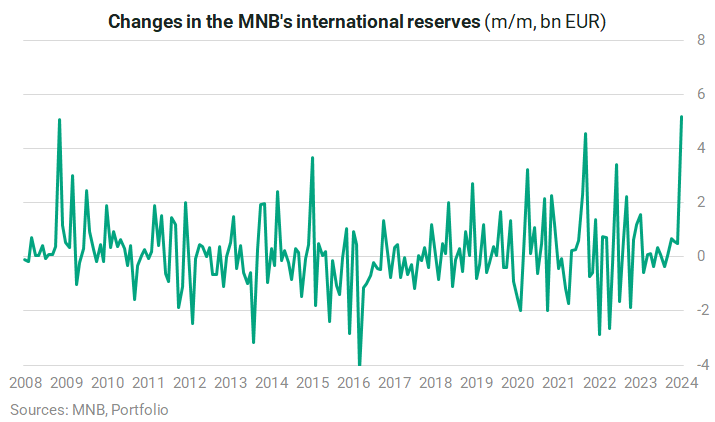
If we want to put the massive €5.2 billion jump in January into perspective, we find that Hungary's international reserves did not jump that much from one month to the next even when the country took out a loan from the International Monetary Fund (IMF) at the end of 2008 (the largest growth was €5.1 billion in November 2008).
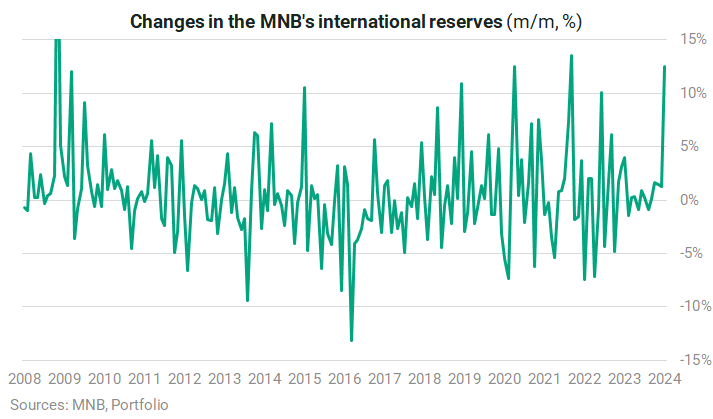
If we look at the monthly change in reserves in percentage terms, the latest figure is not an outlier, as there have been several occasions when the change from one month to the next was close to the current 12.5%.
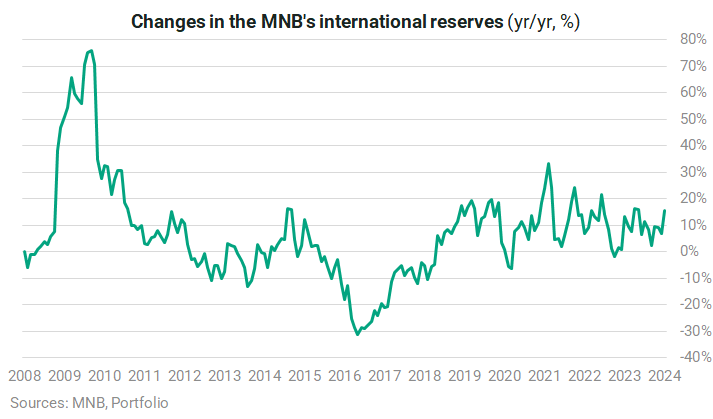
If we look at the year-on-year change in international reserves, the current increase of 15.7% is not particularly significant.
Cover photo: Getty Images





