ECB publishes opinion on amendment of Hungarian Central Bank Act


The European Central Bank has issued its opinion on the single treasury account managed by the National Bank of Hungary (MNB) and the competencies of the Supervisory Board of the MNB. The law amendments proposed by the Finance Ministry were noted by the foreign press too. The opinion, signed by the President of the ECB, makes proposals to amend some of the provisions.
An important element of the amendment is that the MNB Supervisory Board members appointed by the government (FinMin) to exercise state ownership, or the MNB Internal Audit Department instructed by the Supervisory Board, may audit companies newly established/acquired by the MNB, or the MNB Foundation or companies acquired by it.
The question of principle is to what extent and in what form this can be done without infringing the monetary policy independence of the central bank. The ECB considers that the changes do not reach this point on several points, but criticised the Finance Ministry for asking for its opinion late and for the sake of legal certainty, the ECB suggests "reformulating the draft provision on the supervision of majority owned companies to reflect this understanding."
The ECB also stated that "the Supervisory Board may not seek to influence the performance of any of the MNB’s tasks related to its membership of the European System of Central Banks (ESCB)," adding that
the independence of the MNB should be fully respected.
On Wednesday, the MNB welcomed the ECB's opinion, saying that it means that "the amendment to the Central Bank Act initiated by the Hungarian Ministry of Finance cannot result in an impairment of central bank independence."
"Economic history teaches us that independent central banks are more successful in bringing down inflation and ultimately in creating the conditions for sustainable and steady economic growth. The Magyar Nemzeti Bank will continue to make every effort to achieve and maintain price stability," it added.
The rest of the statement is as follows:
"The Ministry of Finance, referring – among others – to the modification of the scope of the tasks of the MNB’s Executive Board and the extension of the powers of the MNB’s Supervisory Board, has recently initiated an amendment to the Hungarian Central Bank Act.
"As the ECB’s opinion also points out, the Supervisory Board of the MNB, even in exercising its proposed new supervisory competences, shall not have the right to supervise any of the MNB’s activities that would directly or indirectly affect the MNB’s core tasks or those related to its membership in the European System of Central Banks.
"Central bank independence is a core value which provides assurance that the central bank is able to concentrate on its long-term statutory mandate to achieve and maintain price stability, regardless of short-term economic policy objectives.
"Only an independent central bank can create the conditions for price stability by providing a predictable economic environment, anchoring economic agents’ inflation expectations and stabilising financial markets.
"The Magyar Nemzeti Bank will continue to make every effort to achieve and maintain price stability. In order to achieve sustainable and steady growth, it is essential to ensure the independence of the central bank in performing its role as guardian of price stability."
Finance Ministry also comments
The ministry has issued a statement on Thursday, saying:
"The government respects the independence of the central bank. The Government's aim is to strengthen the transparency of the Magyar Nemzeti Bank and to ensure the same level of prudence as is expected of public authorities, while respecting the independence of the central bank.
"To this end, the Ministry of Finance, in consultation with the European Central Bank, is examining the possibility of extending the supervisory board's supervisory powers to activities that do not pertain to the central bank's core tasks.
"The Ministry of Finance has also consulted the European Central Bank on the draft, and its comments have been incorporated into the proposal.
"The proposal, as endorsed by the ECB, does not affect the performance of the MNB's core tasks, but would only extend the powers of the Supervisory Board to other activities of the central bank. These include giving the supervisory board the power of prior approval for economic decisions above a certain threshold, tightening up the information requirements and introducing reporting obligations."
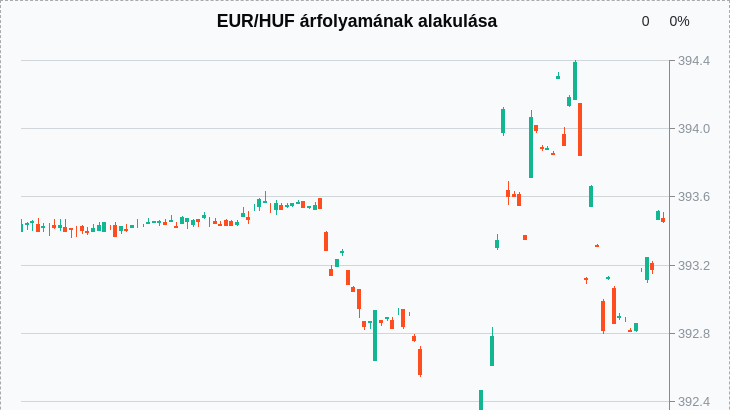
According to some interpretations, the recent clash between economic policy makers has also contributed to the weakening of the forint.
Cover photo: Gábor Juhász





