Stellar numbers: housing loans and bank deposits have skyrocketed in Hungary


The National Bank of Hungary has published the domestic banking sector's February credit and deposit statistics. It's a mixed bag of figures: retail banking kicked off the year on a strong footing, while corporate banking started less convincingly.
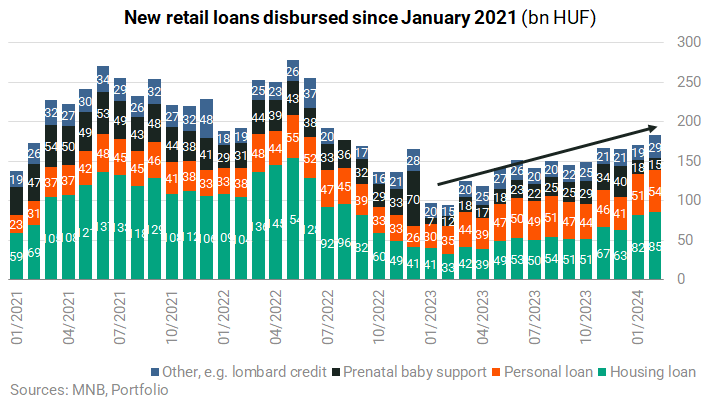
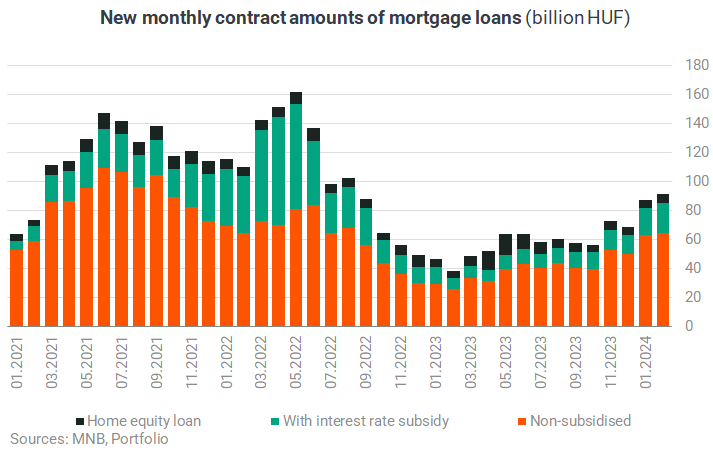
Housing lending is the first area to be mentioned, with HUF 85 billion of new transactions contracted in February compared to HUF 33 billion a year earlier, up by 157%. The yr/yr growth in the first two months reached 126%. The rise in housing transactions in March foreshadows a continuation of the boom.
Not only housing loans, but also consumer loans are on a roll: personal loans are up 62% this year and baby loans are up 74% year-on-year. For the latter, this is also due to last year's artificially low base.

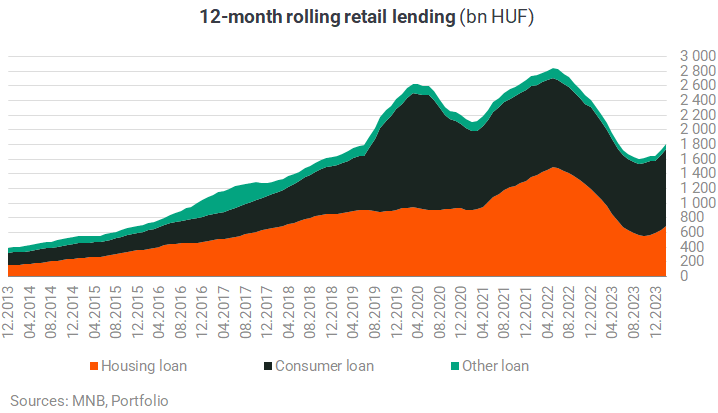
Looking back over the longer term, housing lending in the last 12 months was still at 2017 levels and consumer lending around 2019, but rapid growth means that we could leave these levels behind in a short time.
Both the number of borrowers and the average loan amount are increasing, but while the increase in the average loan amount is the stronger factor for housing loans, the number of borrowers is increasing more for consumer loans.
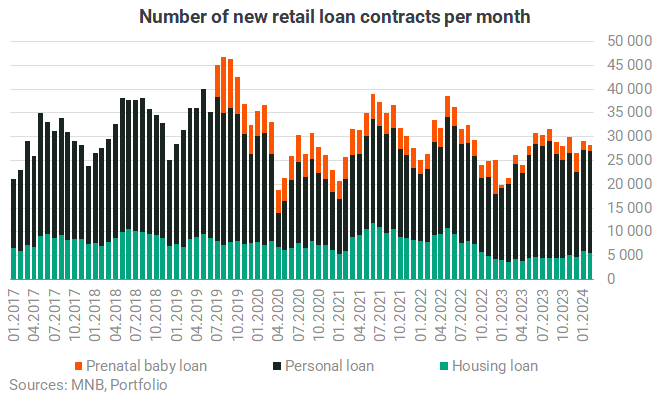
The rise in the average amount of housing loans to HUF 15.5 million is due to the average amount of CSOK Plus (family housing support) loans, which is around HUF 26 million, while the average amount of personal loans is HUF 2.5 million, the same as two years ago.
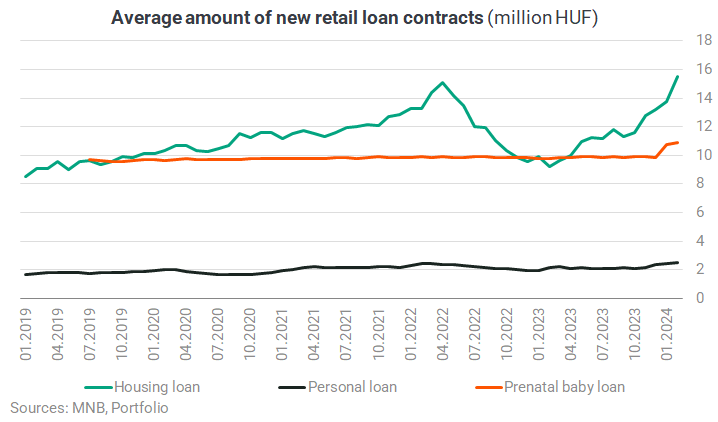
So far, the first two months of the CSOK Plus programme have shown that roughly 1,000 couples apply for it every month, for a total of HUF 49 billion by the end of February. However, in terms of the share by amount of contracts already signed, the overall share of interest-subsidised loans was 24% in the first two months of the year, and this includes the CSOK loan available in small settlements.
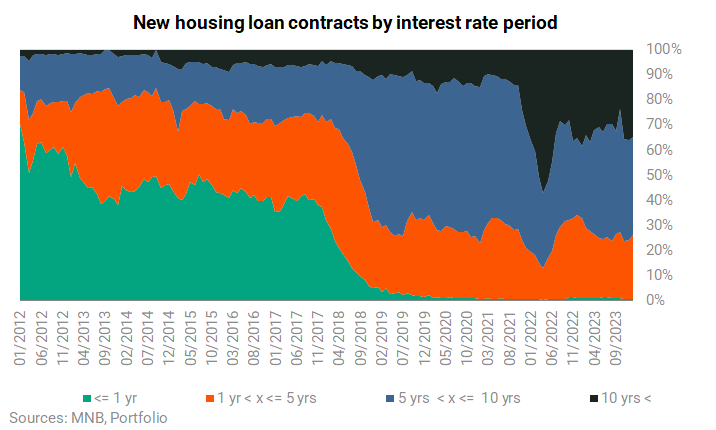
In terms of interest period, 10-year and fixed-rate housing loans remain the most popular, but the share of variable-rate loans jumped to 11% in February, presumably due to CSOK Plus, which has a one-year interest period in the first two years (customers pay a fixed 3%, so this is only relevant for interest subsidies), and is switched to 5 years only then.
In addition, the lowering of the APR ceiling to 7.3% at the beginning of the year has helped the pricing of market-rate mortgages (75% of all), which were taken out at an average rate of 6.7% in February, two percentage points lower than a year earlier. However, further significant interest rate decreases are not expected in the foreseeable future:
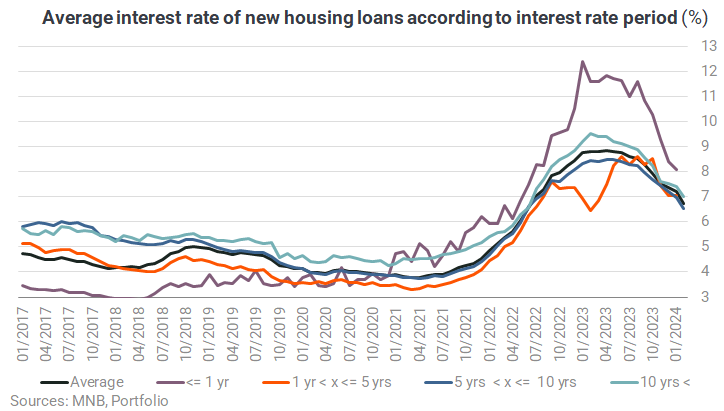
The borrowing cost on consumer loans is also gradually falling. It was at 18.4% on personal loans in February, down from 19.0% a year earlier.

Overall, household bank debt stood at HUF 10,200 billion at the end of the second month of the year, still only 3.4% higher than a year earlier, but the momentum is growing month by month. The stock of housing loans rose by 2.7% to HUF 5,060 billion.

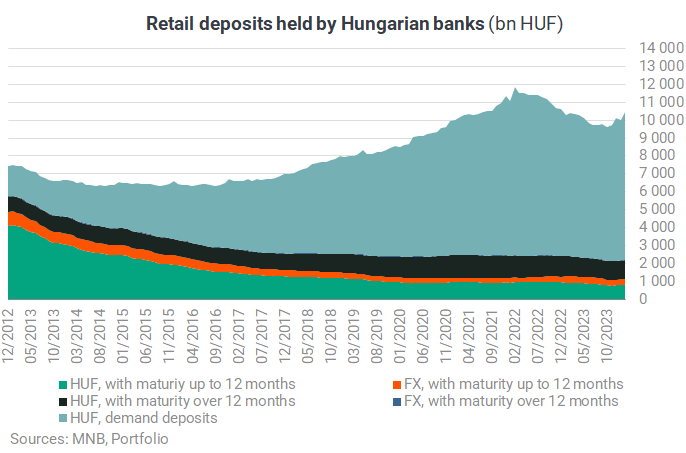
As for retail bank deposits, we also see surprisingly large positive numbers. In February, there was a net inflow of HUF 388 billion into retail bank accounts. We saw an even higher net transaction only during the government's election-related spending spree in 2022.
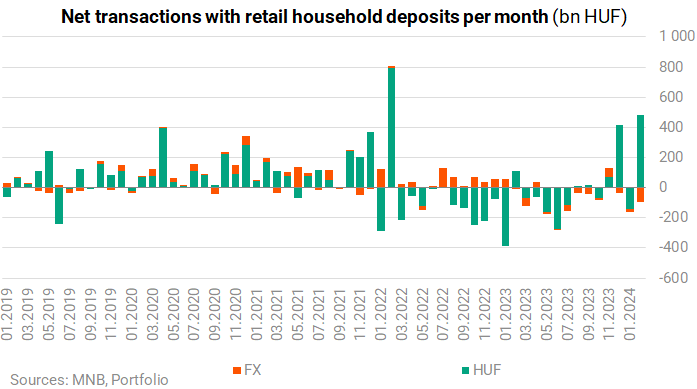
There are several explanations for the current rise: the significant government bond interest payments, the 14th-month pension, the impact of the January wage increases starting to be felt in February, the transfer of some non-regular payments and the impact of a shorter month than usual despite the leap day. Deposit interest rates do not explain the phenomenon, they remain extremely low: banks paid an annualised interest rate of 1.8% on an average retail deposit in February.

The decline in household deposits stopped: in February they rose by HUF 437 billion, but looking back over the past year they were still down by HUF 64 billion, or 0.5%.
In the corporate credit market, February was another weak month after January, with net transactions showing a HUF 120 billion repayment surplus over borrowing, despite the relaunch of the mainly foreign currency-denominated Baross Gábor Loan Programme (up to HUF 200 billion) at the beginning of the year.
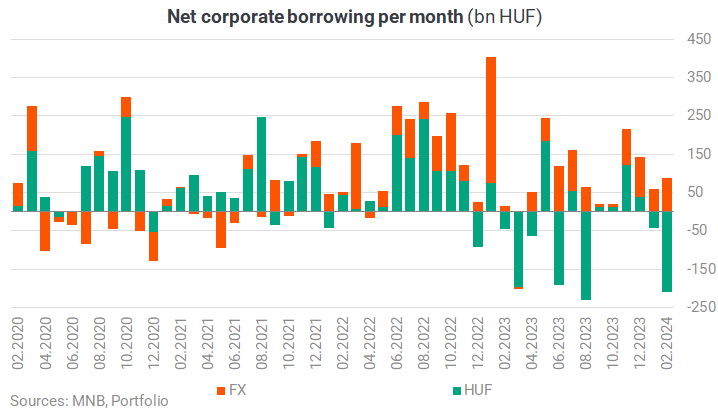
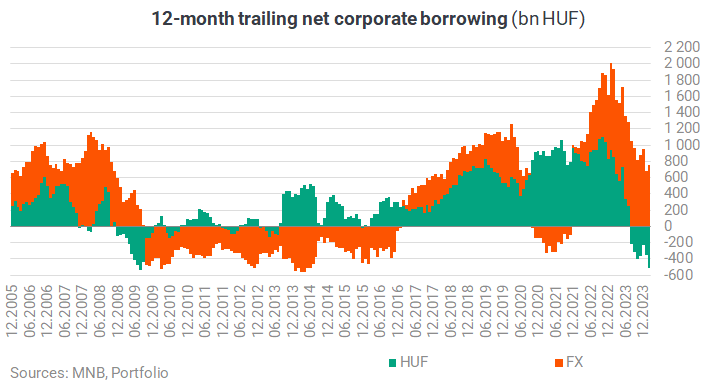
In the past 12 months, companies still borrowed HUF 244 billion more than they repaid. There has been a shift towards working capital loans over investment loans, foreign currency loans over forint loans and subsidised loans (Széchenyi Card, Baross Gábor Loan Programme) over market rate loans. Corporate loans and deposits grew by 3.5% and 4.1% respectively over the year.
Cover photo: Shutterstock





