Loads of market-moving events to come this week


We saw big movements in global markets last week. Stock indices had started to rise in the first half of the week, but the US data pushed them down again. GDP came in weaker than expected, which is good news from a market perspective as it means that the Fed's monetary policy could start to put the brakes on the economy, so interest rate cuts could start soon. However, the first quarter inflation data (PCE, personal consumption expenditure price index) released along with GDP came as an unpleasant surprise, hitting markets as a result.

Of course, the movement of global markets has not left Hungarian assets untouched. Hungarian equity markets also showed a big swing last week, and the forint was also on the wobbly side. The week as a whole saw a small gain for the Hungarian currency, helped by the MNB's interest rate decision on Tuesday, but the forint still failed to break below the 390 level against the euro.

What can we expect this week?
There will be plenty of macro data this week, including on 1 May, when markets will be closed in many parts of Europe. There will also be important news on the domestic front, but it will be the data from the euro area and the US that will be the main market movers.
No major market-moving events are expected on Monday in Hungary, but abroad, Spanish inflation is worth a mention: it will be the first inflation data from a major euro area member state. German inflation will also be released in the afternoon, so we should have a pretty good idea of the euro area average based on these two figures.

Tuesday also sees important events on the home front. First-quarter GDP is released, for the first time 30 days after the period under review. This is a crucially important data, as the Hungarian economy has been performing poorly for two years, and expectations are for a slight upturn in the first quarter after stagnation in the fourth quarter last year.

In addition, industrial producer prices and tourism data for March are also available. Tuesday's data dump does not end here: abroad, the focus will be on Japanese real economic data, as the Bank of Japan raised interest rates last month, but this was not enough to stem the weakening of the yen. The strong real economy could boost expectations of a rate hike, which would be beneficial for the yen. In addition, Chinese PMI is due, and euro area GDP and inflation data will be released. So Tuesday will clearly be the highlight of the week.
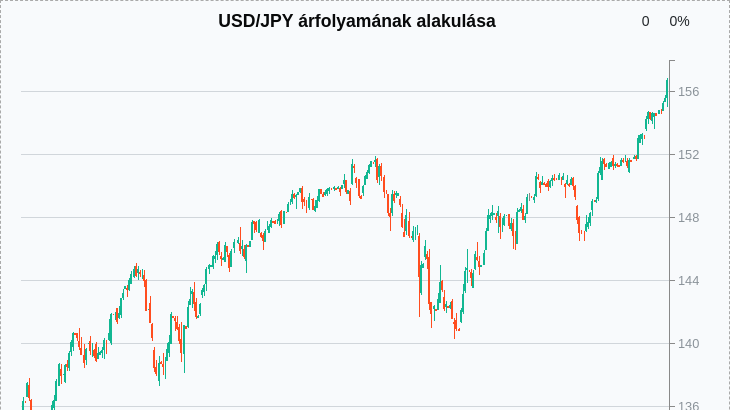
No important Hungarian market data are expected on Wednesday, as markets are mostly closed across Europe, and there will be a public holiday in this country. In the US, however, life is in full swing, with labour market data coming in, starting with the ADP index, but also the number of job openings. There is also ISM PMI, but the most important event of the week will be the Fed's interest rate decision, which will take place this evening. The event could bring some intense market action, as it could be the first time the Fed reacts to the stronger-than-expected inflation data. For example, it could reveal whether the chances of a June rate cut are still real.

On Thursday morning, the second estimate of Hungary's external trade data will be released by the Hungarian Central Statistical Office (KSH), and then we turn our attention to the US, where the manufacturing orders will be followed by the layoffs data, which will again be important for the Fed's interest rate outlook.
On Friday, the KSH publishes housing permits and the National Bank of Hungary (MNB) presents the balance sheets of credit institutions. On the same day, the key US unemployment indicator will be released. Any shift in the unemployment rate in either direction is of huge importance: if the labour market is strong, expectations of interest rate cuts may be pushed further away, but a higher-than-expected unemployment rate may raise concerns about a possible recession, as the so-called Sahm rule might come into play.

Cover photo: Getty Images





