How much trouble is the Hungarian budget in? We will have the answer this week


What happened last week?
We have just had one of the busiest weeks of the year. We learned that the Hungarian economy returned to growth in the first quarter, as GDP was released. In addition, the Fed held its rate decision meeting, at which the central bank virtually dismissed expectations of a rate hike, with chairman Jerome Powell being much more dovish than expected. This time, the Fed got off on the right foot, as the April labour market data point to a significant economic slowdown. Meanwhile in the euro area, hopes of a return to growth have been rekindled as first quarter GDP came in better than expected. Euro area inflation came as no surprise.

Markets were in a wait-and-see mode in the first half of the week, but the Fed's announcement gave some impetus to stock markets and global sentiment improved, allowing the forint to strengthen to below 390 against the euro.

What to expect this week?
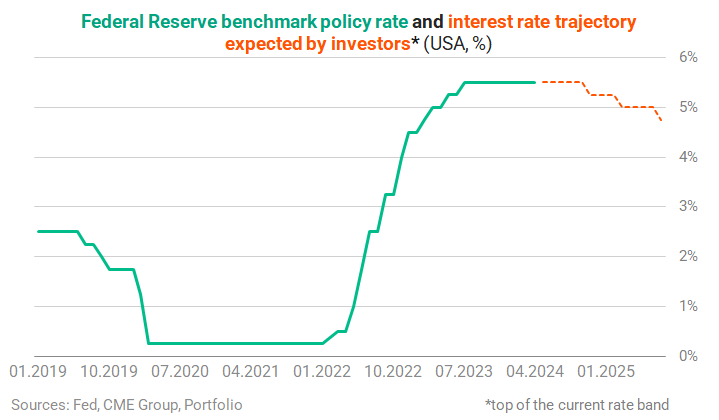
The main focus this week will be on how investors interpret economic developments from last week. A looser-than-expected Fed coupled with an easing US labour market is good news for interest rate expectations, and pricing of interest rate expectations will definitely be something to watch. However, the outlook is now positive for markets and the forint from a macro perspective. This could be somewhat disrupted if one of the Fed central bankers speaks out and sends a more hawkish message compared to the consensus. The divergence of views is typical after the Fed's rate-setting meeting - and the accompanying freeze on statements.
As for the data releases this week, there are no important figures from the international economy that are really market-moving, but there will be a few that could bring some movement if they are different from expectations. From a Hungarian perspective, however, we are in for an important week, with important macro data from the domestic economy.

On Monday, the Hungarian Central Statistical Office (KSH) will release its preliminary March foreign trade figures, while in China, the Caixin PMI in April will be released. As far as domestic foreign trade flows are concerned, we have seen a surplus in previous months, but this was mainly because imports were also weaker.
Tuesday's factory orders in Germany is an important indicator of the outlook for industry, a sector that has been suffering quite a bit over the last few years. European retail sales data is also due. On Tuesday, domestic retail sales data will also be released.
On Wednesday, German industrial production data for March will be released, the National Bank of Hungary (MNB) will publish the development of foreign exchange reserves, and the KSH will publish its first estimate of industrial production. It is the latter in particular that will be worth paying attention to.
On Thursday, we will find out how the government's fiscal figures for April have developed, with the government running a significant deficit in the first three months of the year. Abroad, the UK interest rate decision is one to watch, especially for those with pound sterling exposure. Foreign trade with China also deserves a mention, but this has almost zero market impact.
Friday is also a very important day, with the release of the April inflation data by the KSH. The March figure was a pleasant surprise, so we will see how the annual rate in April compares. Analysts expect annual inflation to rise temporarily in the second half of the year. Abroad, the main focus will be on developments in US inflation expectations, especially now that disinflation has stalled overseas.
Unusually, there will be a data release on Saturday this week, as that is when China will release its April inflation data.
Cover photo: Getty Images





