Windfall profit tax to remain in Hungary, it is not worth waiting to borrow


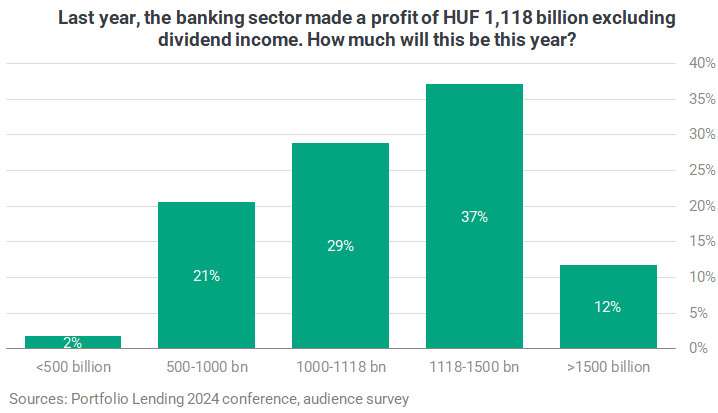
In 2023, the Hungarian banking sector achieved an after-tax profit of HUF 1,451 billion (non-consolidated), or HUF 1,118 billion excluding dividend income. Although the sector's interest income from the central bank (MNB) will fall significantly this year, half of the audience believes that the banking sector will still manage to beat last year's record profits this year.
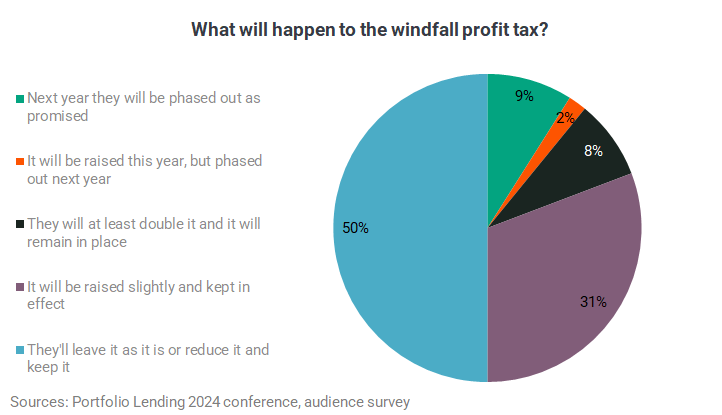
The result could be significantly affected by the fiscal adjustment expected in the second half of the year and the government's decision on the 'extra profit tax'. This year, banks are typically paying half as much windfall profit tax as last year in exchange for switching their government security investments to long-term maturities, and the government has promised to phase out this levy next year. By comparison, only 9% of the audience expect a full phase-out next year, half of them expect the tax burden to be maintained or reduced, and another nearly 40% expect it to be increased. Read our coverage of the bank CEOs' panel discussion here:
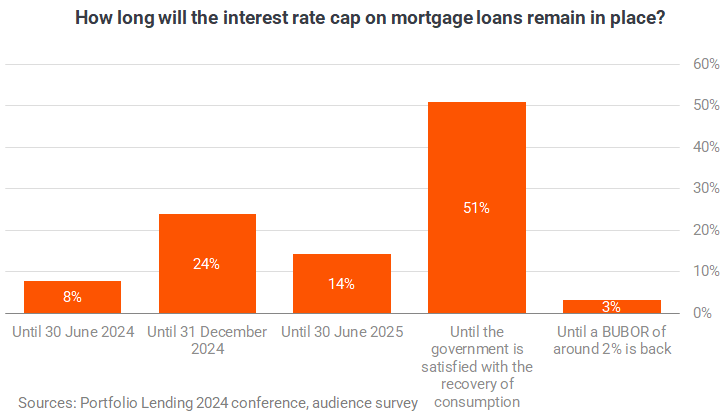
The market has more "faith" in the government on the issue of the interest rate freeze on existing mortgage loans (with an interest period of up to five years). In line with the remarks made by Economy Minister Márton Nagy, the majority expects the measure to be phased out once consumption recovers, while the share of those who expect it to be phased out by the end of this year is relatively high. As for the 7.3% APR cap on new loans, the government wants to keep it in place:
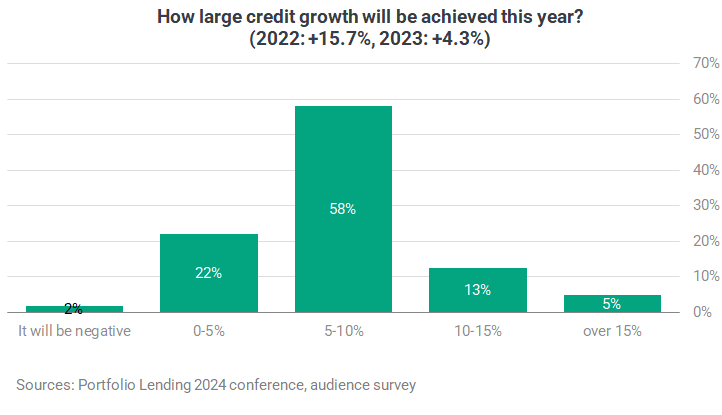
Last year, lending in Hungary slowed down a lot, as neither households nor the corporate sector were keen to borrow at high market interest rates. After a mere 4.3% credit growth last year, the conference audience typically expects a 5-10% increase in the stock of loans this year. MNB Deputy Governor Barnabás Virág also spoke about the outlook, and the summary of his presentation can be find at the link below:
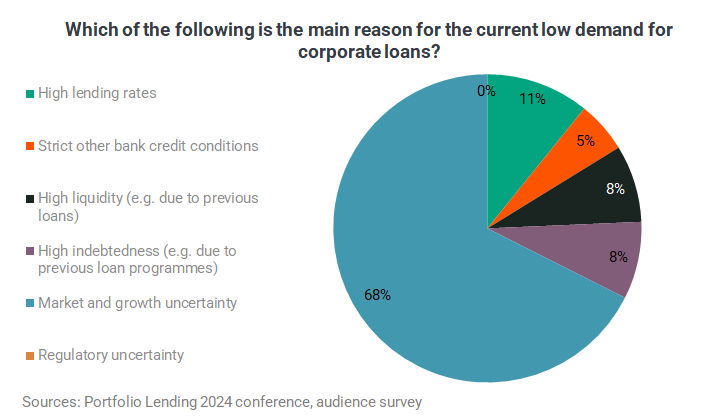
Corporate lending performed weaker than retail lending in the first three months of the year. On the corporate side, market and growth uncertainty were the most cited reasons for low demand for credit.
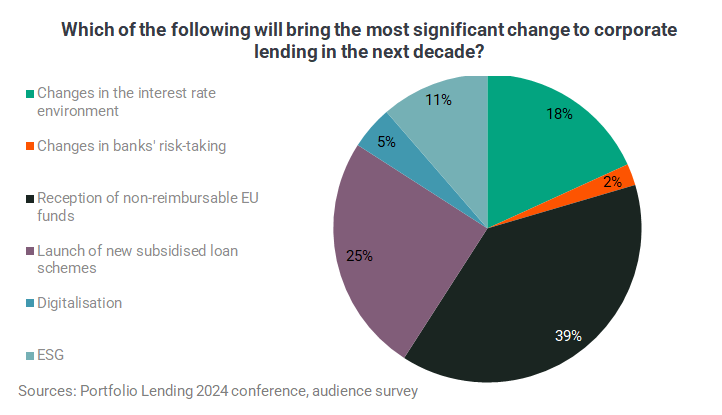
Over the next decade, the transfer of non-reimbursable EU funds, the launch of new subsidised lending schemes and changes in the market interest rate environment could bring the biggest change in corporate lending.
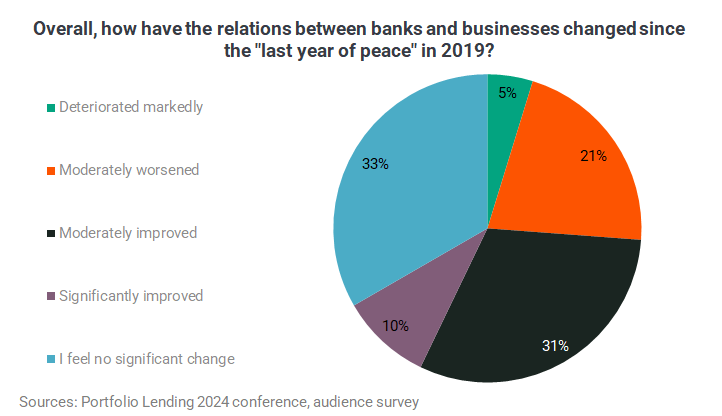
Based on the results of the audience poll, it seems that there has been no drastic change in the relationship between banks and companies, either positive or negative, compared to five years ago, before the coronavirus pandemic and the Russia-Ukraine war.
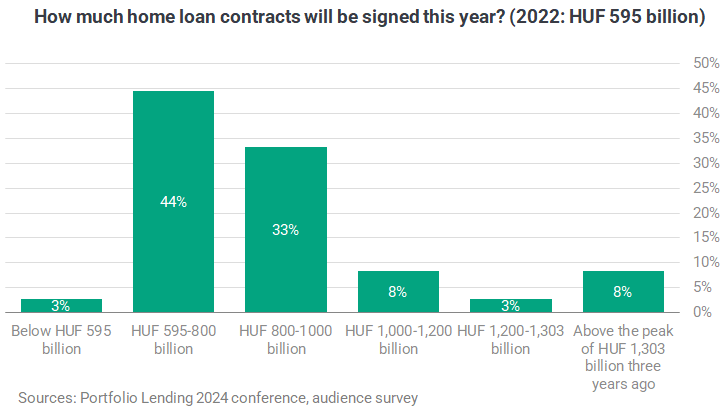
Retail lending is much stronger than corporate lending, with housing loans in particular showing quite high year-on-year figures, for example, in the first quarter the volume of housing loans was 235% of a year earlier. However, after HUF 595 billion in lending last year, the audience expects lower volumes, with a relative majority expecting a moderate increase of less than 33%, which foreshadows a slowdown in growth later in the year.
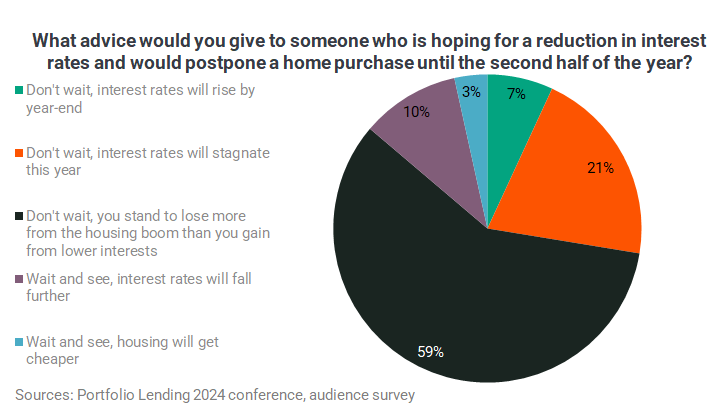
One of the most important questions of the year for those looking to move is whether it is worth waiting to take out a loan in the hope of further interest rate cuts. That ship seems to have sailed: the vast majority of credit market experts suggest not to wait, as interest rates will not fall any further, while nominal house prices will almost certainly rise and real growth is easily conceivable.
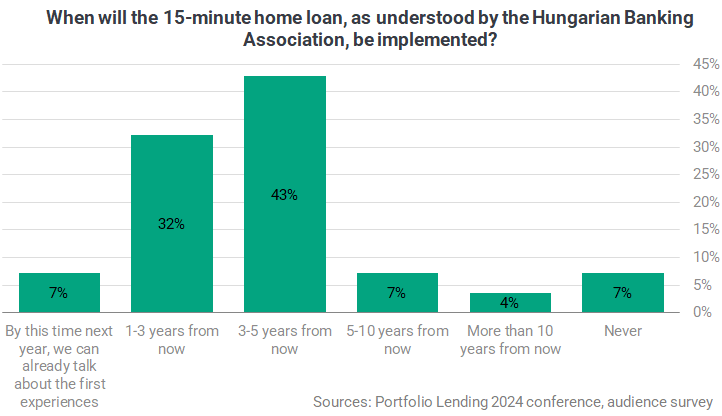
The Hungarian Banking Association's 11-point package of proposals last year set the goal of a 15-minute home loan. The public believes this could be achieved sometime in the next one to five years.
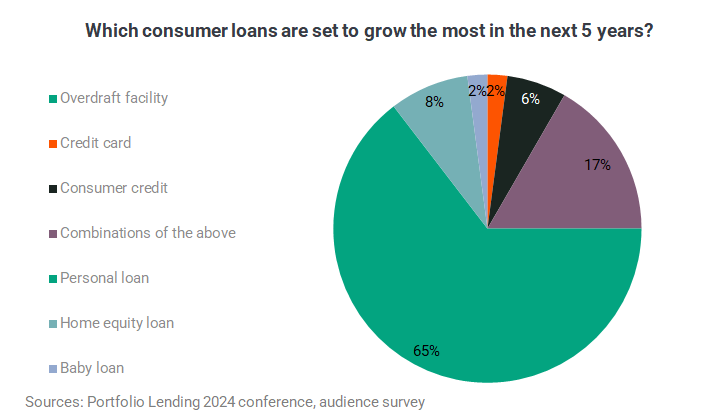
In the session on consumer lending, experts focused on the personal loan market. This type of credit was also considered by the audience to be facing the biggest growth in consumer credit.
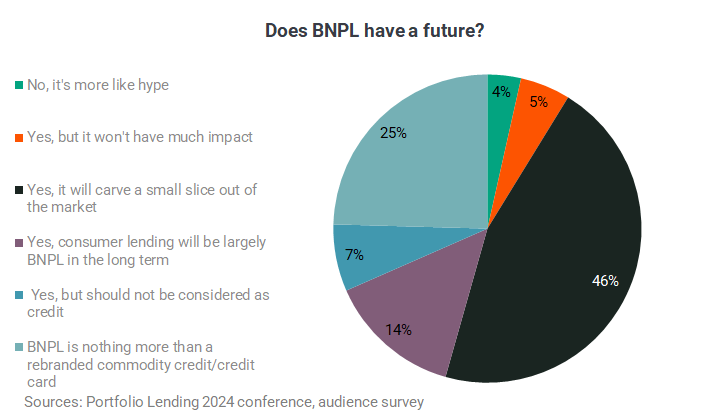
A sub-type of consumer credit is the short term, digitally available commodity credit, more specifically the type called BNPL (buy now, pay later, which is a type of short-term financing that allows consumers to make purchases and pay for them over time). Most believe there is a future for this phenomenon, but it will only represent a small proportion of consumer credit in the longer term.
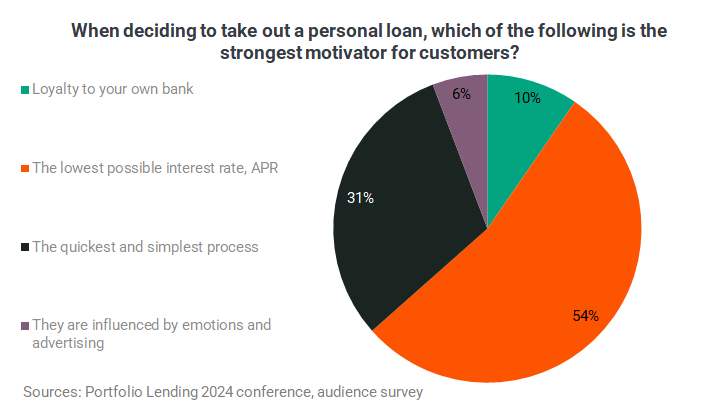
When we take out a personal loan, we are motivated primarily by pricing, according to the majority of respondents. However, a relatively large number of people also opted for the quickest and easiest process possible, which is also seen by many as extremely important for borrowers.
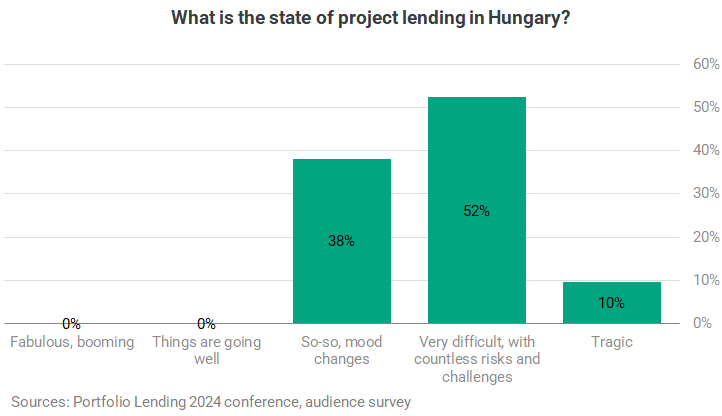
A separate session was also devoted to the situation of project real estate lending. This was perhaps the area where the audience was the most pessimistic: the majority said that conditions were very difficult, with many risks and challenges for market players.
Cover photo: Márton Mónus / Portfolio





