How the government forced foreigners out of Hungary


It seems that even today foreign companies are the backbone of Hungary's economic performance. Only 1.4% of enterprises operating in Hungary (14,100) were foreign-controlled in 2022.
Despite their small numbers, foreign companies accounted for
- almost half of the turnover (47%) and value added (42.3%) of all enterprises
- and 50% of gross investment, and
- foreign-controlled subsidiaries also employed around a quarter of all employees in domestic enterprises.

However, the number and share of foreign-controlled enterprises has fallen compared to both recent years and 2010. This is unsurprising given
- the government's determination to squeeze foreign companies out of some sectors, allowing domestic companies to gain ground, and
- to make life more difficult for companies in the services sector through special taxes and other administrative measures.
The problem is that foreign companies are generally more efficient, have higher productivity and therefore contribute more to GDP growth overall. But the cabinet argues that most strategic sectors should be Hungarian-owned.
As a result of a policy that has always been friendly to manufacturing companies (with subsidies), this sector has retained a large weight of foreign companies, but there is a dominance of domestic companies in energy, trade, IT and financial services.
More than half of the energy sector was foreign-owned in 2010, but this share has now fallen below 30%. "The biggest decline occurred in the energy sector, where the value added generated by foreign-controlled companies was almost 26 percentage points lower than in 2010. The main contributors to the decline were a reorganisation of the ownership structure and the strengthening of domestic control," the Central Statistical Office's summary notes.
In addition, KSH data show that the share of foreign-controlled firms also declined significantly
- in administrative services (by 19 percentage points),
- information and communication (by 16 percentage points) and
- accommodation (i.e. tourism, hospitality, catering) (by 10 percentage points).

The trend is likely to be similar in financial services, but the KSH did not monitor these firms in 2010, so all we can know for sure is that the share of value added generated by foreign firms in financial services exceeded the national average in 2022, at 53%. A decade ago, this value was certainly much higher.
Overall, the share of Hungarian ownership and thus the value added of domestic firms has increased in many sectors. While in 2010 foreign firms accounted for almost 50% of value added in the economy, 12 years later they accounted for just over 42%.
In addition, domestic firms have recently made significant inroads in sectors that are fundamentally high value-added and have played a key role in the rapid development of Budapest and Pest County in recent decades. Meanwhile, at the saddest point of the smile curve, low value-added manufacturing production has remained heavily dominated by foreign companies.
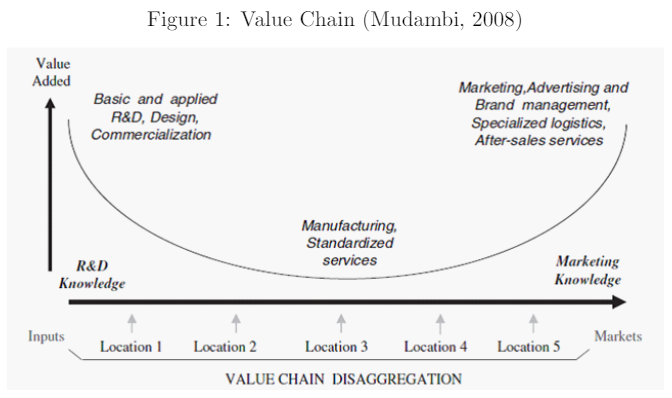
Domestically-owned companies that have carved out a large share of the economy in a particular sector will therefore play a decisive role in the performance of the Hungarian economy over the next decade in several sectors. Whether the change in ownership will succeed in accelerating real convergence remains to be seen.
Cover photo: Getty Images





