Time to say it: Hungary struggles with a new dependence

What makes the "sick man of Europe" sick?
The phrase "sick man of Europe", which is still used frequently, was coined in 1998 by a German economist, Holger Schmieding, to describe a Germany that was struggling with quite serious economic problems after reunification. More than 25 years have passed since then and a lot has changed in that time. This epithet was temporarily removed from the public discourse by the implementation of the Agenda 2010 reforms. But emphasis is on "temporarily", as
the German economy still seems to be struggling with significant structural problems, which have become more apparent in the wake of the external shocks of recent years.
Although German industrial production had already peaked before the pandemic and started to decline, the economy has been unable to cope with the shocks of the past four years. Perhaps the first of these is the energy price explosion, which struck at the heart of an economy built on cheap energy. Although electricity prices for German companies in 2024 will be back to pre-2020 levels by and large, this is far from the case for gas, which continues to cost two to three times more.
However, high energy costs are only one of the reasons for the weakness of German industry, alongside a lack of structural (physical and digital) investment, which has led to a loss of competitiveness. Of course, the German debt brake limits the room for manoeuvre vis-à-vis other euro area member states, but the 2009 constitutional amendment can hardly be blamed for the failure to implement reforms even in the years before.
The current weak industrial performance can also be linked to the present point in the inventory cycle. If not in all sub-sectors, then in aggregate industry, inventories are absolutely replenished and the stock of new orders is quite low. This also explains the very low capacity utilisation rate, which stood at 81% in the first quarter of 2024. This may not seem so bad at first glance, especially when compared to the Hungarian figure of 70%, but it is still the lowest in 30 years, excluding the 2008 and 2020 crises.
To mention one more reason that may be linked to the current problems: the problem of overcapacity in China, which affects a key sector not only for the German economy but also for the European economy, the automotive industry itself. This is because Chinese companies are, by European legal standards, gaining an unfair competitive advantage in the electric car industry through endless state subsidies and then exporting much cheaper new energy vehicles (NEVs) to the world, often at dumping prices.
This has a negative impact on the European automotive industry and, of course, its crown jewel, the German automotive industry,
which has also moved towards electric cars in recent years. And if, after the initial tariff measures, a substantive trade war between China and the EU finally breaks out, the European economy could also be the major victim, as the biggest business leaders are well aware.
Let us clean our own room first
All in all, a combination of factors is responsible for the weakness of German and European industry, which, from Hungary's point of view, is the main reason for the slowdown in external demand. If Hungary's largest trading partner, with whom we do almost 25 % of our external trade, cannot get its industry back on its feet, Hungarian industry will suffer. But ultimately, German industry is not just based on German domestic demand. The entire global value chain suffers if there is no demand for industrial goods because of the peaking of inventories and the prudent consumer mentality.
So one can blame Germany directly, but at the end of the day we are talking about a global problem.
The main reason why the Hungarian economy is experiencing this problem is that the structure of the domestic economy is still export-oriented and therefore clearly dependent on external demand. In this respect, our reliance on external demand has only increased after the EU accession in 2004, with the share of exports in GDP rising from 62.5% to 81.2% between 2005 and 2023. Moreover, it is worth taking import exposure into account in terms of the vulnerability of the economy, so that the indicator capturing the openness of the economy may provide an even better picture. And this openness is reflected in the ratio of exports to imports as a share of GDP, where the indicator increased from 128% in 2005 to 157% in 2023.
On the positive side, the shift in net exports has been positive over the past 20 years. The share of exports (+18.7 percentage points) has increased almost twice as much as that of imports (+10.3 percentage points). However, in terms of the openness of the economy, it is important to note that the 157% is not a historical peak, as the indicator stood at 168% in 2014 (we do not take 2022 into account, as it is an outlier).
But why is it important to contextualise the dependence on external demand?
But why is it important to contextualise the dependence on external demand? Precisely because the "Competitiveness Strategy 2024-2030" published by the government explicitly states that product exports should be increased to 100% of GDP. This would mean increasing the reliance on exports from the already high level of 81.2%, which would further increase the external dependence. We are not alone in this view, as the National Bank of Hungary also mentions this criticism in one of its Pareto Deep Analyses. (not available in English at the time of publication).
Not to mention that the structure of the economy would mean that increasing the share of exports would also increase the country's import needs, thus further increasing the openness (trade dependence) of the economy. This shift would be in stark contrast to the dynamics seen between 2014 and 2020, when the openness of the economy, i.e. its dependence on external demand, was reduced by boosting domestic demand.
Also worth mentioning is the proposal to involve domestic suppliers at a higher level in global production chains. This may sound good in theory, but in practice the problem may arise if economic policy says all-in to ensure the full vertical supply chain of a single sector. This sector is the automotive industry, which accounts for roughly 26% of manufacturing. And if demand at the top level, i.e. for the finished car, falls, the negative spill-over effect ripples through the entire supply chain, worsening prospects everywhere.
Moreover, the exposure is exacerbated by the predominance of a sector whose demand is cycle-sensitive.
If the global economy is doing well, there will be demand for cars (whatever they are powered by) or even electronics. But if the wheels are not in motion, it will act as a brake. The greater the weight of such sectors, the greater the shocks to the domestic economy.
In theory, diversification within the chain, i.e. broadening the supplier network, also seems a good decision. Indeed, at the level of the four-digit Standard Sectoral Classification of Economic Activities (TEÁOR), this will create a more heterogeneous economic structure, with a feeling that the number of important sectors is expanding. In reality, however, this is only an illusion, since at the end of the day it is almost exclusively the demand for cars that determines the performance of what is thought to be a diversified Hungarian industry, because however broad the supplier sector, its production depends on customer demand for the final product. The electrical equipment manufacturing sub-sector, which has been booming in recent years, can be placed in the same category, since electric batteries, as a major component, are also associated with the production of electric vehicles.
Dependence on top of dependence
It is therefore worth considering that the solution to improving the growth prospects of the Hungarian economy is not to go all-in on a single industry, but to increase the long-vaunted domestic value added. In this respect, we are lagging behind the EU, as the domestic value added of Hungarian exports was only 52% in 2020, which puts us in the fifth-worst place in the OECD ranking.
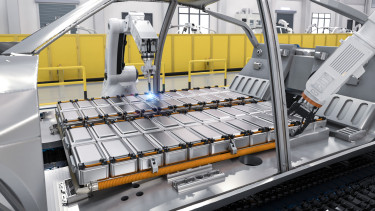
And if we take into account the FDI in battery production announced in recent years, it is feared that as new capacity is ramped up, domestic value added from exports will fall even further. An OECD analysis published in November 2023 shows that domestic value added in the automotive sub-sector, the most important within manufacturing, stood at 32.6% in 2020. And if we look at the domestic value added of the previously mentioned sub-sector of electrical equipment manufacturing, the picture is somewhat better, with domestic value added at around 45%.
In the case of battery production, let us now turn our attention away from the significant energy intensity of the activity, where Hungary has absolutely no comparative advantage. However, let us not forget the fact that the share of imported intermediate inputs used per unit of exports in this sector is 78%. And if we look at the automotive industry, this ratio is 88.4%, so to put it simply:
nearly the same amount of imports is needed per unit of exports.
And if Hungarian economic policy deliberately moves in the direction of increasing the weight of manufacturing as a share of GDP, with a preference for the production of vehicles and electrical equipment, this could not only lead to a reduction in domestic value added, but also worsen the economy's external dependence.
In our view, we cannot blame only the Germans for the poor performance of Hungarian industry (and the economy), as the problem is partly global, partly German and partly related to Hungarian economic policy, industrial strategy and structural problems. It is therefore time to say what has perhaps never been said so clearly before:
Hungary has a dependency problem.
And no, we are not talking about energy imports, we are talking about industrial exports. Of course, it is much easier to say that an economic structure based on a strong internal market would lead to more stable industrial growth than to implement such a structure.
THIS IS ON THE OTHER HAND, THE PORTFOLIO OPINION COLUMN.
This article reflects the views of the author, which do not necessarily reflect those of the Portfolio editorial team.
Cover photo is an illustration. Source: Getty Images





