Value of Hungarian central bank's gold reserves hits all-time high


Expectations of a Fed rate cut, Joe Biden's withdrawal as a presidential candidate and geopolitical tensions combined to push gold to a historic high near $2,500 an ounce in July, which also had a strong impact on the value of the Hungarian central bank's gold reserves at the end of the month.

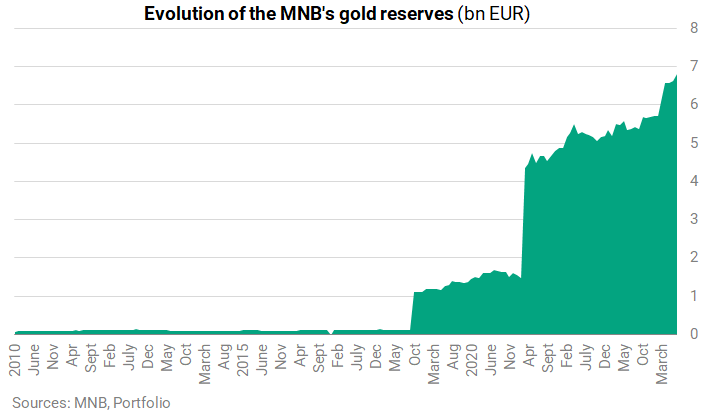
The MNB had previously increased the volume of its gold reserves tenfold in October 2018 at an exchange rate of around USD 1,200, which saw the reported value of gold reserves jump to EUR 1.1 billion from one month to the next. Then, in March 2021, it tripled the volume of gold reserves at an exchange rate of around USD 1,700, bringing the value of reserves to EUR 4.4 billion.
The volume of gold reserves has presumably not changed (significantly) since then, and this is how the reported value of gold reserves rose to $6.8 billion in July this year at the closing price of $2,450, a new historic high.
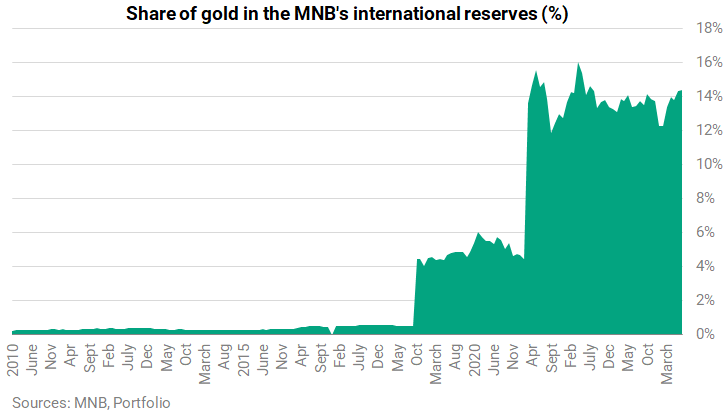
The gold reserve of €6.8 billion accounted for 14.3% of the €47.4 billion in international reserves at the end of July. As shown in the graph below, this does not represent a new peak in the ratio, which was already at 16% in April 2022. Thus, as gold reserves gain value, other components of international reserves also rise, keeping the ratio of gold reserves around 13-14%.
In the latest MNB statistics on international reserves, we also see two other interesting facts:
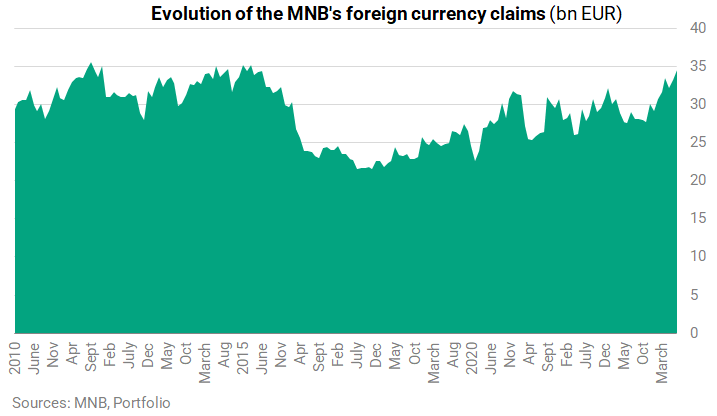
- Firstly, in hindsight, it is easier to understand why the foreign currency claims suddenly jumped by almost EUR 2 billion in April, when there was a Hungarian government foreign currency bond issue, which typically boosts foreign currency claims. As Portfolio first reported two weeks ago, the Hungarian state borrowed €1 billion in foreign currency from Chinese banks in April, and appears to have exchanged some or all of it for forints, which is how the foreign currency ended up in the central bank's foreign currency assets (cash, deposits, securities).
- Secondly, foreign currency claims rose to a nine-year high of €34.5 billion, very close to the historical high of €35.6 billion reached in September 2011.
As a result, the Bank of Hungary's international reserves stood at €47.4 billion at the end of July, merely €0.3 billion shy of the end-May all-time high. If the government has another FX bond issue in Japanese yen in the autumn, as Finance Minister Varga Mihály outlined at the end of last month, foreign currency claims and international reserves could rise to a new historic high.

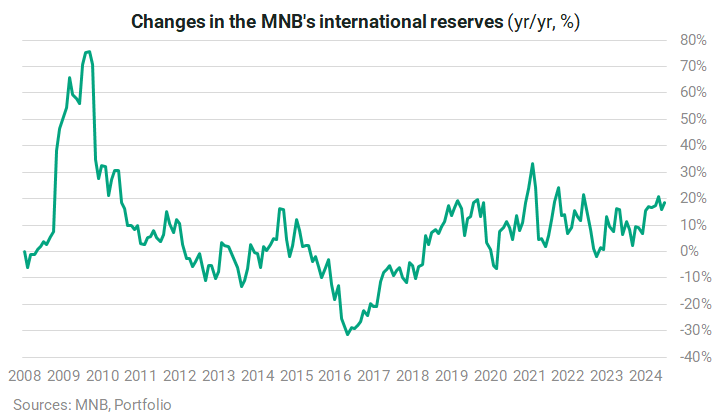
Finally, it is also worth noting that international reserves grew at a brisk annual rate of 18.5%, one of the fastest rates in recent years.
Cover image (illustration): Portfolio





