Hungarians borrow like there's no tomorrow, records being broken


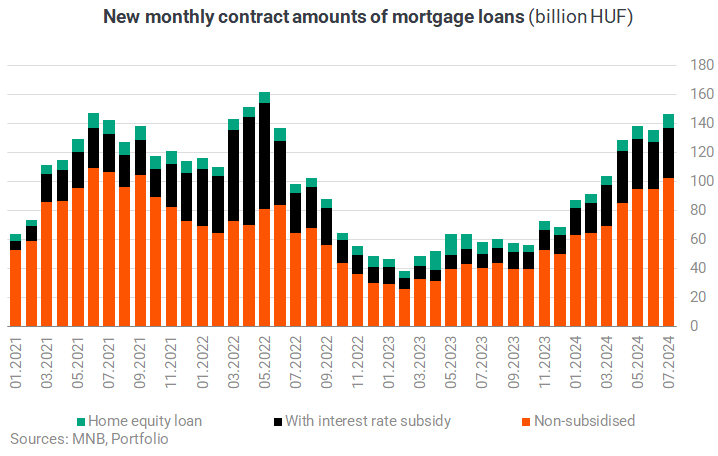
Contrary to market expectations, housing lending has not yet decelerated in July, with HUF 137 billion in contracts signed, 2.7 times more than a year earlier, and Hungarians took out even more home loans only in April-May 2022, during the MNB's Green Home Programme.
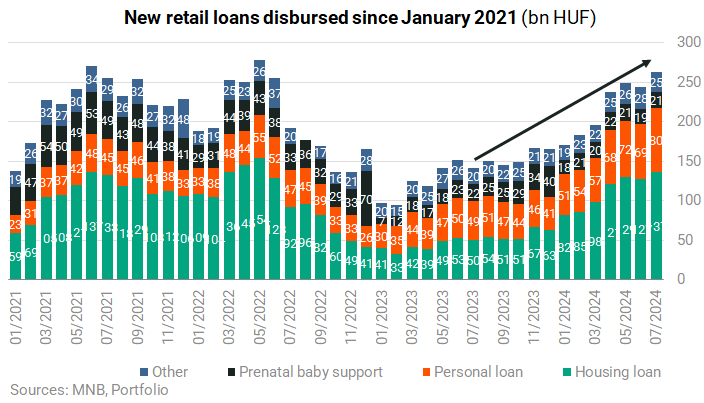
Personal loans have set a new record for the umpteenth time, with HUF 80 billion in personal loans taken out, 63% more than a year earlier.

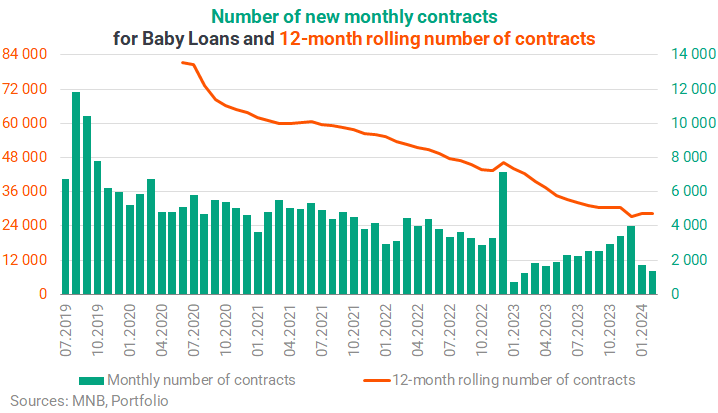
Baby loans, the eligibility for which has been restricted, ended the month in line with this year's average, with total household lending of HUF 263 billion in July, almost double the level of a year earlier.
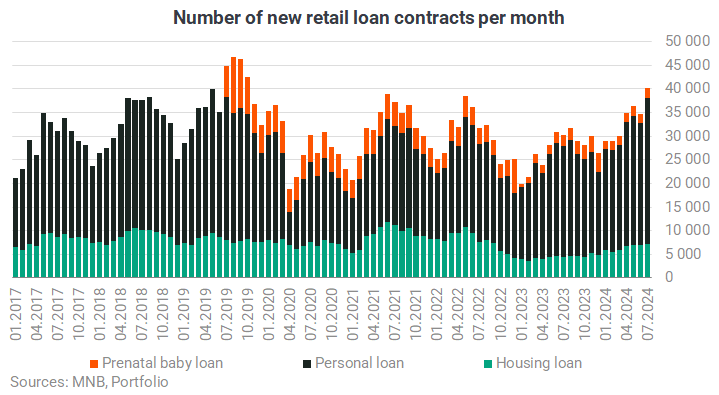
It is mainly the average loan amount, and not the number of loans, that is driving the market forward, but the number of borrowers has still increased by 53% to 45,000 at housing loans and 26% to 176,000% at personal loans in the January-July period.
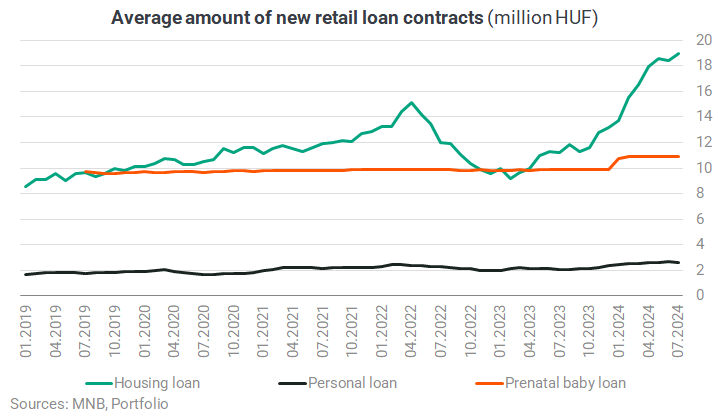
The average amount of new housing loans increased to HUF 19.0 million thanks to the interest-subsidised CSOK Plus, while the average loan amount was HUF 2.6 million for personal loans and HUF 10.9 mn for baby loans.
The two graphs below show that overall household lending has not yet reached its previous nominal peaks, but is approaching them at a fast pace.
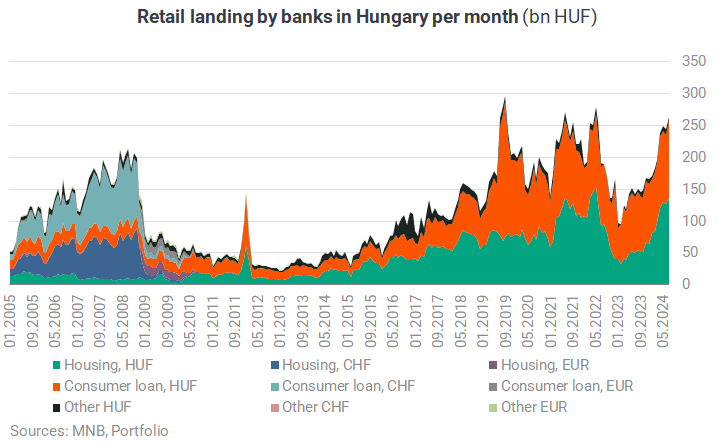
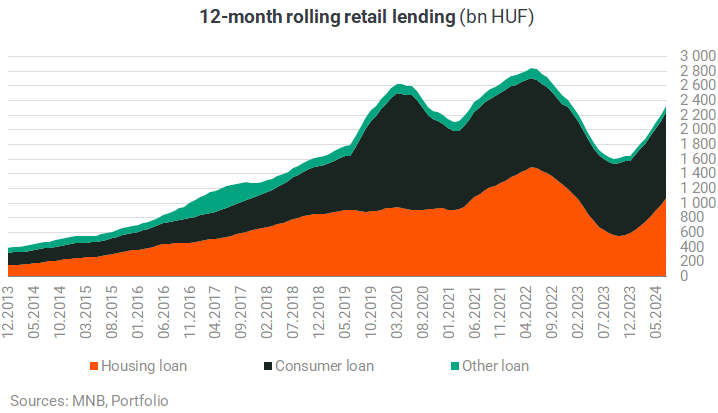
Both housing loans extended on market terms and interest rate subsidised options are driving the expansion of the housing loan market, but the latter are showing higher growth compared to last year. In the first seven months of the year, 26% of new housing loans were subsidised CSOK Plus or Village CSOK loans.
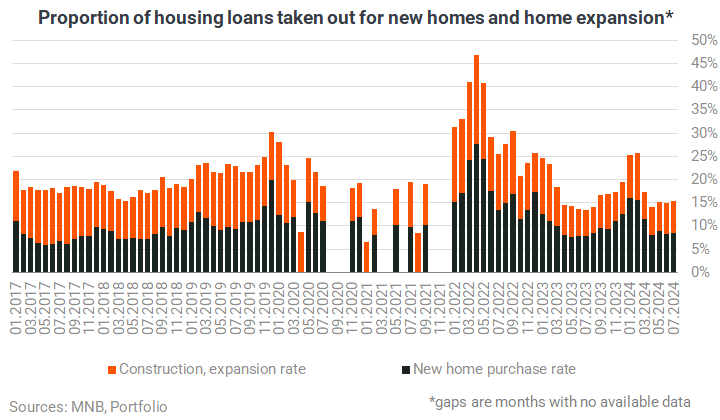
The second-hand housing market continues to be the engine of lending, with the share of new housing only around 15%, and borrowing for renovation has not really taken off.
Paradoxically, the interest period statistics are the best indicator of how many CSOK Plus loans households have taken out, as these are currently considered to have an interest period of up to one year due to the way the interest subsidy works.
Based on the data, households have taken up almost HUF 178 billion of CSOK Plus, so the HUF 300 billion volume of the new subsidised product that many had previously predicted may be reached. Otherwise, the 10-year interest period remains the most popular for market-rate housing loans.
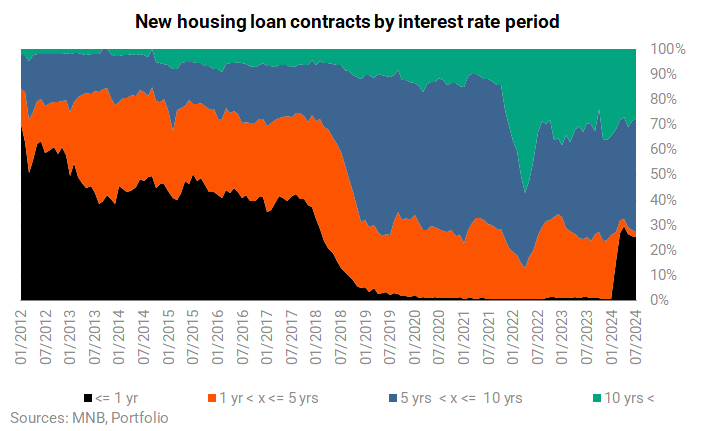
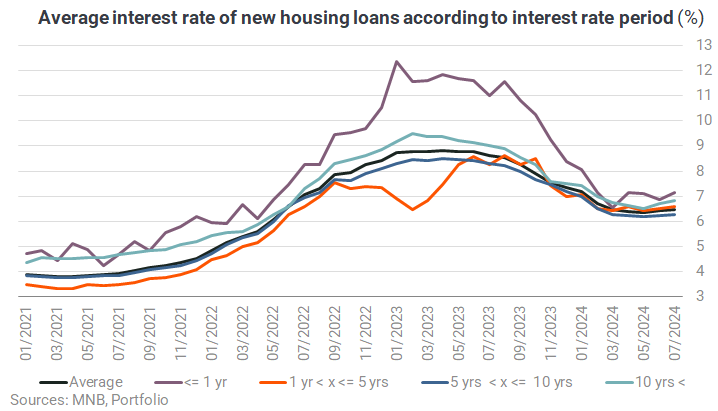
While CSOK Plus is offered by most banks at a fixed customer interest rate of 3%, the average interest rate on market housing loans is barely budging: in July, they were taken out at 6.5%.
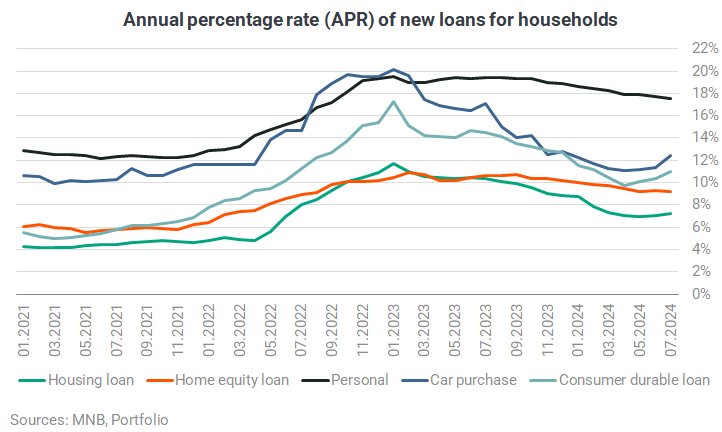
The annual percentage rate (APR) for personal loans was 17.6% in July, down slightly and one percentage point lower than in January.
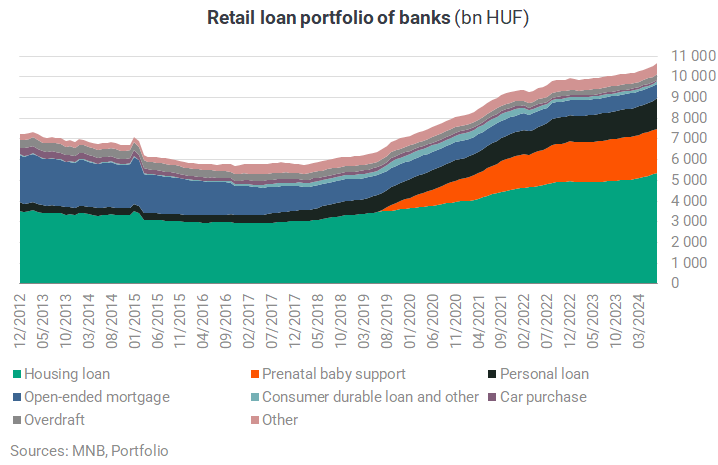
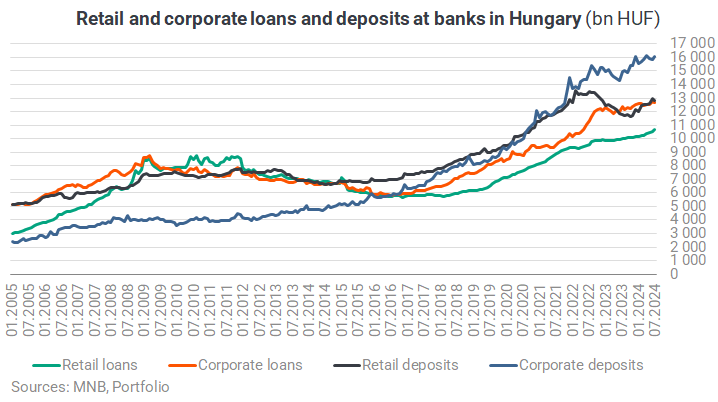
Households owed HUF 10 657 billion to banks at the end of July, an increase of 6.5% over a year. The stock of housing loans increased by 8.7% to HUF 5,374 billion.
Meanwhile, the stock of retail bank deposits contracted slightly in July. It was to be expected after the bounce in June, which was presumably driven mainly by dividend income.
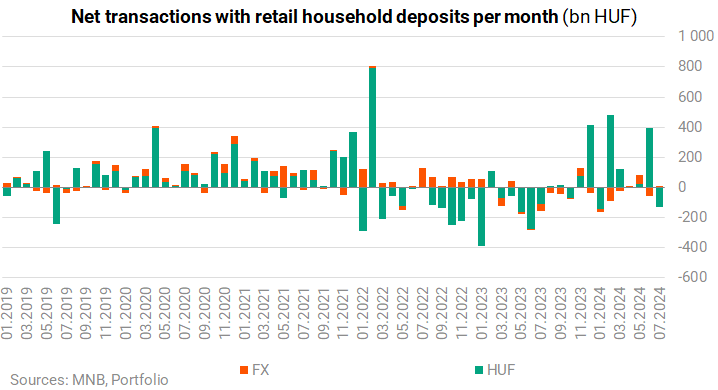
The hike to the transaction tax announced in July may have had a much smaller impact, with total household deposits growing at 9.1% year on year after a contraction in a period of high inflation.
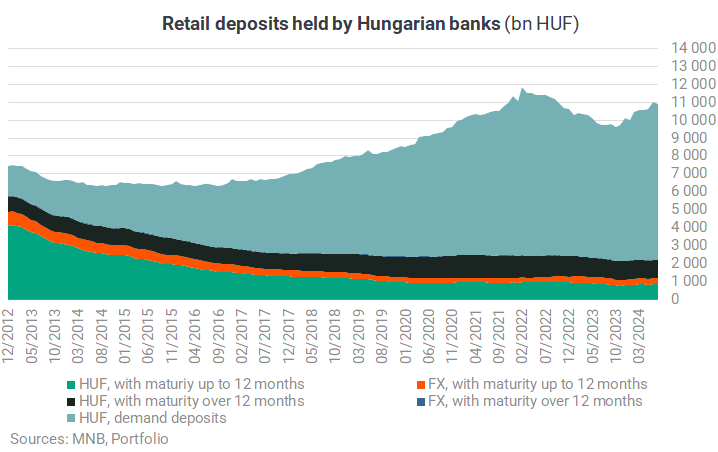
Banks are still not pampering retail depositors: on average, they paid 1.41% on deposits with agreed maturity, and the average HUF interest rate for new contracts was only 2.91%. For companies, the above figures were 5.6% and 6.0%, respectively.

We also looked at the corporate credit market: the repayment of foreign currency loans by some large companies may be the reason why net transactions were negative this time.
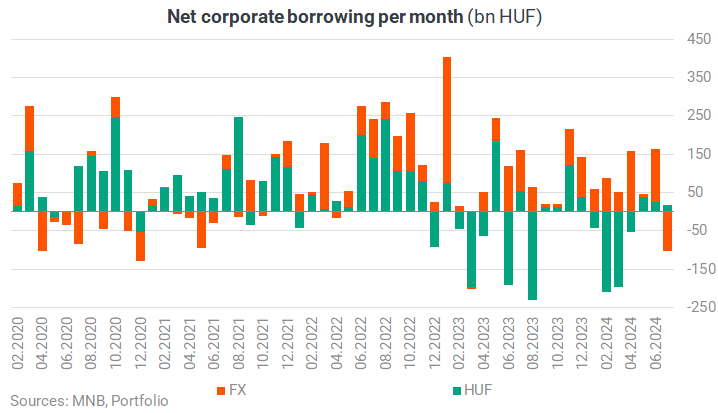
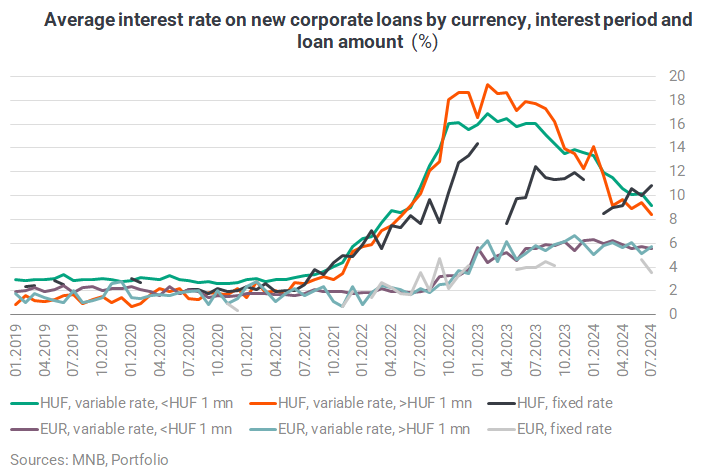
Looking at new contracts we find that variable-rate forint loans have returned, mainly for larger loan amounts, presumably taken out by larger enterprises.
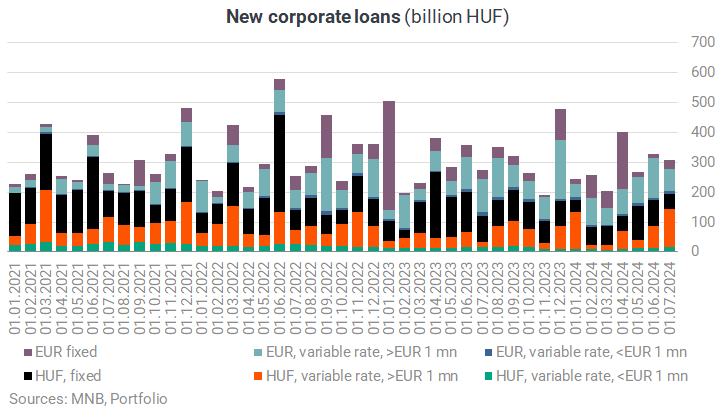
On average, firms still borrowed at an average interest rate of 8-9% for variable-rate forint loans, and even higher for fixed-rate forint loans. The reverse was true for euro-denominated loans, with variable-rate loans taken out at interest rates of 5-6% and fixed-rate loans at 3 to 4%.
Lastly, it is worth noting that retail lending continues to outperform corporate lending, as shown by the fact that while retail lending was up 6.5% year-on-year in July, while corporate lending grew by just 2.8%. Household deposit holdings also grew more (9.1%) in annual terms than corporate deposits (7.5%).
Cover image (illustration): Getty Images





