Hungarian households simply can't stop borrowing, but something went awry for companies


Housing lending slowed down slightly at the end of the summer, with a volume of HUF 109 billion in August, down from July but again above market expectations. This is still double last year's level, while total retail lending increased by 51%.
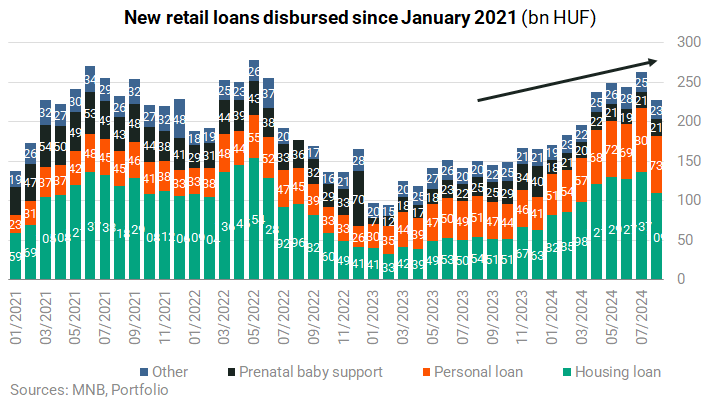
The same can be said for personal loans, but fewer baby loans were taken up, which can be explained both by unfavourable demographic trends and the shrinking pool of borrowers, and from January 2025, those over 30 who are already pregnant will not be eligible for these loans.

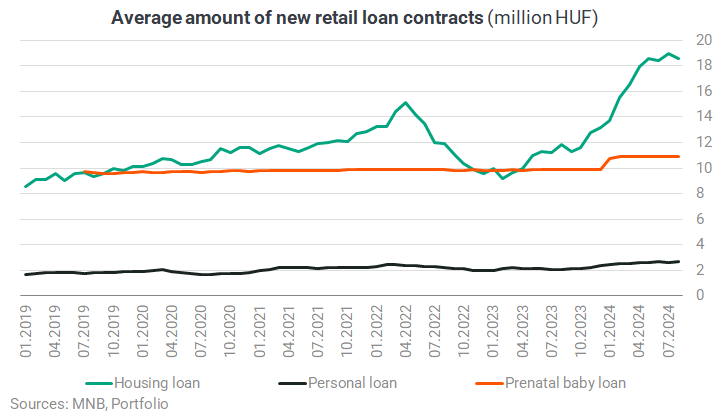
The growth continued to be driven mainly by the increase in the average loan amount, which was HUF 18.6 million for housing loans, up 57% year on year, and HUF 2.7 million for personal loans, up 30% yr/yr. The introduction of the CSOK Plus, with a value of up to EUR 50 million, played a major role in the former.
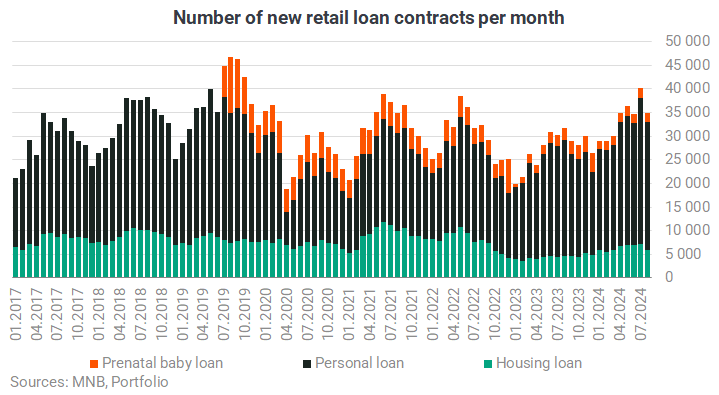
In the first eight months of this year, households signed 51,000 housing loan contracts, 203,000 personal loan contracts and 15,000 baby loan contracts, a smaller but also significant increase than the average.
The autumn also started well for the housing market, so momentum is expected to continue in the coming months, with the minimal slowdown in August most likely caused only by seasonal factors.
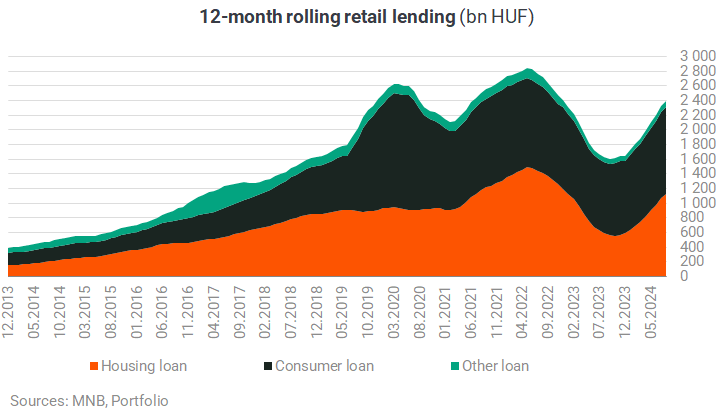
In the 12 months to end-August, HUF 1,122 billion of housing loan contracts have been signed, and the number is getting closer to the peak of HUF 1,489 billion set in May 2022 (during the Green Home Programme). Next year, the record could even be broken, especially if the three big changes planned by the government and the MNB are implemented.
According to Portfolio, there are three major changes in the housing credit market in the pipeline at the same time, but the exact date of their entry into force is not yet known:
- The APR could be reduced from the current 6-8% to 5% or below. The banking association has to work out how to do this within two months, and we understand that banks would not accept this lower APR for all home loans, only for green home loans for first-time buyers. This means practically all home loans for new build housing.
- The minimum deductible for green home loans could be reduced from 20% to 10%. In practice, this also means all loans taken out for new homes.
- Part of the savings in voluntary pension funds could be used tax-free without penalty for home-building purposes, most likely also for the down payment on a home purchase loan. Previously, all long-term financial savings were discussed, but we understand that this version was not ultimately negotiated.
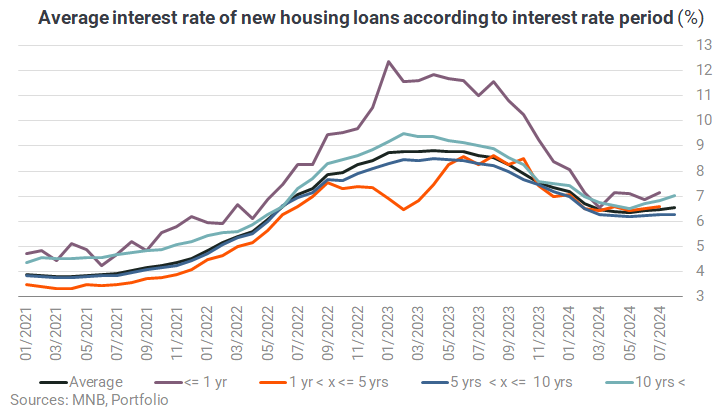
There is no news yet on the government's target of a maximum APR below 5%, but market mortgage rates are not particularly supportive of explosive growth. In August, the average market mortgage rate rose slightly to 6.56%.
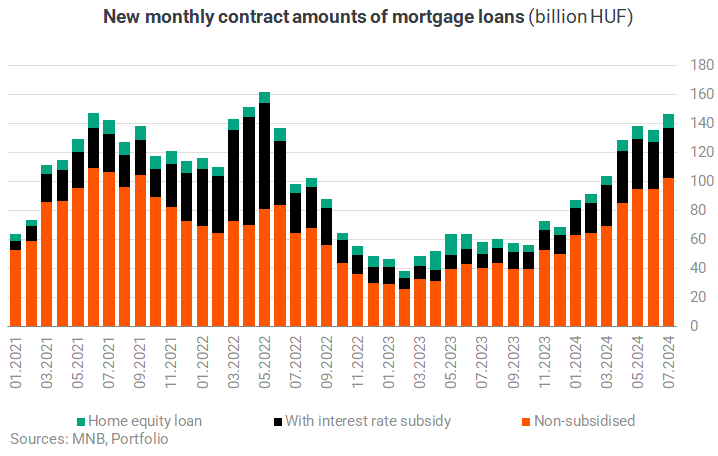
The share of subsidised loans has stabilised at around 25% in recent months, and families have borrowed around HUF 200 billion in CSOK Plus in the first eight months of its existence, which means that the HUF 300 billion in loans forecast by many for the whole year may be met.
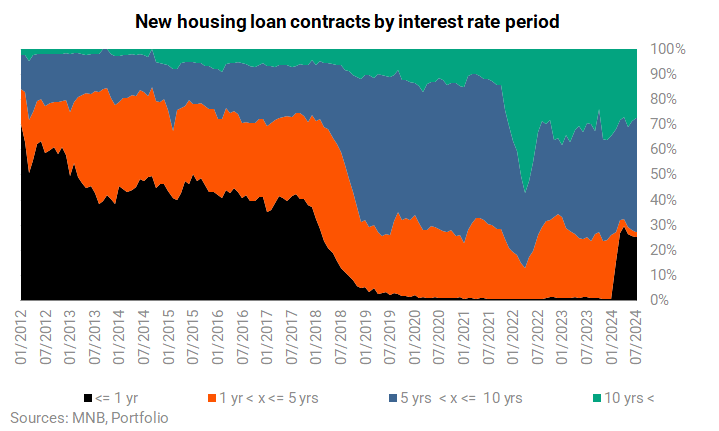
While CSOK Plus is counted as a short-interest period loan in the statistics (due to the regulation of interest subsidies), among market housing loans, loans with a 10-year interest period or fixed until the end of the term are neck and neck in terms of their share of new lending.
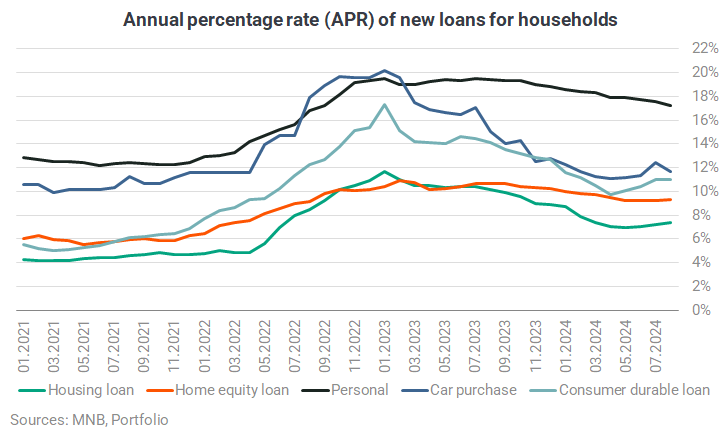
Personal loans were granted by banks in August at an average APR of 17.2%, and home equity loans at 9.3%, a modest decline of 2.2 and 1.4 percentage points respectively over a year.
Bank lending to households stood at HUF 10,736 billion at the end of August, up 6.9% year-on-year and 5.8% this year alone, showing that retail lending really took off this year.
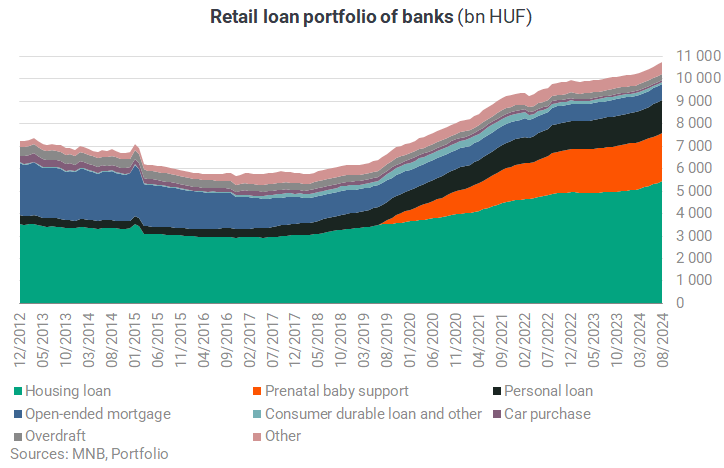
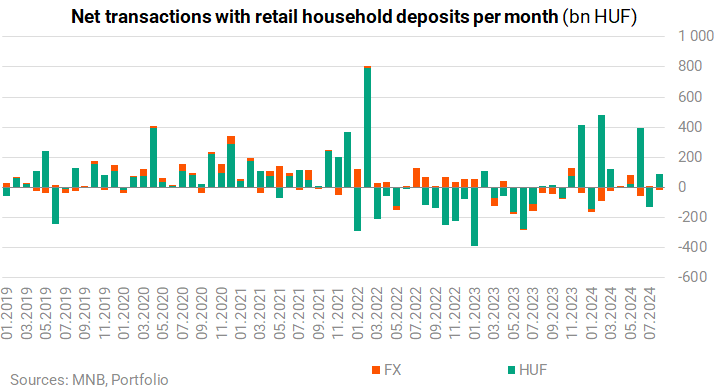
In terms of deposits, August was a normal month: after the July contraction, on a transaction basis, households' HUF deposits increased by HUF 93 billion and their foreign currency deposits decreased by HUF 19 billion.
The new foreign currency conversion transaction tax, introduced on 1 October, is expected to have a significant impact on retail customers from January.
Banks are not overly generous with their depositors either: the interest rate paid on an average HUF deposit was just 1.35% for households, compared with 5.53% for companies on the total.

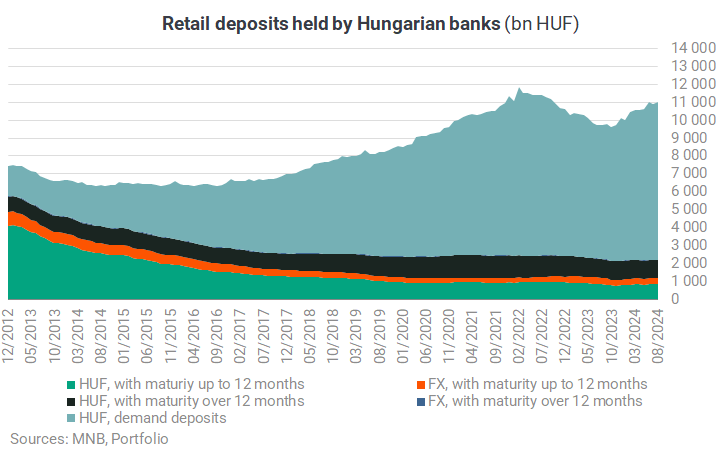
Households' bank deposits have been rising since last autumn, standing at HUF 12,896 billion at the end of August, up 10% year-on-year, while the share of demand deposits was 82.9%.
In corporate lending, August was another weak month, similar to previous months. The growth in corporate lending was smaller than that of retail lending, at 4.4% over the past year, and this year it is only 0.9%.
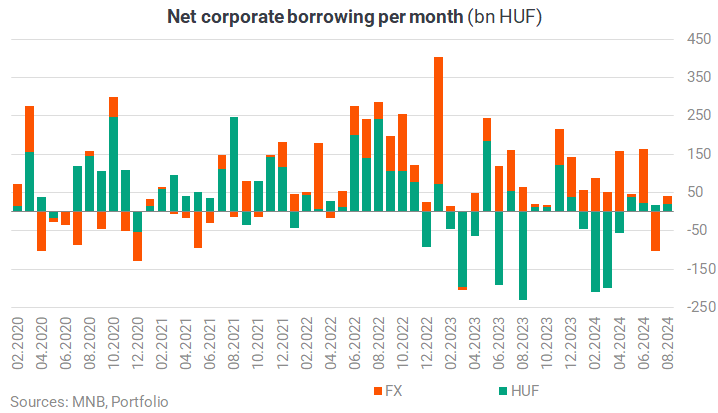
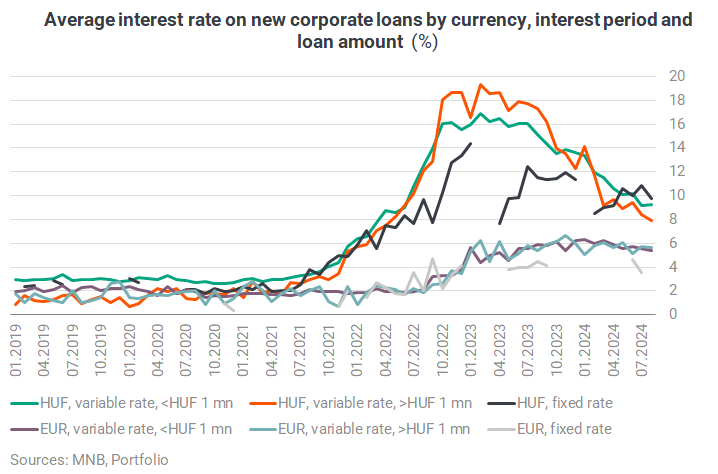
Average market interest rates for corporate forint lending are in the range of 8-10%, which is not conducive to the ramp-up of forint lending, especially for investment plans and financing for companies facing market/revenue uncertainty. Those who can, take out a euro loan or a subsidised loan (mostly a 5% Széchenyi Card loan), or turn to a foreign bank if they can.
Cover photo (for illustration purposes only): Getty Images





