New retail lending record in Hungary, households can't stop borrowing


The MNB has published the September credit and deposit statistics of the Hungarian banking sector. In retail lending, market activity increased compared to August for seasonal reasons alone, but the jump compared to a year earlier is also impressive.
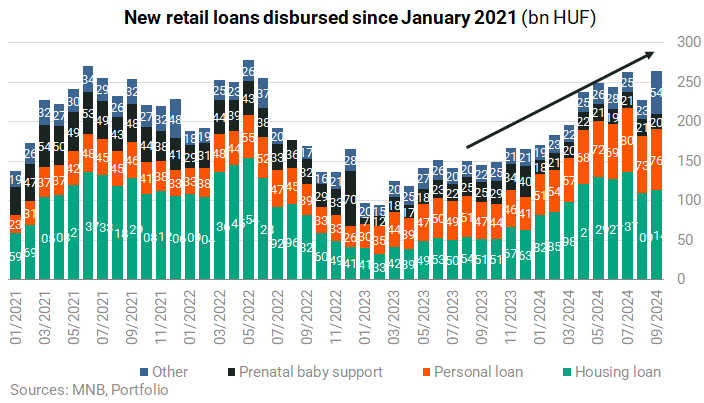
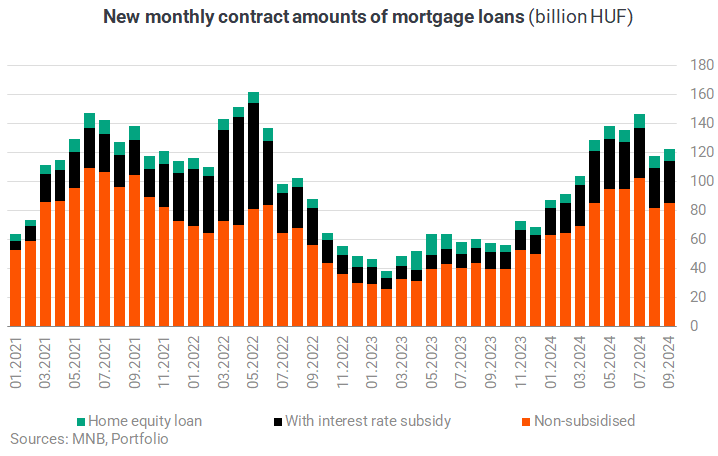
Banks extended HUF 114 billion in housing loans, HUF 76 billion in personal loans and HUF 20 billion in baby loans in September, which means that 2.4 times as many housing loans and one and a half times as many personal loans were signed than in the same period last year, while baby loans fell by a fifth as eligibility was tightened this year.

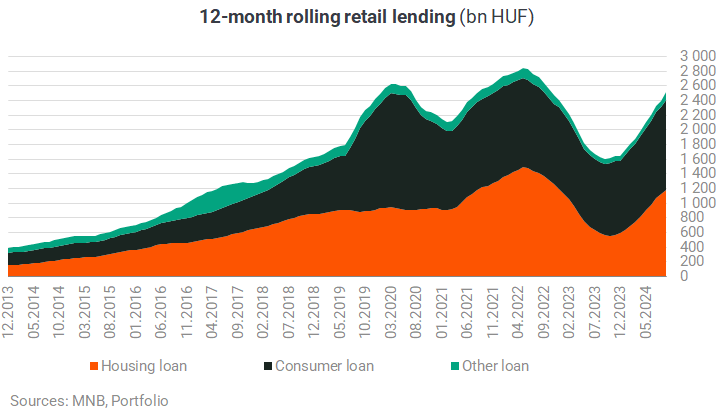
Housing lending is on track to surpass its 2025 record of HUF 1,195 billion, as the past 12 months have seen a total of HUF 1,185 billion in lending. However, there is a good chance that the 2021 record HUF 1,303 billion will be broken only in 2025.
However, personal loans are already at an all-time high, with the first nine months of lending of €601 billion already surpassing the 2019 full-year record of €559 billion.
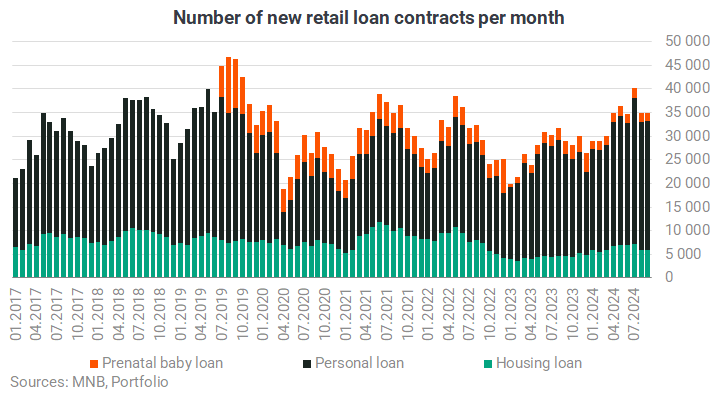
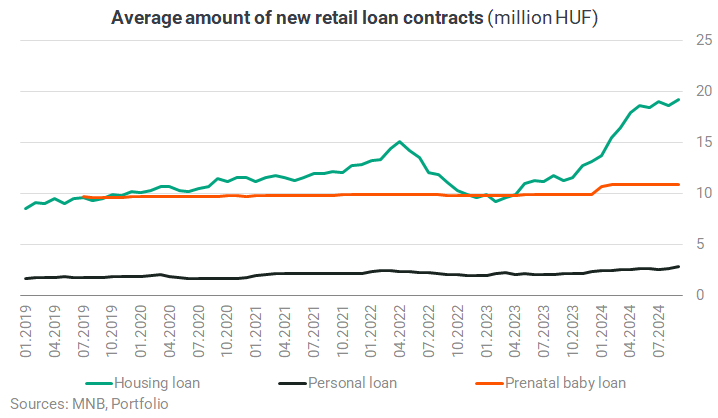
In housing loans, it is mainly the average loan amount that is driving the market (HUF 19.2 million in September compared to HUF 11.3 million a year earlier), but the number of new contracts has also increased by one and a half times. In personal loans, the number of contracts and the average loan amount increased by roughly the same amount (to HUF 2.8 million from HUF 2.1 million ).
The share of subsidised loans within housing loans increased to 25% from 22% a year earlier, clearly due to the higher average amount of CSOK Plus. We still do not see any significant market expansion for home equity loans.
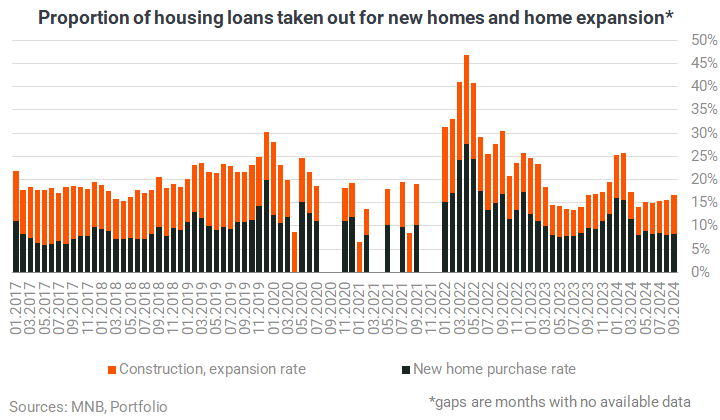
In September, 17% of newly extended housing loans were for the purchase or construction of a new dwelling, in line with a year ago. The question is how much of an increase the new measures by the government and the MNB will bring about in this area.
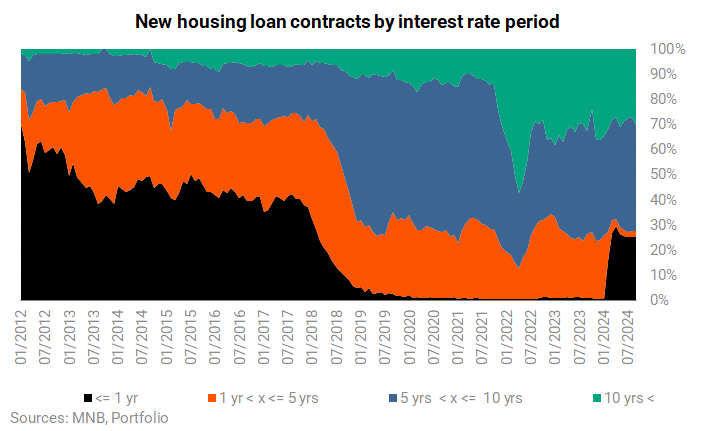
30% of new housing loans are fixed market rate loans, but together with subsidised loans, which are technically classified as variable rate, the share of housing loans posing no risk of an increase in repayments is above 50%. Real variable-rate, market-rate home loans have disappeared from the market in recent years.
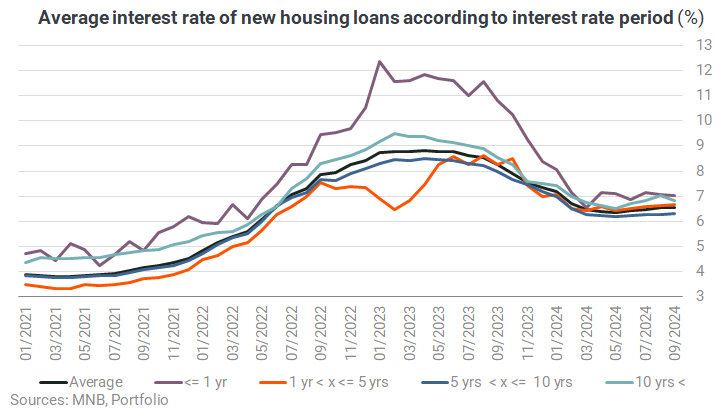
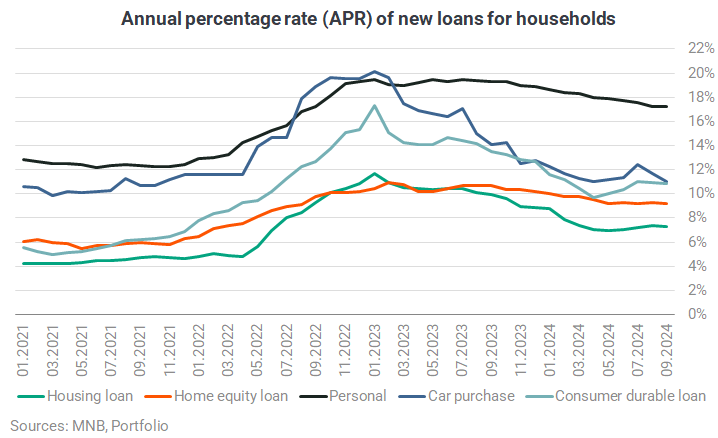
Households took out market-rate mortgages at an average interest rate of 6.55% in September.
There is little change in this, nor in the fact that banks' offers are very similar in terms of interest rates, and the chances of further massive rate cuts have even narrowed recently due to the rise in benchmark rates in October. It is now also clear that young first-time homebuyers are likely to benefit from the 5% APR option, as requested by the Economy Ministry from banks, when taking out a green home loan.
The cost of personal loans has also been slowly declining recently, but this trend was reversed in September, when households took out such loans at an average APR of 17.2%, setting a new annual record in the market despite the high cost level. Bankers explain this as a clear result of digitalisation.
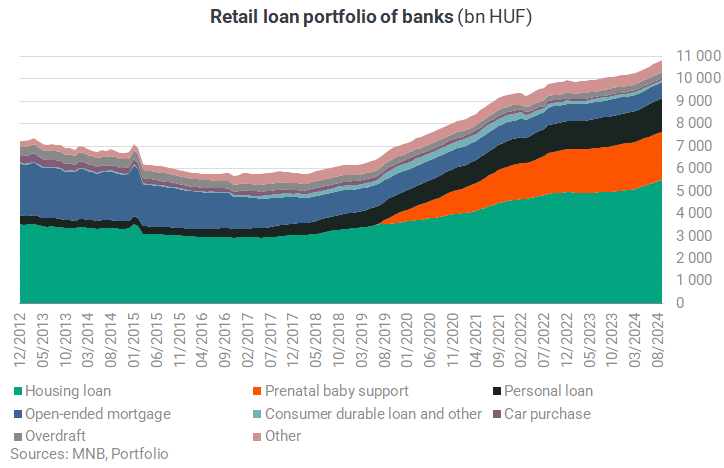
Thanks to the booming retail lending, total bank debt of households increased by 7.6% year on year, while housing loan debt grew by 10.5%. 51% of household loan debts are home loans and 20% are baby loans.
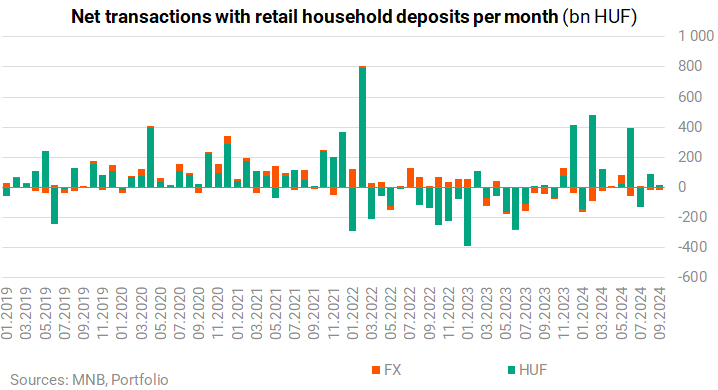
As for retail deposits, there was only minimal shifts in September, with a net decrease of HUF 5 billion on a transaction basis.
Banks paid an average interest rate of 1.3% on a retail HUF deposit and 2.7% on new contracts. The corresponding rates for corporates were 5.4% and 5.8%.

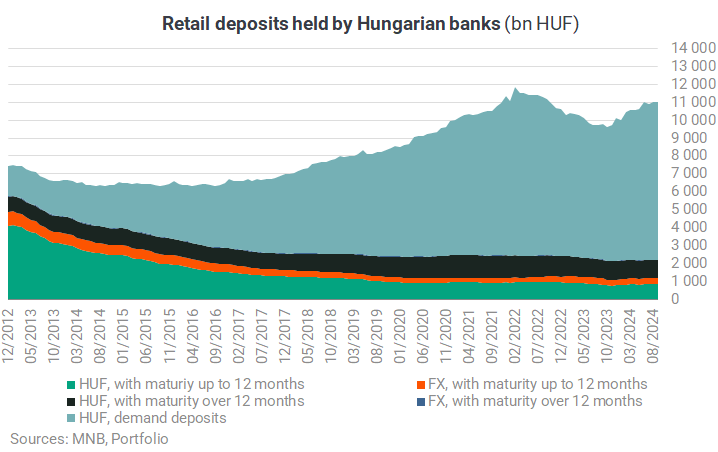
Hungarian household deposits have been growing again for almost a year, but the pace of growth seems to be slowing.
Over the past year, household deposits have grown by 9.7%, 83% of which are still demand deposits.
Meanwhile, corporate lending has been performing extremely poorly, with corporate credit growing by just 3.5% yr/yr in September and 1.6% since December 2023. September did not bring a turnaround either: on a transaction basis, corporate credit grew by only HUF 5 billion.
SME lending has performed particularly badly in recent quarters, and it is no coincidence that the government is now looking to give it a boost.
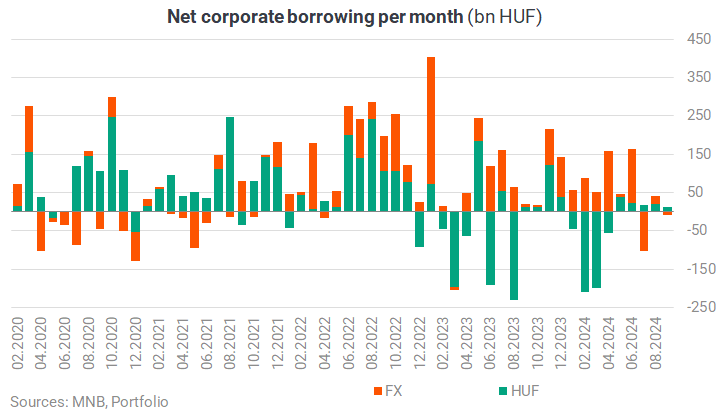
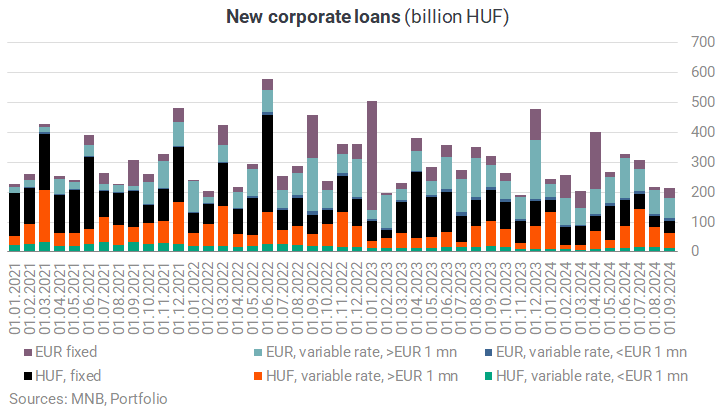
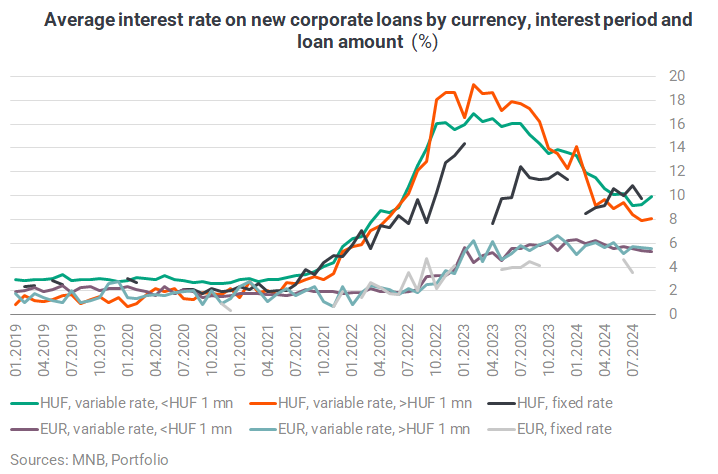
It is not only still high market interest rates, but also high corporate liquidity, gloomy market prospects and the corresponding postponement of investment plans that are limiting the growth of the corporate credit market. Although interest subsidised Széchenyi Card loans have been available at 3.5% since 1 November, this move is expected to rather help credit restructuring in the short term.
Cover image (for illustration purposes only): Getty Images





