Retail lending en route to new record in Hungary, but there's a catch


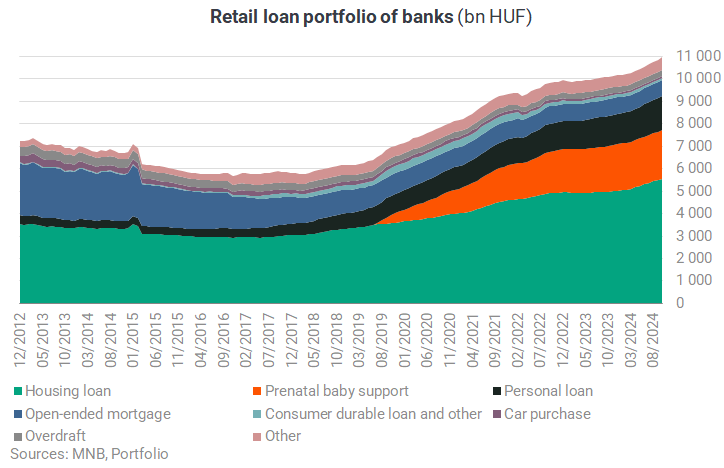
As in the year as a whole, the domestic credit market was mixed in October, with retail lending booming and corporate lending faltering. Of the HUF 255 billion in retail loan contracts in October, HUF 118 billion were home loans and HUF 81 billion were personal loans, so the former could set a new record this year with over HUF 1,400 billion in lending and the latter over HUF 800 billion.
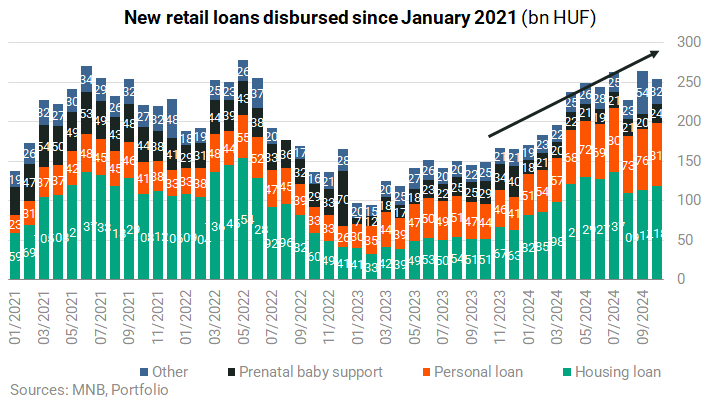
Housing loans more than doubled in the first 10 months of the year compared to the same period of 2023, and personal loans almost doubled. However, take-up of baby loans, the third big driver of household lending, has fallen due to the reduction to the pool of eligible borrowers, and with further tightening to be implemented in 2025.

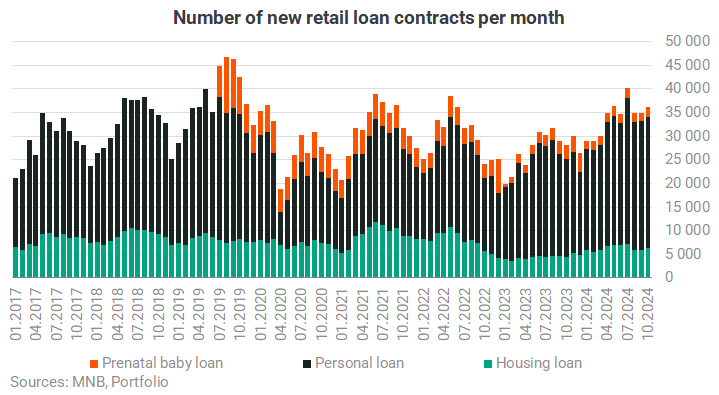
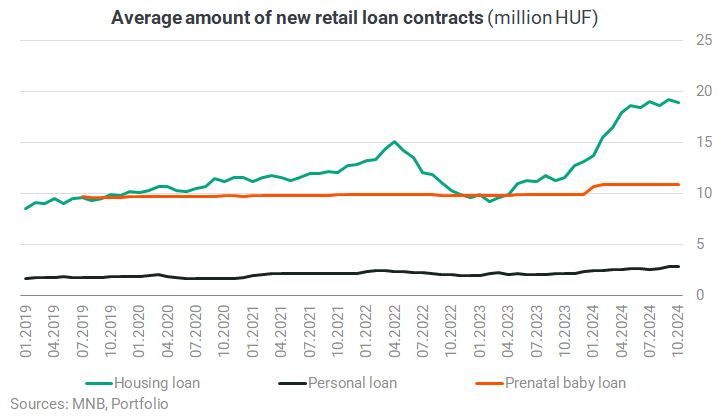
The increase in housing lending is mainly due to the rise in the average loan amount (to HUF 19 million from HUF 12 mn), but the number of contracts also increased almost one and a half times, while the number of personal loans increased more than the average loan amount (to HUF 2.9 mn from HUF 2.1 mn).
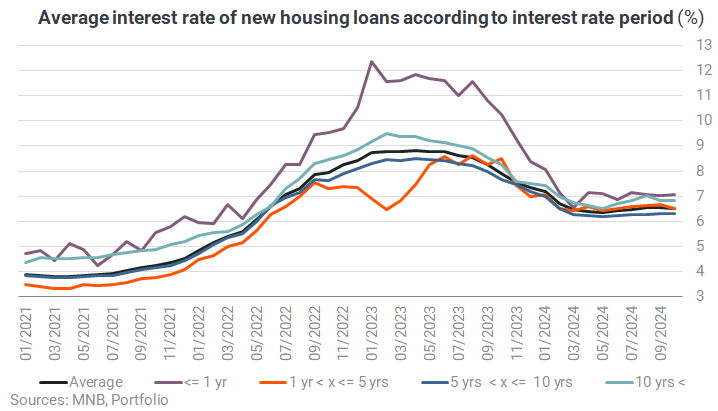
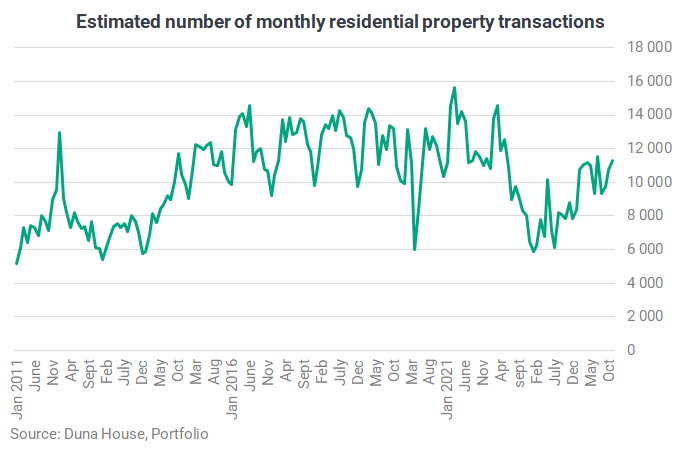
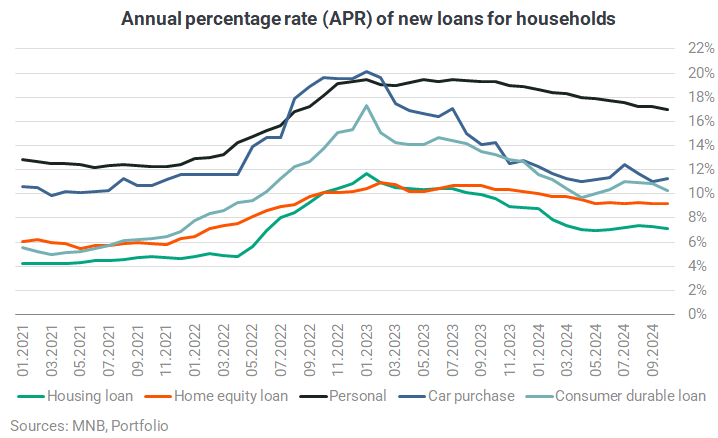
Average mortgage rates have frozen at between 6-7% this year, despite a big boom in the market, mainly due to the recovery in the housing market and the strong resurgence of people buy second-hand homes on credit.
This, combined with the very low supply of new housing, explains why the share of new housing in lending is still only 17% and renovations only a few percent. The stuttering energy efficiency home renovation programme and the rural home renovation programme starting in January are unlikely to kick-start construction, and the housing loan interest rates capped at 5% are also expected to benefit only a small group.
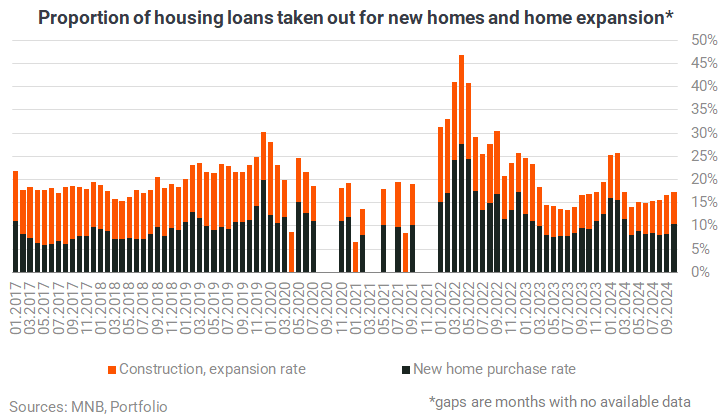
Next year, the housing (credit) market could be further boosted mainly by:
- around HUF 3,000 billion in principal and interest payments on retail government securities,
- the usability of voluntary pension savings, which the government expects to mobilise around HUF 300 billion,
- minor state measures such as the rural home renovation programme or the introduction of 5% interest rates on housing loans for a narrow group of people, the latter of which the vice-president of the Hungarian Banking Association expects to mobilise a few tens of billions of forints.
At the same time, not only the outlook for next year, but also for the end of this year is positive for mortgage lending, although there is no prospect of a massive fall in market interest rates for the time being.
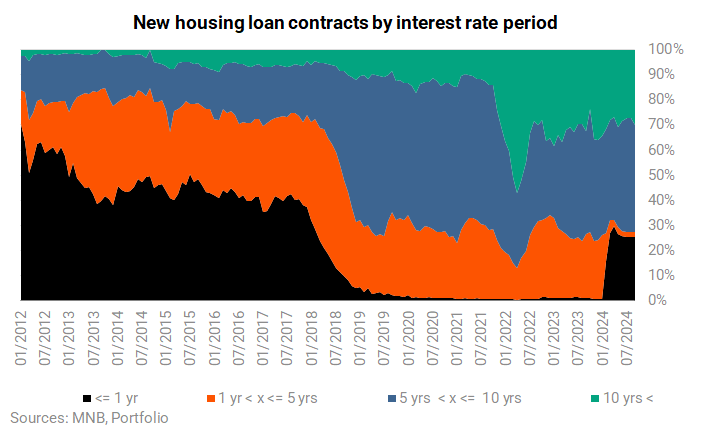
In terms of the interest period, the 10-year fixed rate continues to dominate, while the rise in variable rate loans this year is only a statistical phenomenon, reflecting the emergence of the family housing subsidy CSOK Plus, which is expected to account for HUF 300 billion in the HUF 1,400 billion housing loan market this year.
As mentioned above, the personal loan market is also booming, but the fall in interest rates has not been particularly spectacular. The average interest rate on personal loans is still 17.0%, 2.3 percentage points lower than a year ago.
Overall, according to the latest data, household debt grew by 8.4% over a year, including housing loans by 11.5%. Overall, one in two household loans are home loans and one in five are baby loans.
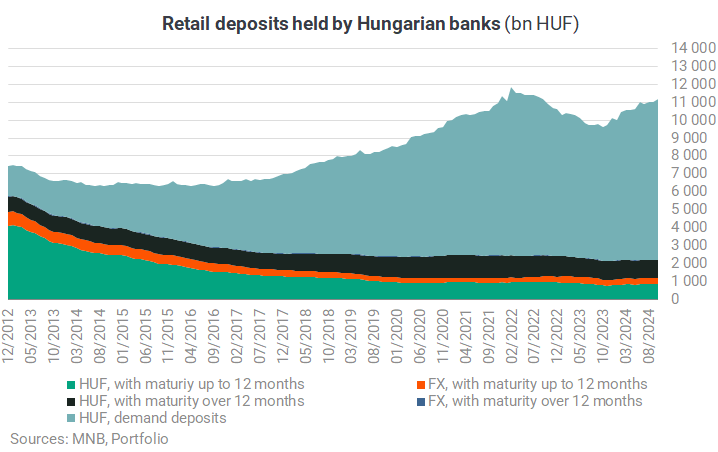
Retail deposits also continue to rise, and were up 12.8% yr/yr in October, indicating a particularly strong savings capacity compared to the previous period of high inflation. However, 83% of deposits remain uncommitted at the end of the month under review.
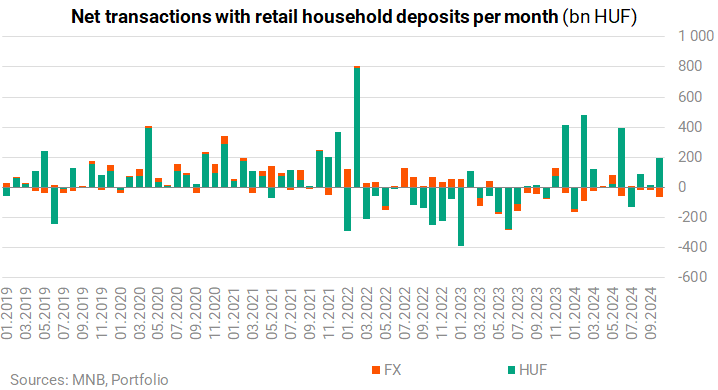
The October expansion may have been helped by the disbursement of area-based agricultural subsidies (which are partly paid into retail rather than corporate accounts), which also contributed to a net HUF 138 billion increase in household deposits on a transaction basis.
Deposit rates are still not much to look at: banks paid an average interest rate of just 1.3% on their retail HUF deposits in October, as they do not need the extra liquidity.

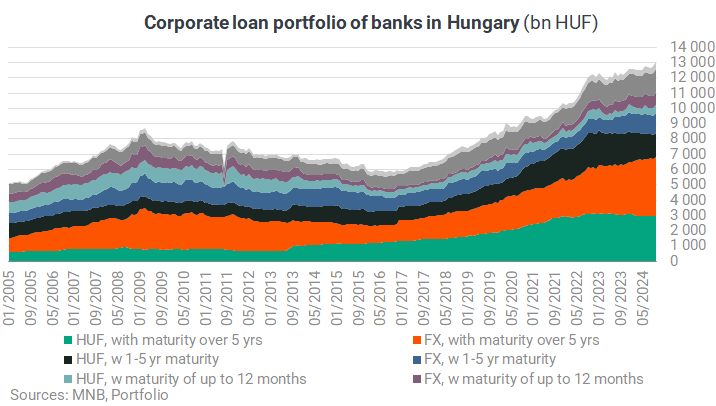
The credit market for companies looks much worse than for households, although credit growth in October was driven by net corporate borrowing of more than HUF 100 billion, with an annual growth rate of 6.8% in October, compared to 3.5% in September.
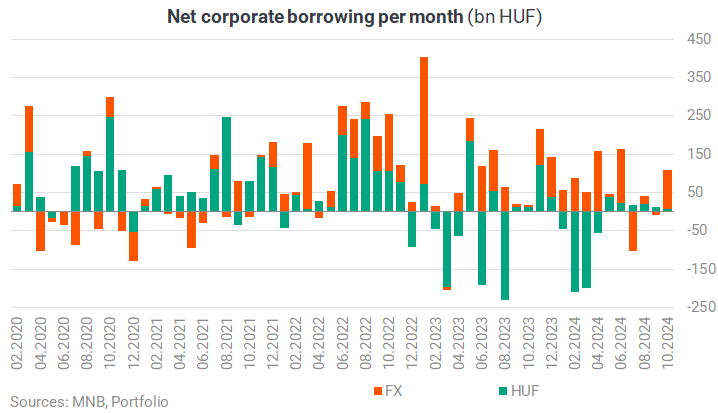
For corporates, lower interest euro loans and subsidised loans are keeping the credit market alive, while the weight of loans with a maturity of less than one year has also increased. In the space of a year, the share of foreign currency loans has risen to 50% from 44% of total corporate loans, while the share of loans maturing in less than a year has risen to 26% from 22%.
Cover image (for illustration purposes only): Getty Images





