Hungarians storm banks, everyone wants a housing and personal loans


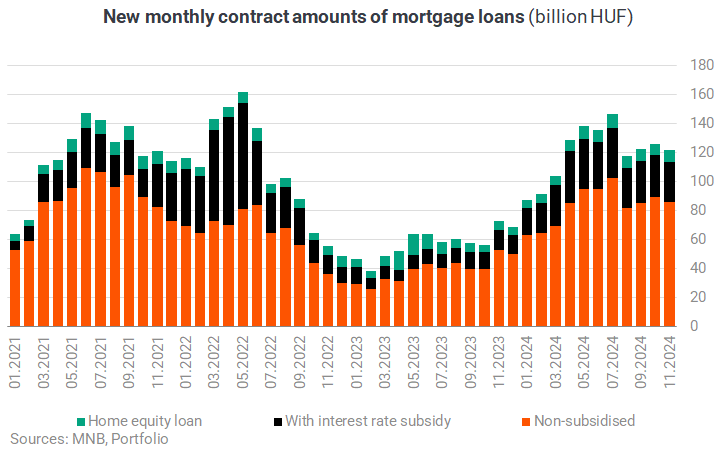
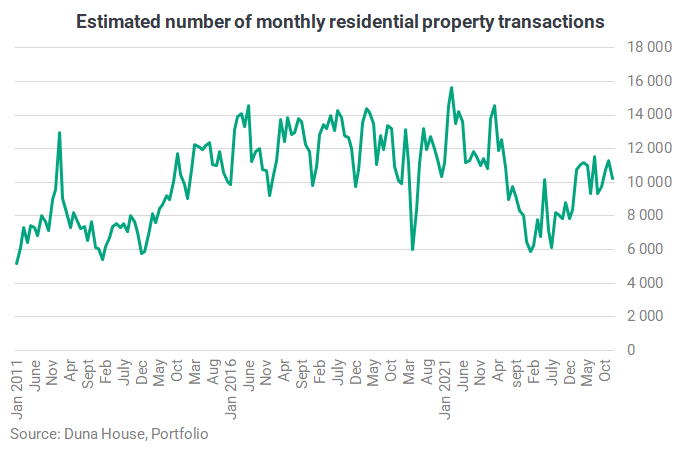
In November 2024, HUF 113 billion of housing loans were signed, up 69% year-on-year. Hungarian housing lending is on track to break its previous record of HUF 1,303 billion in 2021, having reached HUF 1,235 billion in the first 11 months of the year. However, in real terms and in terms of relative indebtedness, last year's result is far from outstanding.
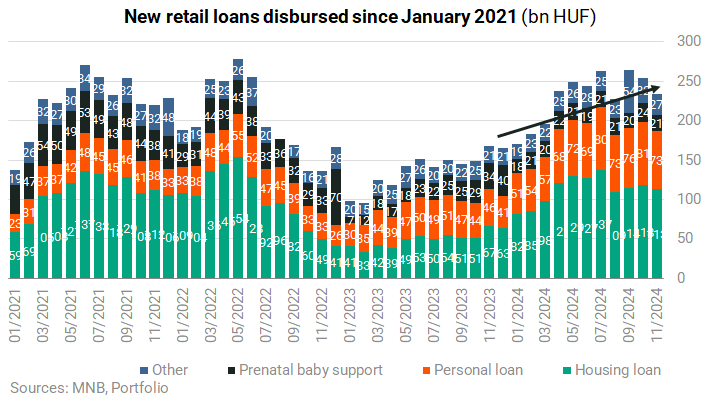
While mortgage lending showed a 132% volume increase in the first 11 months of the year, after a local low in the previous year, personal loans, which also set an absolute record (at HUF 755 billion in the first 11 months of the year), jumped 57%. However, baby loans, the third biggest driver of retail lending, saw contract volumes fall 0.5% due to age restrictions, which the government has eased slightly this year.

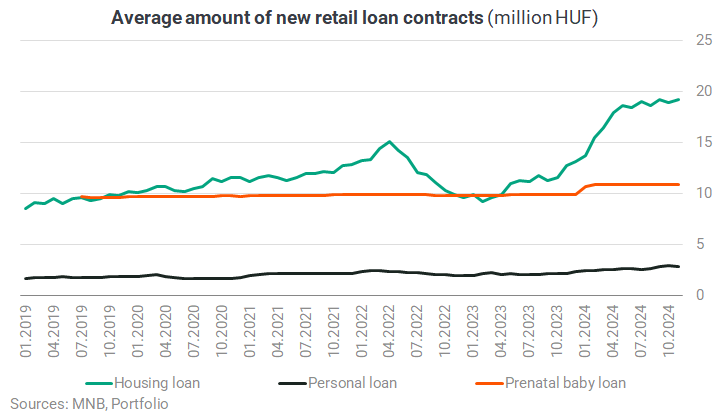
The increase in the volume of housing loans and personal loans is mainly due to the increase in the average loan amount, followed by the increase in the number of contracts. The average amount of new housing loans in November was HUF 19.2 million, while the average amount of new personal loans was HUF 2.9 million.
The number of contracts was 43% higher than a year earlier for housing loans and 25% higher for personal loans, while only personal loans surpassed the previous peak. This is partly due to the fact that the personal loan market is well digitised and partly to the fact that with the emergence of the higher average CSOK Plus last year, there was less duplication in the housing loan market, i.e. CSOK loans were combined with market rate housing loans, which skewed contract numbers upwards.
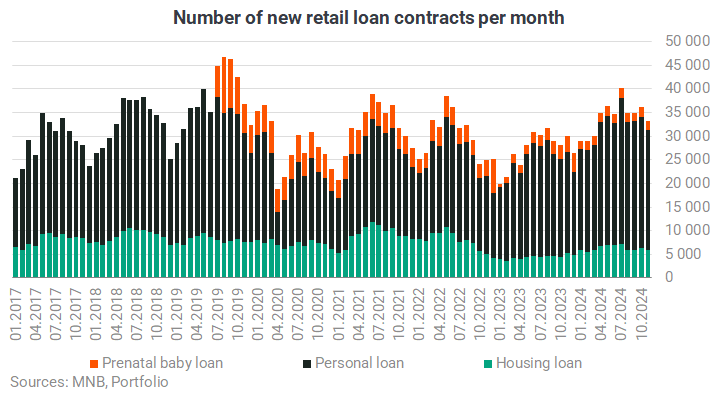
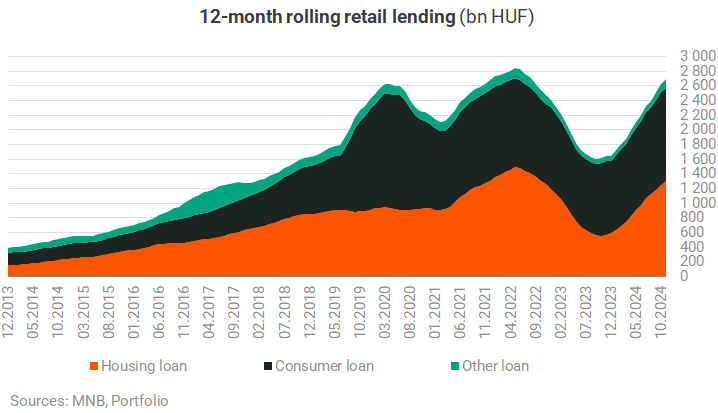
In the long run, this is what the volume of retail lending looks like: on a calendar-year basis, the record is expected to be set in 2024, but the 12-month rolling figure is not yet a new peak (the second half of 2021 and the first half of 2022 were really strong).
The share of subsidised housing loans in new lending was 26% last year, higher than in the past thanks to the introduction of CSOK Plus.
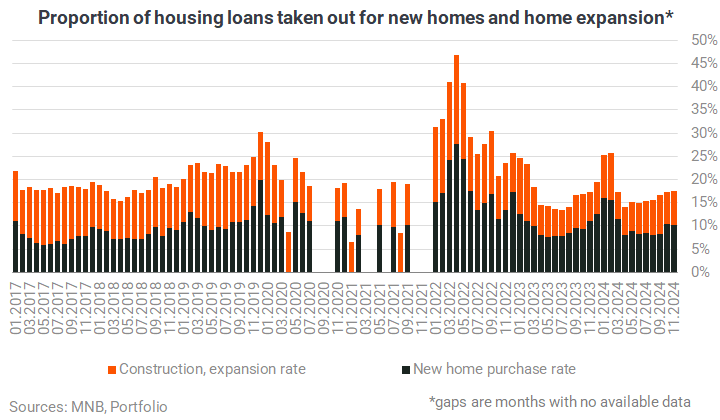
The share of new-build housing has not yet skyrocketed in lending, and the rise in housing supply is expected to be strong in the second half of the year, as a result of new government measures and banks' commitment to a 5% interest rate cap (which will only affect a narrow group of borrowers), by which time the share of new housing in the lending market is expected to rise back above 20%.
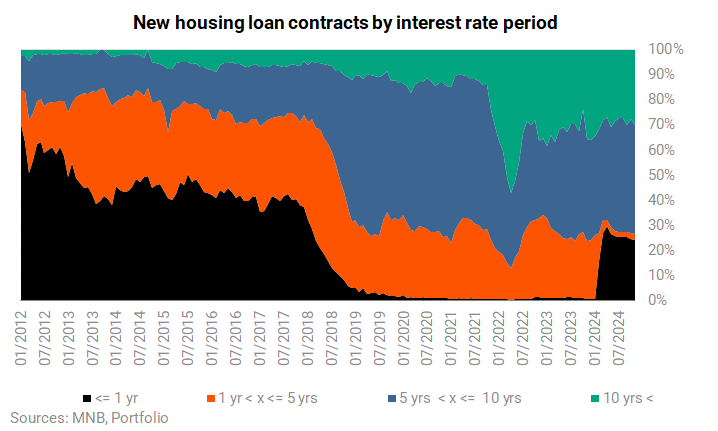
CSOK Plus explains the return of housing loans with a one-year interest period in the statistics, as the calculation of interest subsidies for these loans follows a one-year interest period for the time being, while customers pay a fixed interest rate. Otherwise, the market for market-rate loans is dominated by 10-year and fixed-rate loans, i.e. the safest products, with a marginal share of shorter interest periods.
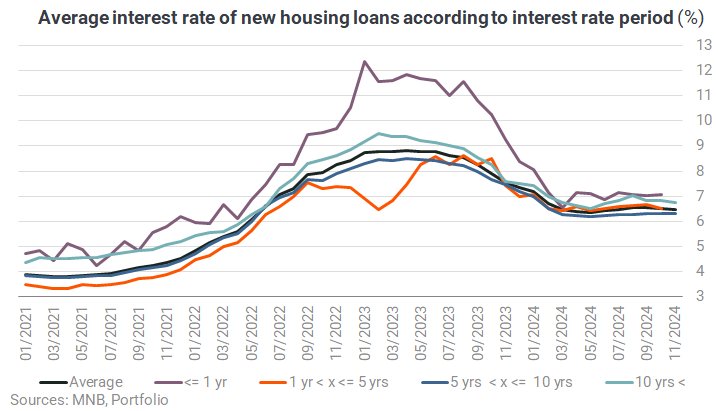
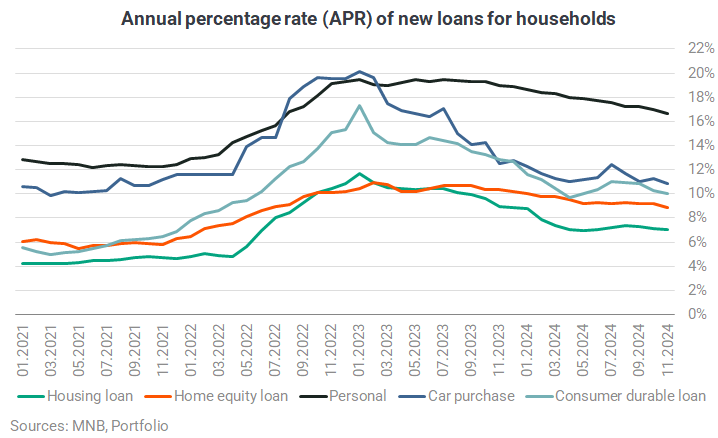
In November, households took out market-rate mortgages at an average rate of 6.48%, in line with the average of the previous nine months. Interest rates were stuck in 2024, and the market outlook does not promise a massive drop in interest rates in 2025 either.
Next year, the housing (credit) market could be further boosted mainly by:
- around HUF 3,000 billion in principal and interest payments on retail government securities,
- the usability of voluntary pension savings, which the government expects to mobilise around HUF 300 billion,
- minor state measures such as the rural home renovation programme or the introduction of 5% interest rates on housing loans for a narrow group of people, the latter of which the vice-president of the Hungarian Banking Association expects to mobilise a few tens of billions of forints.
The good news for borrowers is that the average interest rate on personal loans has also fallen below 17% for the first time since August 2022, and as mentioned in the lead, interest rates below 10% have also appeared on the banking market for these unsecured products.
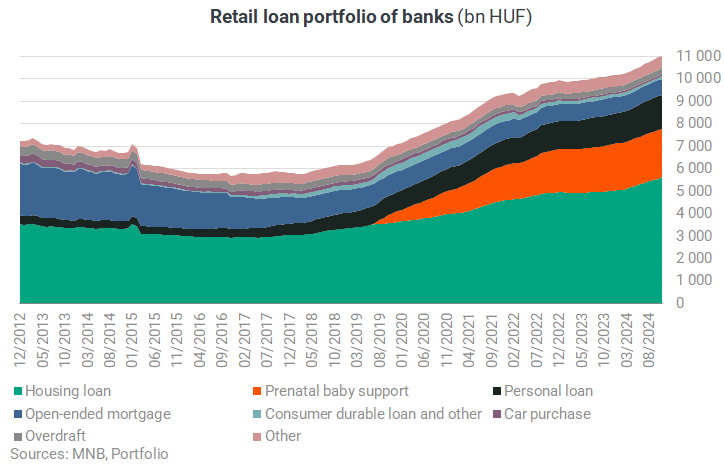
In the 12 months to end-November 2024, the stock of retail loans increased by 8.7%, housing loans by 12.2% and personal loans by 13.7%. Out of five forints of household debt, one forint is a baby loan.
Meanwhile, November was strong in terms of deposits, as was October, which may be due to the autumn payment of EU agricultural subsidies, which also trickled down to retail deposits. Retail deposits have been growing for more than a year, with net inflows of almost HUF 150 billion in November.
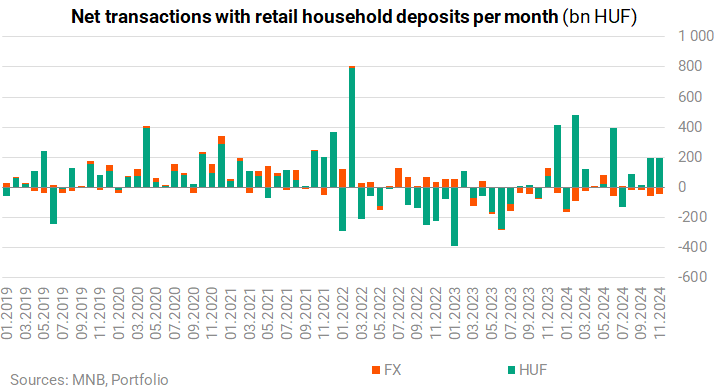
Household deposits have increased by 13.4% over the past year, but 83.5% of the HUF 13,317 billion in household deposits are uncommitted.
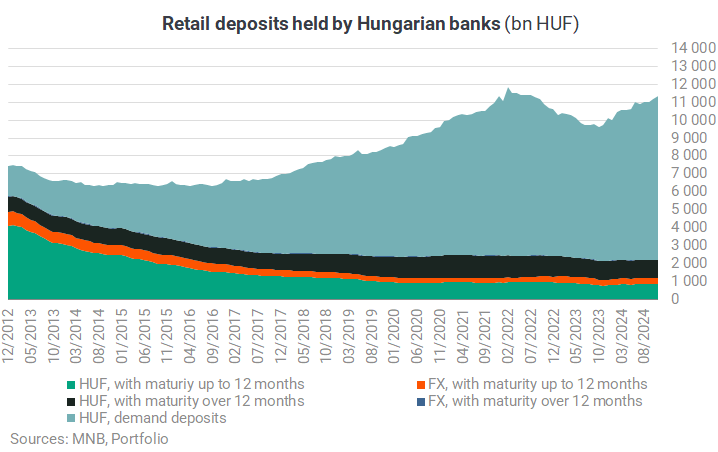
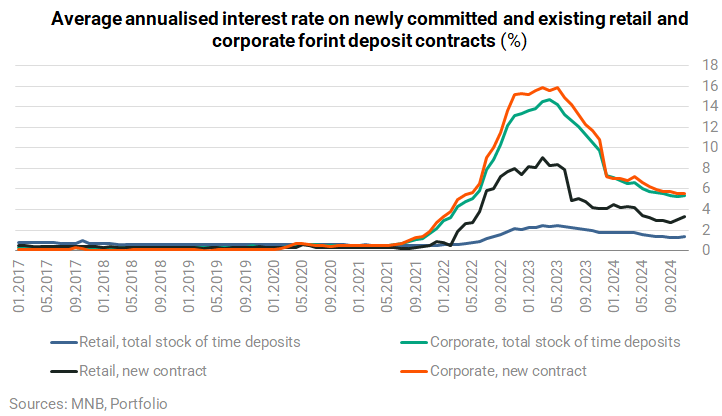
This is understandable, given that banks pay only 1.3% interest on an average retail deposit (weighted by the stock), and still do not need the extra liquidity from the public.
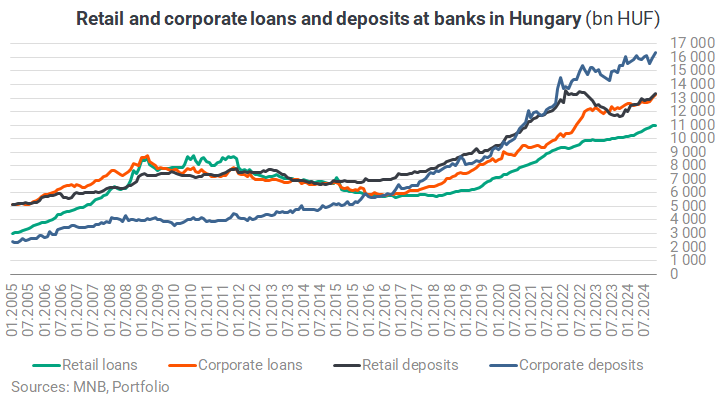
While retail lending is booming, corporate lending has had a relatively weak month, although by comparison, corporate lending rose by a respectable 7.0% by the end of November. Corporate deposits grew less, by 6.1%, which may be due to the lower lending momentum and the disruption in the transfer of EU funds (rule of law dispute).
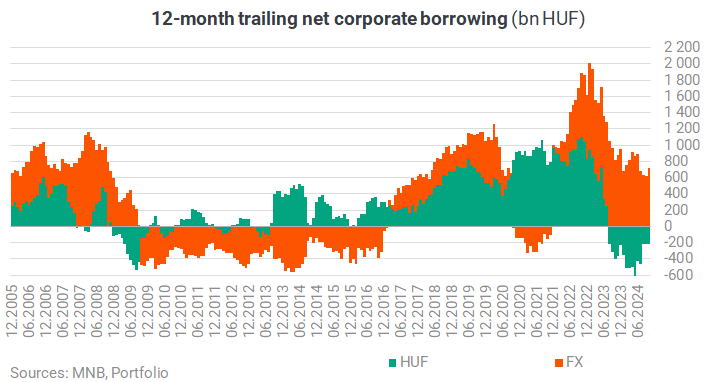
Net borrowing by companies was still at an okay level in November after October, but there can be considerable variation by company size, and even a few large loan transactions can often improve the statistics considerably.
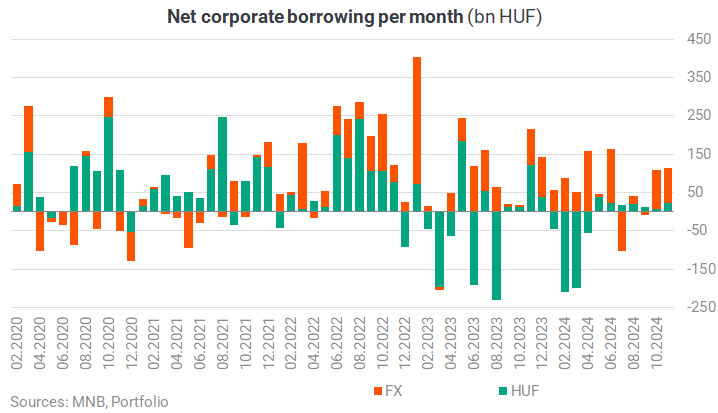
Over the past year, the corporate sector was a net repayer in HUF (- HUF 221 billion), but a significant net borrower in EUR (+ HUF 713 billion), reflecting the dominance of larger export companies. EXIM's new lending programmes launched on Monday under the Demján Sándor Programme could help to expand this circle.
Cover photo (for illustration purposes only): Getty Images





