Hungarian economic sentiment at 19-month low, many expect price increases


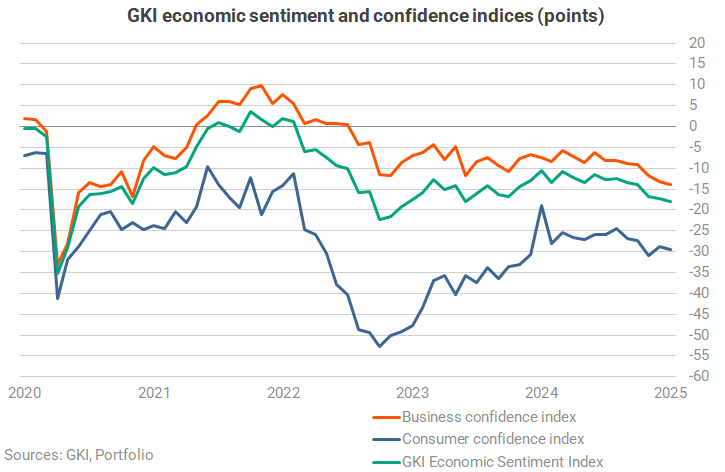
The GKI business confidence index dropped within the margin of error in January,
but it still managed to slip to its 50-month low.
The industrial and construction confidence sub-indices rose within the margin of error compared with the previous survey. However, the trade index fell slightly and the business services confidence index plunged. Trade remains the gloomiest sector, while business services have the rosiest outlook.
The consumer confidence index hardly changed between March and September last year, then it clearly started to drop in the autumn months. The positive correction in December was followed by a slight decline in January. Households felt that their financial situation over the past 12 months was slightly better than how they assessed it in December. At the same time, their outlook for their own financial situation for the next 12 months and the country's economic situation have deteriorated.
The perception of discretionary funds for high value consumer goods has not changed compared to the previous month. Households' expectations for inflation have declined slightly, while the outlook for unemployment has improved slightly compared to December.
The employment indictor, which gauges the aggregate employment propensity of businesses, fell slightly in January compared with December, dropping to a 19-month low.
Employment intentions worsened in industry, construction and services compared with the previous month, while the outlook for trade improved. In the next three months, 9% of businesses are preparing to expand their workforce, while 14% are planning to lay off workers.
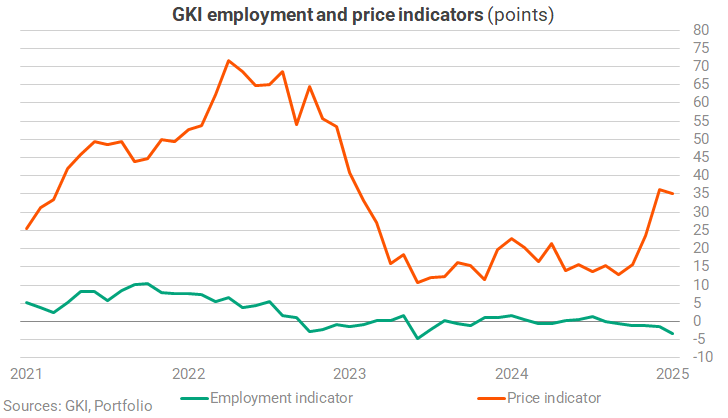
The price indicator, which condenses business price adjustment plans into a single figure, fell slightly in the first month of this year compared with the previous month. Price hike intentions strengthened only in trade, while they eased in the other sectors. Half of the businesses in the survey plan to raise prices in the next three months, while only 5% plan to lower prices.
The indicator jumped at the same time as the forint's depreciation accelerated last year and remains extremely high. After December's inflation data, which came as a mild negative surprise, the National Bank of Hungary (MNB) also drew attention to rising inflation expectations in its assessment (see charts below).
However, the good news is that the perception of the predictability of the business environment improved markedly in January compared to December, after two months of deterioration.


Cover photo (for illustration purposes only): Getty Images





