Share of internet users doing online courses sixth lowest in Hungary in EU


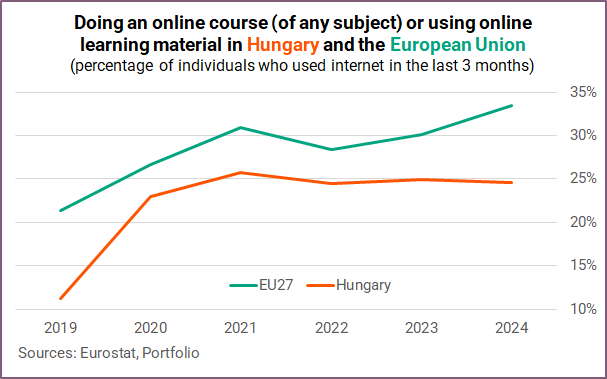
In 2024, 33% of EU internet users reported that they had done an online course or used online learning material in the 3 months prior to the survey. This is a 3 percentage point (pp) increase compared with 2023 (30%).
Ireland recorded the highest share of internet users engaged in online learning (61%), followed by the Netherlands (59%) and Finland (53%).
By contrast, online education was less prevalent in Romania (10%), Cyprus (11%) and Bulgaria (17%).
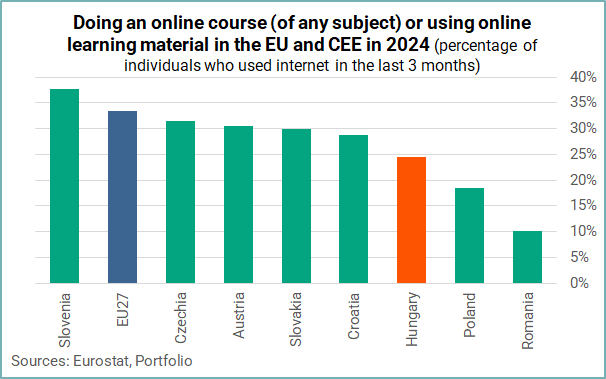
the share in hungary was 24.6%, which secured the country the sixth lowest place in the eu ranking.

The gap between the EU and Hungary widened last year to 8.87 percentage points, the largest difference since 2019 (10.11).
The leader in this indicator is Slovenia (37.7%) in Central and Eastern Europe, while only Poland (18.39%) and Romania (10.19%) fared even worse than Hungary, although the progress here is undeniable, with the percentage still as low as 11.2% in Hungary in 2019.
The coronavirus pandemic certainly played a key role in people going online for various courses (a jump to 23% in 2020), but the interest has not really grown further since.
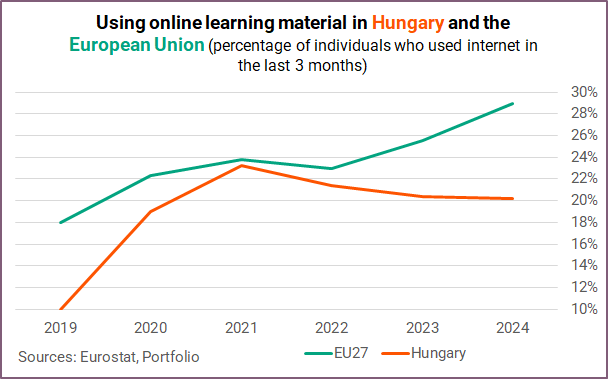
When considering specific online learning methods, 18% of internet users did an online course in 2024, which was most prevalent in Ireland (36%), Finland and Spain (both 32%). At the same time, 29% internet users used online learning materials, with the highest share in the Netherlands (53%), Ireland (52%) and Finland (46%).
Hungary fared way worse than the EU average with a 20.2% share, falling even further behind (8.8ppt gap). Again, the progress is clear, with only 10% of Hungarians using online learning materials the year before COVID-19 struck.
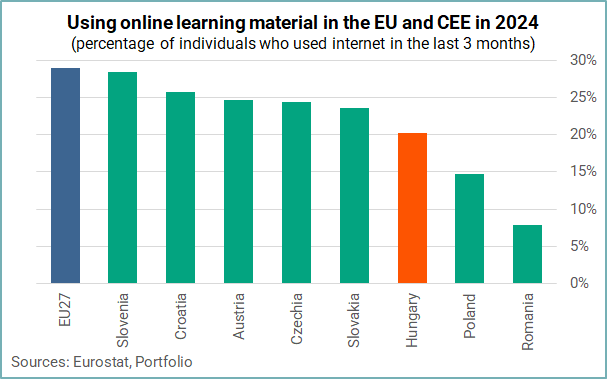
Slovenia is on top of the CEE ranking here too, with Hungary, Poland and Romania on the last three spots.
Two other interesting data from Eurostat's statistics:
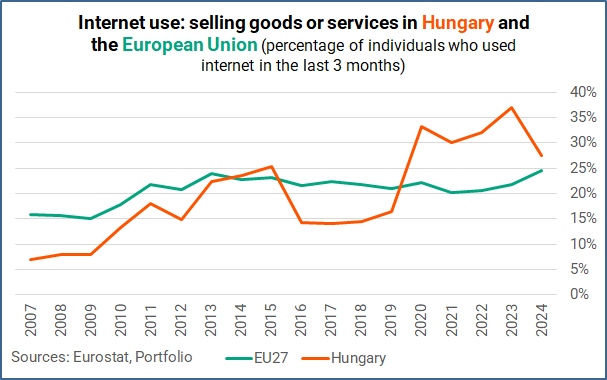
(1) While selling goods or services online has been fairly a steady activity in the European Union (with the percentage ranging between 15.9% (2007) and 24.5% (2024), Hungary's pattern was much more volatile (low at 6.9% in 2007, high at 36.9% in 2023) and the percentage took a plunge last year to 27.45%.
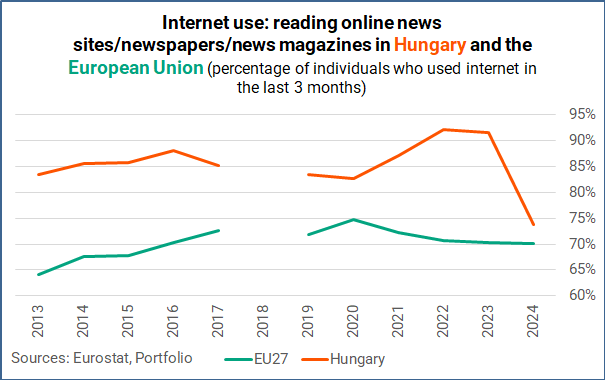
(2) Reading news online (newspapers, magazines) has been rather widespread both in the EU and in Hungary for over a decade, but the share of Hungarians indulging in said activity has always been much higher. And it also took a plunge last year to 73.8% from 91.5% in 2023, while the EU index remained fairly steady around 70%.
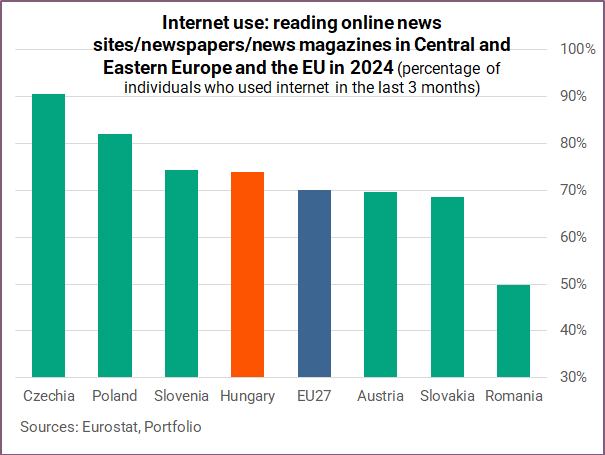
The only other country with a similar, albeit smaller (12.6ppt) plummet was Romania, while online news reading actually spread in Austria (+4.48ppt), Poland (+1.76ppt) and Czechia (+0.21).
Cover image (for illustration purposes only): Portfolio





